
For boat registration decals, the best vinyl is marine-grade, outdoor-calendared vinyl with a UV-stable topcoat and a marine-rated pressure-sensitive adhesive. That combination survives UV radiation, salt spray, fuel splashes, and hull flex — the four conditions that destroy ordinary vinyl within a single season.
Before you order, check three things:
- The supplier specifies outdoor-calendared or UV-engineered vinyl, not generic indoor film
- The topcoat is UV-gloss or UV-matte rated for chemical and abrasion resistance
- The decals carry a state-compliance guarantee for your specific registration requirements
For a fast, compliant order, Registrationdecals.com builds custom registration decals to these specs with a 3–5 business day production window and free shipping in the contiguous U.S.
Table of Contents
- What does "marine-grade" vinyl actually mean for decals?
- How to choose the right vinyl for registration decals
- Cast vs. calendared vinyl: which film type works best?
- How to install and maintain registration decals for maximum life
- How long do marine-grade decals last, and what do they cost?
- What U.S. state compliance rules apply to registration decals?
- How to evaluate a vinyl decal supplier before you order
- Key Takeaways
- Why the "marine grade" label is doing too much work
- State-compliant marine-grade decals, shipped in days
- Useful sources and further reading
What does "marine-grade" vinyl actually mean for decals?
Marine-grade vinyl is not a single-sheet plastic. It is a layered composite: a woven polyester base bonded to a PVC coating, with UV stabilizers and anti-mildew treatments built into the chemistry. The polyester backing contributes tear resistance and cold-crack performance; the PVC layer shields it from UV degradation. Strip either layer out of the equation and you have a material that looks fine in a showroom but fails on the water.
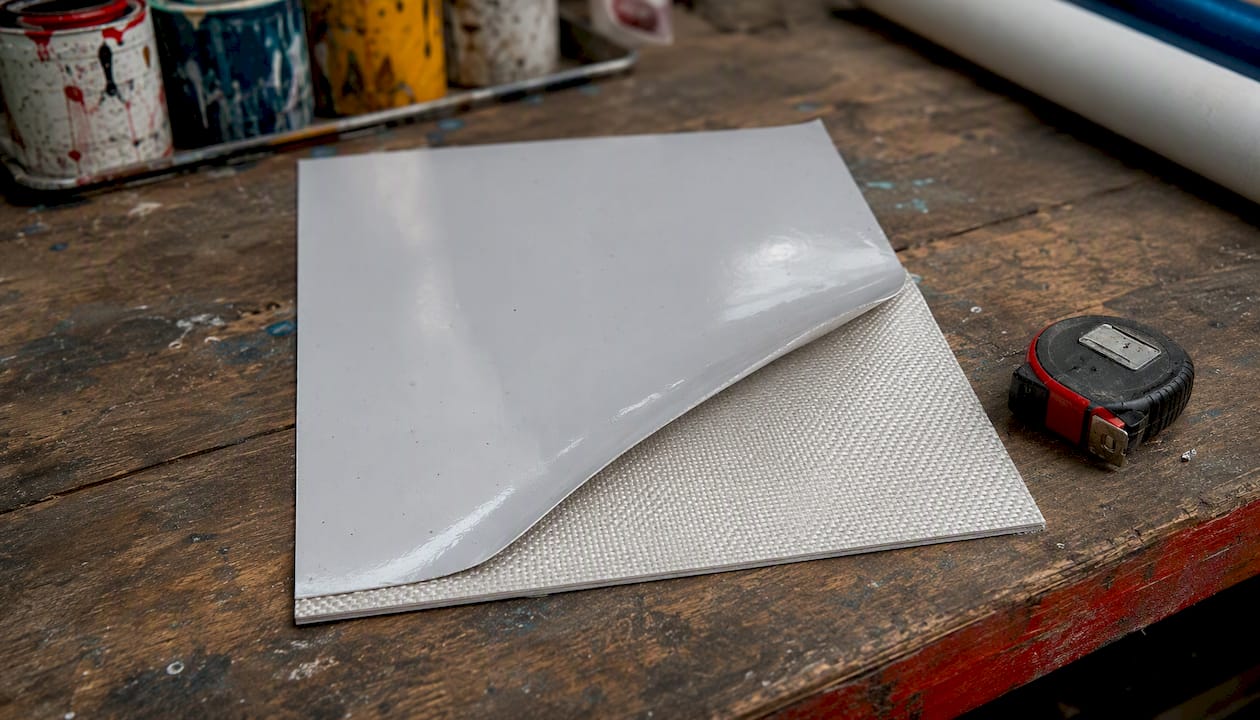
The term "marine grade" is a performance category, not a regulated standard. Suppliers use it freely, which means the phrase alone tells you nothing. What actually matters are the testable specs behind the label.
Key specs to request from any supplier:
- WeatherOmeter or QUV hours: UV aging test results (look for 1,000+ hours as a baseline, per Spradling Islander specs)
- Cold-crack temperature: the lowest temp at which the film stays flexible without cracking
- Mildew resistance: confirmation of antimicrobial or anti-mildew treatment
- Abrasion/double-rub count: how many rub cycles the surface survives before visible wear
- Adhesive spec: marine-rated, pressure-sensitive, compatible with gelcoat and painted hulls
One distinction worth making: upholstery-grade marine vinyl and outdoor decal film are different systems. Upholstery products like EverSoft prioritize four-way stretch, high double-rub counts, and antimicrobial additives for seat cushions. Decal film needs an ink-plus-clearcoat-plus-adhesive system rated for UV and chemical exposure — a different engineering problem entirely.
Pro Tip: Ask every supplier for the actual datasheet, not a product description page. If they cannot produce WeatherOmeter hours and a cold-crack temperature, treat the "marine grade" claim as marketing copy.
How to choose the right vinyl for registration decals
The single most common mistake buyers make is equating thickness with durability. Outdoor design determines durability, not mil count. A thick indoor film will fade and peel faster than a thinner outdoor-calendared film with proper UV inhibitors.
When comparing materials and vendors, run through this checklist:
- UV resistance first: UV inhibitors and topcoat chemistry protect printed inks from fading; without them, legibility fails before the adhesive does
- Adhesive compatibility: marine-rated, pressure-sensitive adhesives must tolerate gelcoat, painted hulls, and textured surfaces while resisting salt and fuel
- Topcoat type: UV-gloss or UV-matte overlaminates protect inks from abrasion, fuel spills, and chemical exposure
- Flex tolerance: hulls move and change temperature; decals need flex tolerance to avoid cracking at seams and edges
- Mildew resistance: anti-mildew treatments and solvent-resistant clearcoats preserve legibility in humid, wet storage conditions
Decal longevity depends on the full system — vinyl film, ink, topcoat, and adhesive working together. Validating one component while ignoring the others is how buyers end up with faded numbers after two seasons.
Pro Tip: When comparing suppliers, ask for four specific numbers: UV aging hours, cold-crack pass temperature, abrasion/double-rub count, and mildew resistance confirmation. These map directly to CFFA test-method standards and cut through vague marketing language fast.
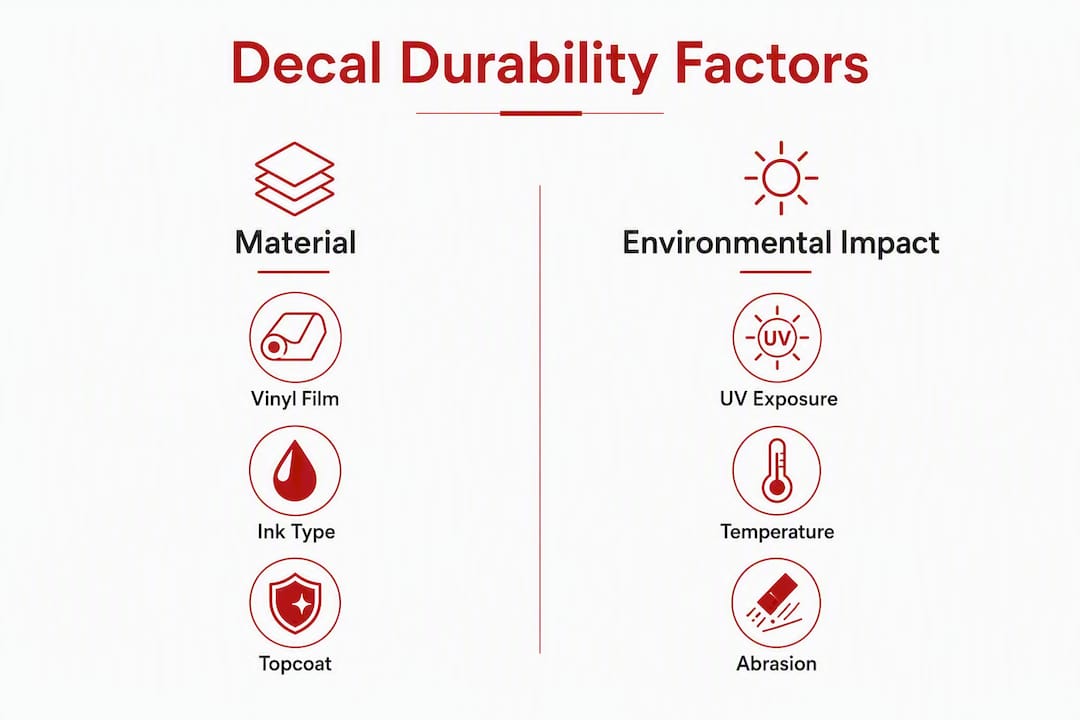
Cast vs. calendared vinyl: which film type works best?
Cast vinyl conforms to complex curves and lasts longer in demanding outdoor applications. Calendared vinyl costs less and suits flatter surfaces. For most registration decals applied to a boat's bow, outdoor-calendared marine-grade film is the practical choice: UV-stabilized, cost-effective, and built for the job.
Film thickness around 4 mil is common for marine registration kits. That thickness provides enough body for clean transfer and edge adhesion without being so rigid it cracks on a curved hull. The 4-mil spec matters less than whether the film carries a UV-gloss coating rated for fuel, salt, and abrasion.
- Cast film: best for heavily curved or textured hull areas; higher conformability, longer rated lifespan
- Outdoor-calendared film: appropriate for flat-to-moderate curves; valid when UV-stabilized and paired with a UV overlaminate
- UV-gloss overlaminate: protects printed inks from fading, fuel contact, and surface abrasion; non-negotiable for multi-year outdoor legibility
- Permanent marine-rated adhesive: required for gelcoat and painted surfaces; surface prep determines whether the adhesive bond actually holds
Pro Tip: For raised or curved hull sections, prefer cast or conformable calendared films with a flex-rated overlaminate. A flat-stock calendared film applied to a tight curve will lift at the edges within months.
How to install and maintain registration decals for maximum life
Surface prep matters more than any small difference in material grade. A perfect decal applied to a waxed, contaminated hull will fail at the adhesive before UV ever becomes the issue.
- Clean the surface with a marine-safe solvent (isopropyl alcohol works well) to remove wax, polish, and salt residue
- Dry completely and let the hull reach 50–90°F before application; cold surfaces prevent proper adhesive bonding
- Mark placement with masking tape guides before removing the decal backing
- Apply with transfer tape and a squeegee, working from the center outward to push air bubbles toward the edges
- Allow dwell time of at least 24 hours before the decal contacts water or fuel
- Maintain annually: wash with mild soap and water; avoid harsh solvents near edges; inspect for lifting or topcoat crazing
- Remove old decals by heating gently with a heat gun or hair dryer, peeling slowly at a low angle, then removing adhesive residue with a marine-safe adhesive remover to avoid gelcoat damage
For step-by-step guidance, Registrationdecals.com publishes a detailed application walkthrough covering surface prep and squeegee technique.
Pro Tip: Keep a spare decal set in a cool, dry place. When you see topcoat crazing or color loss on the installed set, replace immediately — faded or cracked registration numbers can trigger a compliance issue during a routine inspection.
How long do marine-grade decals last, and what do they cost?
Properly specified marine-grade decals typically last 3–5 years in real-world conditions. That range assumes UV-stabilized film, a UV-gloss topcoat, and correct installation. Shorten any one of those variables and the lifespan drops.
| Factor | Effect on lifespan |
|---|---|
| High UV exposure (no cover, southern climate) | Reduces lifespan notably without premium UV topcoat |
| Sheltered storage or northern climate | Can extend lifespan with proper maintenance |
| Heavy fuel or chemical exposure | Degrades adhesive and topcoat; replace sooner |
| Incorrect installation (waxed surface) | Adhesive failure within months, regardless of film quality |
| UV-gloss overlaminate present | Extends color and legibility by protecting printed inks |
Custom registration decal sets vary in price depending on character count, color, and order volume. Individual sets are typically affordable for a single boat; marinas and dealers ordering in bulk can access tiered pricing. Registrationdecals.com ships within the contiguous U.S. at no additional cost, with production completing in 3–5 business days. For more on what affects decal lifespan, their answers page breaks it down by material and environment.
What U.S. state compliance rules apply to registration decals?
Every state sets its own rules for character height, spacing, color contrast, and placement. Ordering the right material is only half the job; the decal also has to meet your state's legibility and placement requirements or you risk a citation on the water.
Compliance checklist before ordering:
- Character height: most states require a minimum of 3 inches for registration numbers
- Spacing: a space or hyphen between the letter prefix, numbers, and letter suffix
- Color contrast: numbers must contrast with the hull color (dark on light or light on dark)
- Placement: forward half of the hull, on both sides, typically 3 inches from the bow
- Decal vs. plate: confirm your state permits vinyl decals as a substitute for metal registration plates
State rules vary enough that what passes in Michigan may not satisfy Maine's requirements. Registrationdecals.com maintains state-specific guidance pages — see their placement and sizing rules for a starting point, plus state-specific pages for Michigan and Maine as examples of how requirements differ. Their state-compliance guarantee means the decals you receive are built to meet your state's published rules.
How to evaluate a vinyl decal supplier before you order
Marketing copy is not a spec sheet. The right questions separate suppliers who know their materials from those who are reselling generic film with a "marine grade" label.
Ask every supplier:
- What is the UV aging test result in WeatherOmeter or QUV hours?
- What is the cold-crack pass temperature for the film and adhesive?
- What abrasion or double-rub count does the topcoat carry?
- Is the adhesive rated for gelcoat and painted marine surfaces?
- What overlaminate or clearcoat is applied, and is it solvent-resistant?
- Do you provide a state-compliance guarantee for registration decals?
For marinas and dealers, add:
- What is the bulk pricing structure for 50+ sets?
- What is the production lead time for large orders?
- Are state-compliance checks included in the order workflow?
Validate claims by requesting datasheets, not product pages. A supplier confident in their specs will hand them over without hesitation. One who deflects to marketing language probably cannot back the numbers up.
Key Takeaways
Marine-grade, outdoor-calendared vinyl with a UV-stable topcoat and marine-rated adhesive is the correct material for U.S. boat registration decals — verify the specs with a supplier datasheet before ordering.
| Point | Details |
|---|---|
| Material choice | Outdoor-calendared, UV-stabilized vinyl with a UV-gloss topcoat outperforms thicker indoor films. |
| Spec validation | Request UV aging hours, cold-crack temperature, abrasion count, and mildew resistance from every supplier. |
| Lifespan range | Properly specified marine-grade decals typically last 3–5 years; fuel exposure and poor installation shorten that. |
| State compliance | Verify character height, spacing, contrast, and placement rules for your specific state before ordering. |
| Registrationdecals | Registrationdecals.com produces state-compliant, marine-grade decals in 3–5 business days with free contiguous U.S. shipping. |
Why the "marine grade" label is doing too much work
The boating industry leans hard on "marine grade" as a trust signal, and buyers accept it without question. That is a mistake. The phrase has no regulatory definition. A product can carry it and still use an adhesive that softens in fuel, a topcoat that chalks after one summer, or a film calendared for indoor use. The label is a starting point for a conversation, not a conclusion.
What actually protects a registration decal is the system: UV-stabilized film, ink engineered for outdoor exposure, a clearcoat rated for chemical contact, and an adhesive matched to the hull surface. Any supplier worth ordering from can hand you a datasheet that proves each of those components. If they cannot, the "marine grade" claim is decoration.
The other thing buyers underestimate is installation. A technically excellent decal applied to a waxed or contaminated hull will fail at the bond line before UV becomes relevant. Surface prep is free. Skipping it costs you a replacement order.
State-compliant marine-grade decals, shipped in days
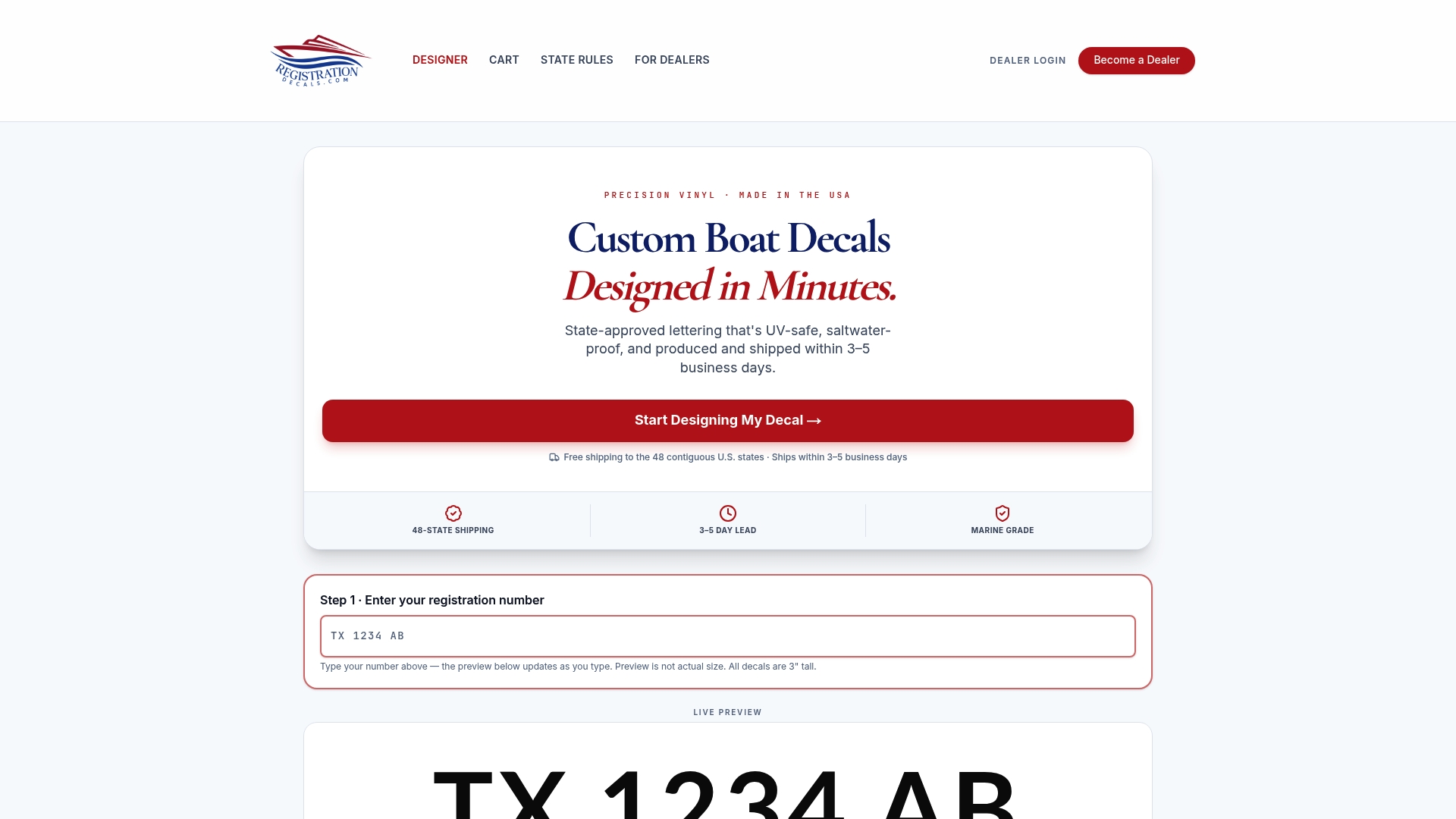
Registrationdecals.com builds custom registration decals from UV-stabilized, marine-grade vinyl with a UV-gloss topcoat and permanent marine-rated adhesive — the same spec combination this article recommends. Every order goes through a state-compliance check, so the character sizing, spacing, and contrast meet your state's published rules before the decal ships.
Production runs within a few business days, and shipping is free across the contiguous U.S. Marinas and dealers can access wholesale pricing for bulk orders, with the same compliance guarantee applied to every set.
Use the online design tool at Registrationdecals.com to enter your registration numbers, pick your color and font, and preview the finished decal. If you have placement questions, the support team can confirm requirements for your state. Your compliant, marine-grade decal set can be on the water within the week.
Useful sources and further reading
- Differences Between Marine Vinyl and Traditional Vinyl — Carolyn Fabrics: practical comparison of marine vs. standard vinyl for upholstery and outdoor use
- Islander Marine Vinyl — Spradling via Carolyn Fabrics: supplier spec sheet with WeatherOmeter hours, cold-crack criteria, and mildew resistance data
- Where do boat registration numbers go? — Registrationdecals.com: placement and sizing rules for U.S. state compliance
- How to apply vinyl registration decals — Registrationdecals.com: step-by-step surface prep and application guidance