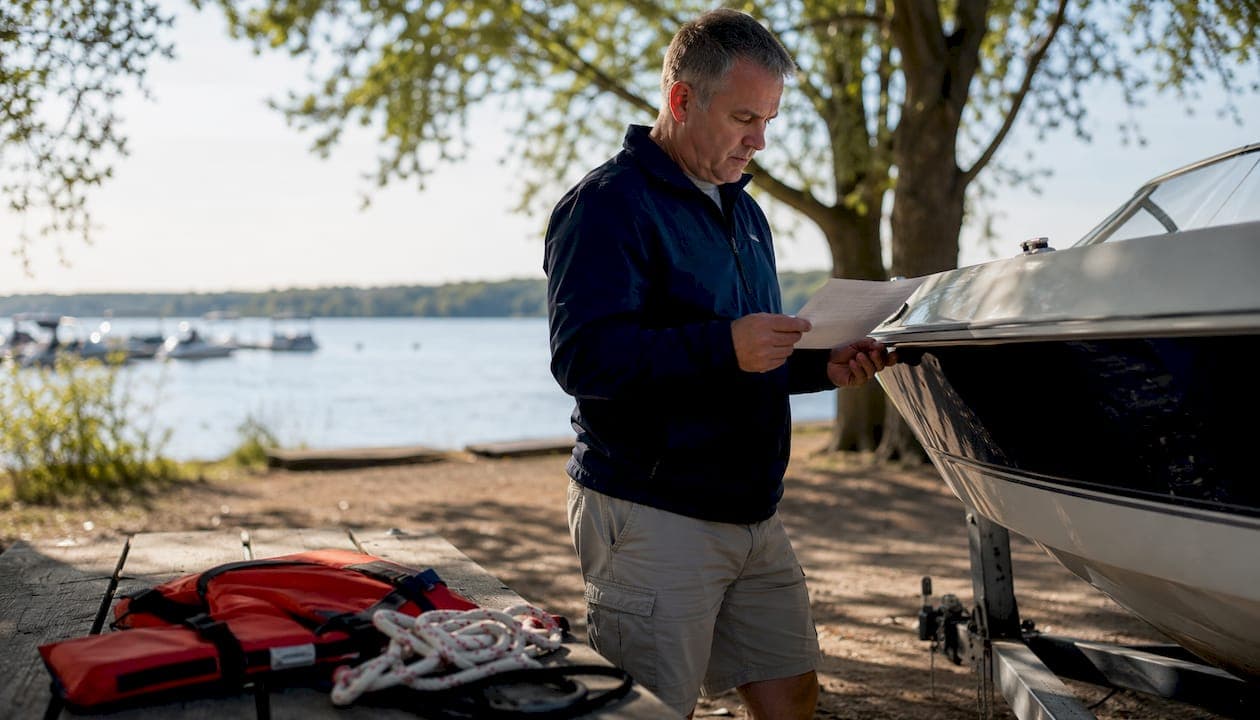
If you've been searching for "boat CF numbers" and you're registered in Minnesota, here's the short answer: CF is a California-only prefix. The California DMV assigns CF numbers to vessels registered in that state. Minnesota boat owners get a completely different format, issued by the Minnesota Department of Natural Resources, and your number will begin with "MN" — not "CF."
Your three-item quick-check before you launch:
- Your assigned number: Find it on your Certificate of Number (the registration card MN DNR issues). That document is your proof of assignment and must be on board whenever you're on the water.
- How it appears on the hull: Plain vertical block letters at least 3 inches high, high contrast against the hull color, reading left-to-right, with a space or hyphen between each letter and number group (example: MN 1234 AB).
- Where the validation decal goes: In line with the registration number, roughly 3 inches toward the stern on each side.
Pro Tip: If a YouTube tutorial or forum post shows a "CF" number on a bow, it's a California example. Don't copy that format for your Minnesota boat — the prefix, and sometimes the spacing rules, differ by state.
Table of Contents
- How do you get a Minnesota boat registration number?
- What are the exact display rules for Minnesota registration numbers?
- Where should you order MN-compliant registration decals?
- How do you apply and maintain registration decals correctly?
- How do transfers, duplicates, and titles affect your registration number?
- Can you look up a boat's registration number or owner?
- What happens if your registration numbers aren't compliant?
- Key Takeaways
- Why legible registration numbers matter more than most owners realize
- Get MN-compliant decals fast with Registrationdecals
- Useful sources and further reading
How do you get a Minnesota boat registration number?
Registering a new watercraft with MN DNR is straightforward, but you need the right documents in hand before you start.
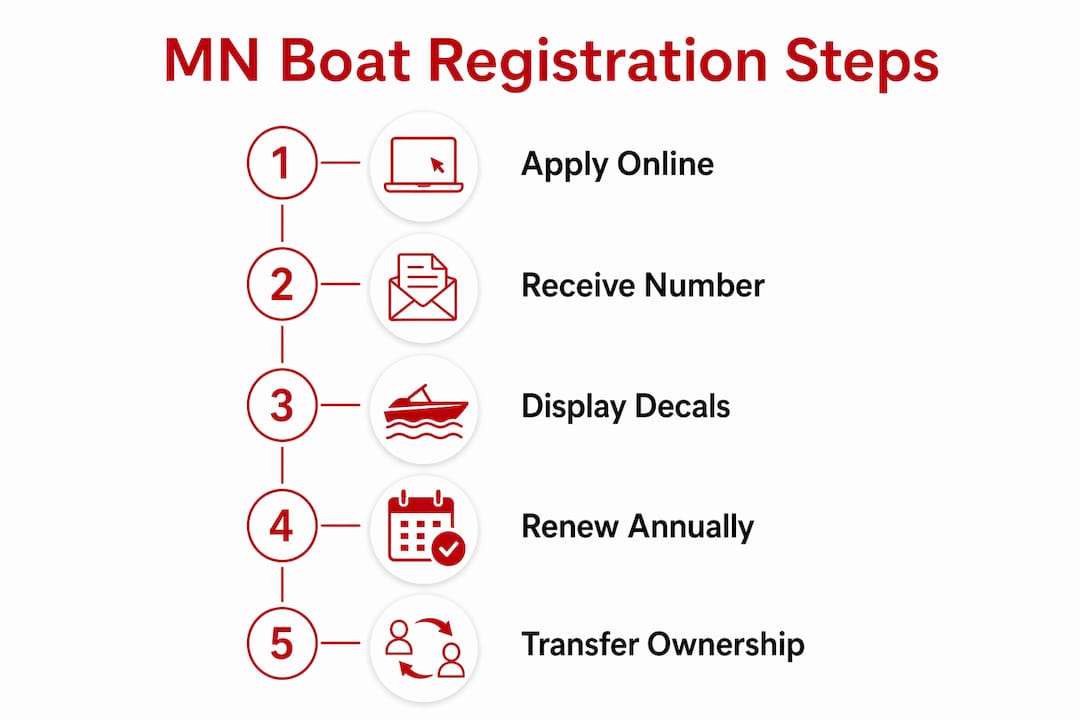
Step-by-step for new registrations:
- Gather your documents. You'll need proof of ownership (manufacturer's certificate of origin for a new boat, or a signed title for a used one), the Hull Identification Number (HIN), a bill of sale, and a completed application.
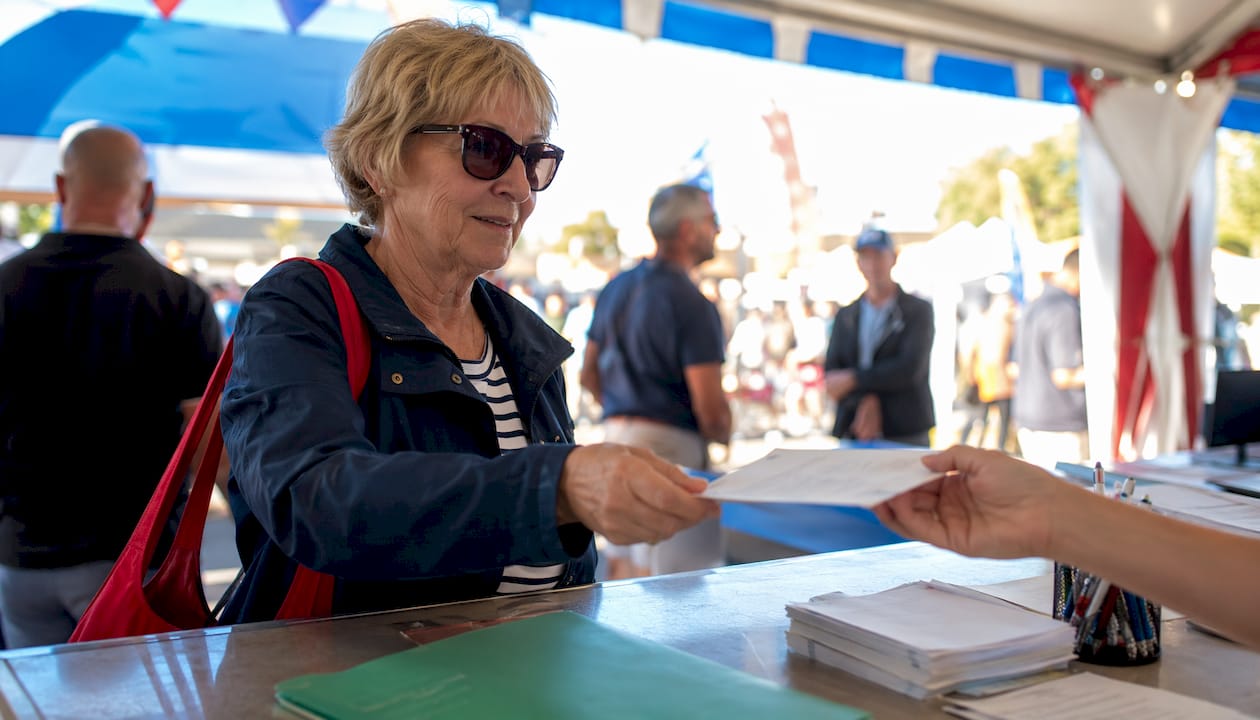
- Submit your application. You can register in person at a deputy registrar location or through MN DNR's online services. For a brand-new boat, in-person is often faster because staff can verify the HIN on the spot.
- Pay the registration fee. Fees vary by watercraft length and type. Check the MN DNR registration page for the current fee schedule before you go.
- Receive your Certificate of Number. Once processed, MN DNR issues your Certificate of Number and validation decals. Keep the certificate on board at all times.
- Display your number and decals. Apply them to both sides of the forward hull before you head out.
For renewals:
- MN DNR sends renewal notices before your registration expires. You can renew online, by mail, or at a deputy registrar.
- New validation decals arrive by mail after renewal. Apply them before the old ones expire — don't wait until you're at the dock.
- If you move or change your address, notify MN DNR promptly. Federal boating safety regulations under 33 CFR Part 173 require owners to report address changes, theft, or transfer of interest to the issuing authority within a set timeframe.
Deputy registrar offices are spread across Minnesota, so an in-person visit is rarely a long drive. Online renewal is the faster option for most owners who already have their paperwork in order.
What are the exact display rules for Minnesota registration numbers?
Minnesota's display requirements align with federal standards under 33 CFR Part 173, which set the baseline every state must meet. Get these wrong and you're looking at a boarding or a fine.
The core display requirements:
- Location: Both port and starboard sides, on the forward half of the hull (typically the bow area).
- Letter height: Plain vertical block characters, minimum 3 inches high.
- Color contrast: The number must contrast clearly with the hull color. White hull? Use dark letters. Dark hull? Use light letters.
- Reading direction: Left-to-right on both sides.
- Spacing: A space or hyphen between the prefix, number group, and suffix (MN 1234 AB or MN-1234-AB — both are acceptable).
- No clutter: No other numbers, letters, or decorative elements near the registration number. Ornamentation around the number is a violation.
Validation decal placement:
Decals go in line with the registration number, about 3 inches toward the stern on each side. Both sides. Every time.
What if your hull shape makes placement tricky?
If the hull's shape or design prevents direct placement on the bow, you can attach a contrasting backing plate to the forward half so the number is visible from each side. This satisfies the regulation where the hull geometry makes standard placement impractical.
| Requirement | Spec |
|---|---|
| Minimum letter height | 3 inches |
| Letter style | Plain vertical block characters |
| Placement | Forward half, both port and starboard |
| Reading direction | Left-to-right |
| Spacing | Space or hyphen between groups |
| Decal position | In line with number, ~3 inches toward stern |
| Contrast | High contrast with hull color |
Common mistakes that get boats boarded:
- Numbers placed too far aft (past the midpoint of the hull).
- Letters smaller than 3 inches, especially on older hand-painted numbers.
- Low contrast — gray letters on a silver hull are nearly invisible from a patrol boat.
- Peeled or partially obscured decals that hide the expiration year.
- Extra stickers or graphics placed too close to the registration number.
Where should you order MN-compliant registration decals?
You have a few options: pick up generic lettering at a marine supply shop, order through a local sign shop, or use an online custom decal supplier. The critical factor isn't where you order — it's what you verify before you confirm the order.
Before you order, check these five things:
- Exact characters from your Certificate of Number. Copy them character-for-character, including spacing and hyphen placement as issued. Mismatched formatting is one of the most common reasons decals fail inspection.
- Minimum 3-inch height. Measure your bow area first. Some boats have limited space, but the 3-inch minimum is non-negotiable.
- Block font compliance. Plain vertical block letters only. Script, italic, or decorative fonts don't meet the standard.
- Color contrast. Choose a color that contrasts sharply with your hull. If you're unsure, go darker or lighter than you think you need.
- Marine-grade vinyl. UV resistance and saltwater durability aren't optional on a Minnesota lake. Sun, cold, and water will destroy a standard vinyl decal within a season or two.
Registrationdecals offers an online design tool where you enter your Certificate of Number exactly as issued, choose your color and font, and select marine-grade UV-resistant vinyl. Their Minnesota decal requirements page maps the state's specs directly to their product options, so you're not guessing about compliance.
Quick ordering steps:
- Pull out your Certificate of Number and read the registration number exactly as printed.
- Enter it into the design tool — spaces, hyphens, and all.
- Select a color that contrasts with your hull.
- Choose marine-grade vinyl.
- Confirm production time (typically 3–5 business days) and shipping.
Pro Tip: Order a spare set at the same time. Decals can peel at the edges after a hard season, and having a backup on hand means you're not scrambling before a weekend trip.
How do you apply and maintain registration decals correctly?
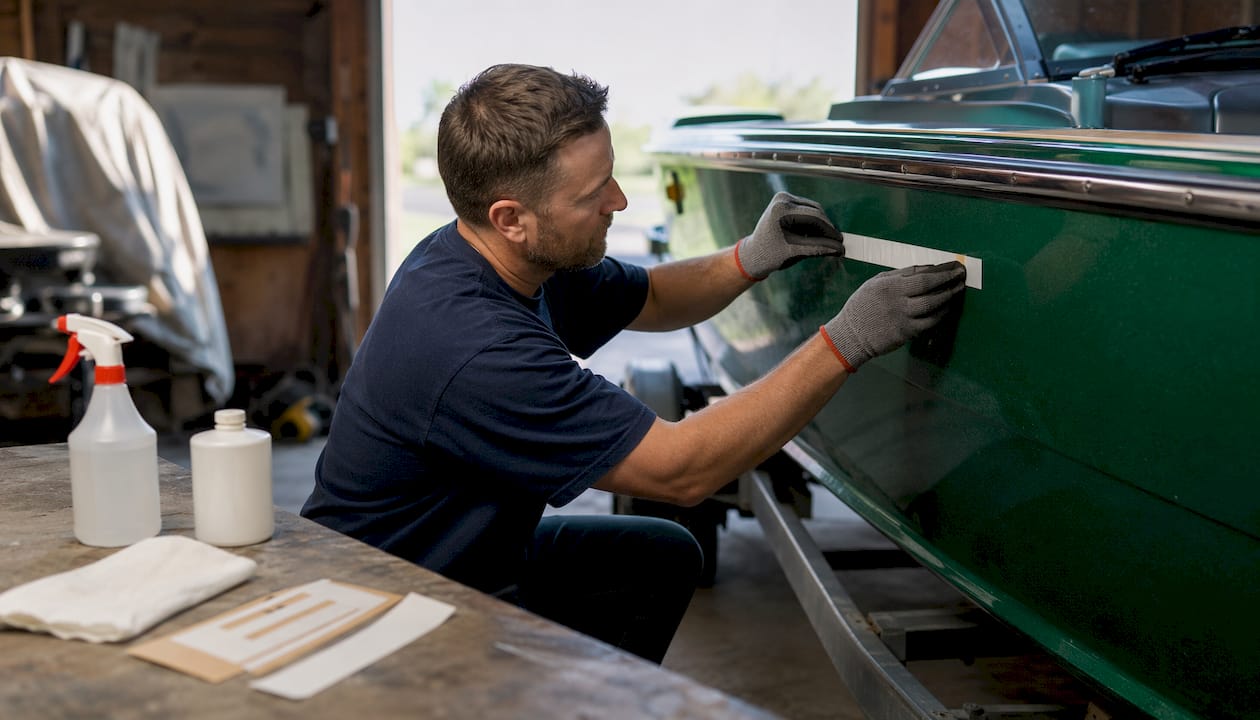
A clean application takes about 20 minutes and saves you from a re-do. Rushed installs — bubbles, crooked placement, lifted edges — are what lead to citations for "obscured numbers."
What you need before you start:
- Measuring tape and a pencil or chalk marker
- Masking tape (for alignment guides)
- Isopropyl alcohol and a lint-free cloth
- A squeegee or credit card
- A spray bottle with a few drops of dish soap in water (for wet application)
Apply decals when the temperature is between 50°F and 90°F. Cold vinyl gets stiff and won't conform to curved surfaces; hot vinyl stretches and can distort the lettering.
Step-by-step application:
- Clean the surface. Wipe the application area with isopropyl alcohol. Any wax, oil, or residue will cause the adhesive to fail at the edges.
- Dry-fit first. Hold the decal in position and confirm placement before peeling anything. Use masking tape to mark the top edge as a guide.
- Choose wet or dry method. For marine vinyl on a curved bow, the wet application method works best: lightly mist the hull surface with your soap-water solution, peel the backing, and position the decal. The solution lets you slide it into exact position before it sets.
- Squeegee from center out. Work air bubbles toward the edges. Don't press hard from one side — you'll trap air on the other.
- Peel the transfer tape slowly. At a low angle, not straight up. If letters lift with the tape, press them back down and wait a few more minutes.
- Allow cure time. Wait at least 24 hours before water exposure. The adhesive needs time to bond fully.
Maintenance schedule:
- Annually: Inspect both sides for peeling edges, fading, or cracks. Replace any decal that's lost legibility.
- Each season: Clean with mild soap and water. Avoid pressure washers directly on the decals.
- Before renewal: Remove the old validation decal completely before applying the new one. Layering decals causes edge lift and looks sloppy to enforcement officers.
Pro Tip: For marine vinyl decal longevity, UV-resistant material is the single biggest factor. Minnesota's summer sun is intense on open water, and cheap vinyl fades within one season. Marine-grade material holds color and adhesion significantly longer.
How do transfers, duplicates, and titles affect your registration number?
Buying or selling a boat in Minnesota involves a few steps that directly affect which number goes on the hull and what decals you need.
When your registration number stays the same:
An intra-state transfer (selling to another Minnesota resident) typically keeps the same registration number. The new owner registers the boat in their name, and the number carries over. The decals on the hull may still be valid until the registration expires.
When the number changes:
Moving to another state means a new registration with the new state's prefix. When transferring ownership across state lines, wait until the new issuing authority confirms the assigned number before ordering replacement decals. Ordering before confirmation is a common and avoidable mistake.
Title vs. registration:
Minnesota issues a title for most motorized watercraft and watercraft over a certain length. The title proves ownership; the registration number is the display identifier. They're separate documents. A boat can be registered without a title in some limited circumstances (very old vessels, for example), but most transactions involve both.
Getting duplicates or replacements:
- Lost Certificate of Number: Contact MN DNR to request a duplicate. You'll need to provide your registration number, proof of identity, and pay a replacement fee.
- Address or ownership change: Federal regulations require you to notify the issuing authority within the statutory timeframe. For Minnesota, that means contacting MN DNR directly.
- Replacement decals: If your validation decals are lost or damaged before the registration period ends, MN DNR can issue replacements.
Action checklist for transfers:
- Complete the title transfer paperwork with MN DNR.
- Confirm the registration number assignment for the new owner.
- Order new decals only after the number is confirmed in writing.
- Remove old decals from the hull before applying new ones.
Can you look up a boat's registration number or owner?
The short answer is no — not through a public search tool. Minnesota registration records are protected by privacy rules, and ownership details are not publicly searchable. You can't enter a registration number online and pull up an owner's name and address.
What you can do:
- As the owner: Your Certificate of Number is your proof of assignment. Keep it on board and present it when asked by enforcement officers.
- As a buyer: Ask the seller to show you the Certificate of Number and the title. Verify that the registration number on the hull matches the certificate. If they don't match, walk away or contact MN DNR before completing the purchase.
- As a marina or dealer: Contact MN DNR directly with the registration number to verify current status. You'll need a legitimate reason (pending sale, storage, etc.) to request that information.
If you suspect fraud or mismatched numbers:
Contact MN DNR immediately. Mismatched or altered registration numbers are a serious issue — they can indicate a stolen vessel or title fraud. Don't try to resolve it yourself; let the DNR investigate. Understanding why boat licensing matters goes beyond compliance — it's also how the system protects buyers from fraud.
What happens if your registration numbers aren't compliant?
Enforcement officers on Minnesota waters can stop any vessel to verify registration. If your numbers don't meet the display requirements, the encounter goes from a quick wave-through to a full boarding.
Common violations that trigger stops:
- Numbers placed aft of the hull midpoint.
- Letters under 3 inches in height.
- Poor contrast between number and hull color.
- Peeled, faded, or partially obscured decals.
- Decorative graphics or extra numbers placed near the registration number.
- Expired validation decals still displayed alongside current ones.
Typical enforcement outcomes:
Most first-time violations result in a warning and an order to correct the issue. Fines are possible, especially for repeat violations or cases where the number is completely unreadable. The good news: compliance issues are usually fixable within a day or two. Order replacement decals, apply them correctly, and you can demonstrate compliance at your next encounter.
If you're cited:
- Document the correction with photos (before and after).
- Keep your new Certificate of Number and decal receipt as evidence.
- If the citation requires a court appearance, bring both documents and the photos.
The fastest fix is ordering state-compliant replacement decals from a supplier who can turn them around in 3–5 business days. Don't wait until the weekend before a trip.
Key Takeaways
Minnesota boat owners must use MN DNR-issued registration numbers with the "MN" prefix, displayed in 3-inch block letters on the forward hull of both sides, with validation decals placed in line and 3 inches toward the stern.
| Point | Details |
|---|---|
| CF numbers don't apply in MN | "CF" is a California-only prefix; Minnesota issues "MN" registration numbers through MN DNR. |
| Display specs are federally backed | Minimum 3-inch block letters, high contrast, forward hull, both sides, left-to-right per 33 CFR Part 173. |
| Certificate of Number is your proof | Keep it on board at all times; it's the document that confirms your assigned number. |
| Marine-grade vinyl extends decal life | UV-resistant, saltwater-proof material holds up through Minnesota's sun and cold far longer than standard vinyl. |
| Registrationdecals for MN compliance | Registrationdecals's online tool lets you enter your Certificate of Number exactly and order spec-compliant marine-grade decals with 3–5 day production. |
Why legible registration numbers matter more than most owners realize
The conventional wisdom is that registration numbers are just a legal checkbox — something you slap on the bow to avoid a ticket. That framing misses the bigger picture.
Readable numbers are how search-and-rescue teams identify a vessel in distress. They're how a marina can confirm a boat belongs to the slip holder. They're how an enforcement officer decides in three seconds whether to board or wave you through. Proper decal placement lets officers confirm registration without boarding — which means less disruption for you and faster response times for everyone on the water.
The material choice matters more than most people budget for. A cheap decal that fades or peels by mid-summer doesn't just look bad — it creates a compliance problem you didn't have in May. Marine-grade vinyl costs a little more upfront and lasts significantly longer, which means fewer reorders and fewer surprise boardings. For marinas and frequent boaters especially, keeping a spare set of decals and a printed copy of the Certificate of Number on board is the kind of simple habit that prevents a bad day from getting worse.
The font and visibility standards exist for the same reason road signs use specific typefaces: legibility at speed and distance. If an officer on a patrol boat can't read your number from 50 feet away, the number isn't doing its job — regardless of whether it technically meets the 3-inch rule on a tape measure.
Get MN-compliant decals fast with Registrationdecals
Minnesota boat owners who need replacement decals or are registering a new vessel for the first time get a straightforward path with Registrationdecals: state-compliant, marine-grade vinyl number sets designed to meet MN DNR display requirements, ordered entirely online in a few minutes.
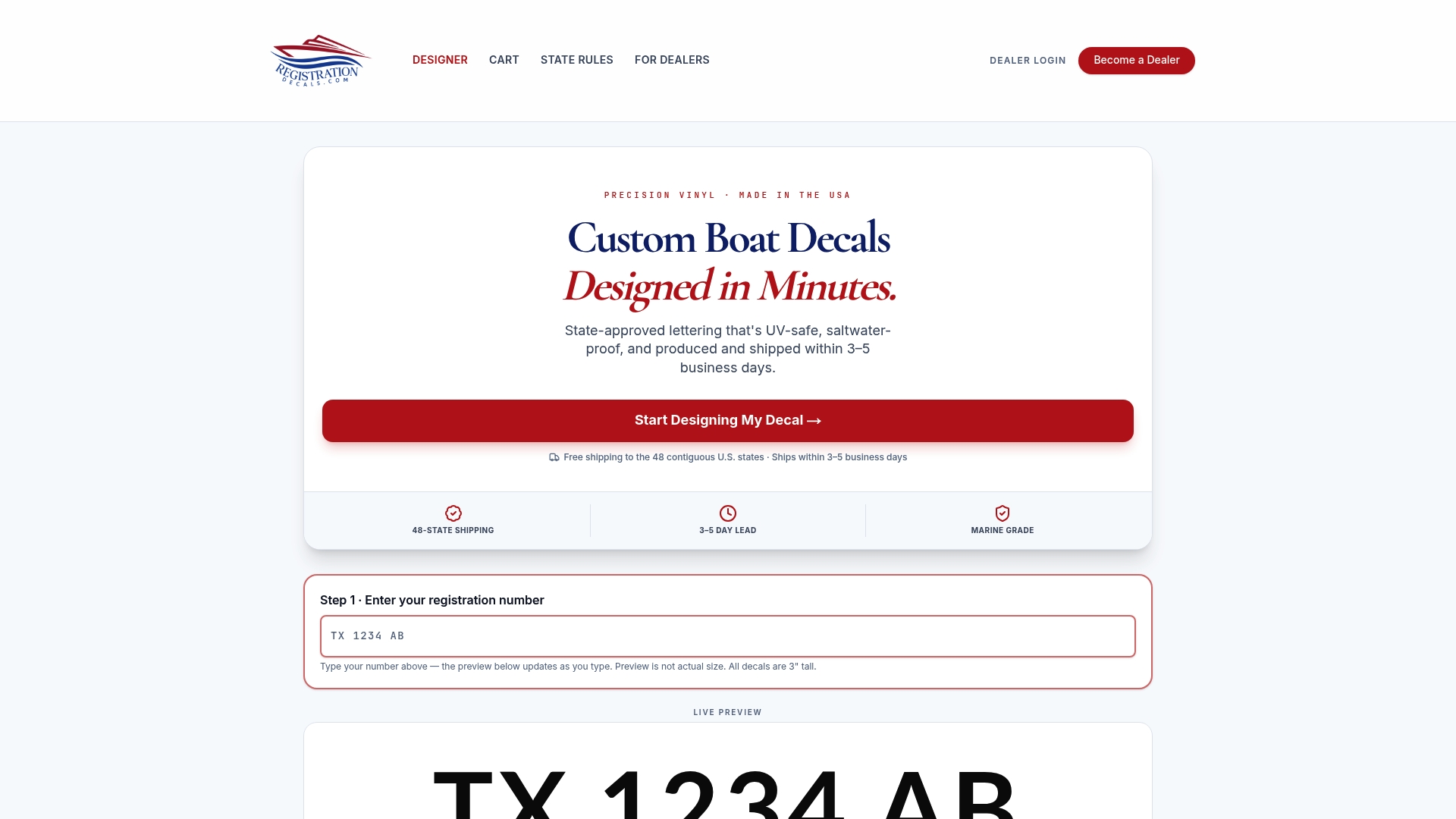
The process is simple. Pull out your Certificate of Number, open the online design tool at Registrationdecals.com, and enter your registration number exactly as it appears on the certificate — spaces, hyphens, and all. Choose a color that contrasts with your hull, select the marine-grade UV-resistant vinyl, and confirm your order. Production runs 3–5 business days, with free shipping across the contiguous United States. For bulk orders (marinas, dealerships, fleet operators), the same tool handles multiple sets without extra friction.
Have your Certificate of Number in front of you when you order. Getting the characters exactly right the first time is the difference between decals that pass inspection and ones that don't.
Useful sources and further reading
- MN DNR Boat/Vessel Registration — Primary source for Minnesota registration procedures, fees, renewal, and title requirements.
- 33 CFR Part 173 — Federal Boating Safety Regulations — Federal display standards for vessel registration numbers, including size, placement, and spacing requirements that Minnesota aligns with.
- California DMV — Vessel Registration (CF Numbers) — Reference for understanding the California CF prefix system and why it doesn't apply outside California.
- How to Apply Vinyl Boat Registration Decals — Registrationdecals — Step-by-step application guide for marine vinyl decals, including surface prep and wet-method instructions.
- Minnesota Boat Registration Decal Requirements — Registrationdecals — State-specific manufacturing and display specs for MN registration numbers and validation decals.