
For legal operation on Massachusetts waterways, choose state-compliant marine-grade vinyl registration decals for your hull numbers, plus a separate decorative nameplate if you want your vessel's name displayed in style. Those are two different things, and mixing them up is the most common mistake boat owners make.
Here is the short version of what you actually need:
- Registration decals carry your state-issued number (e.g., MA 1234 AB) and must meet Massachusetts Environmental Police placement, size, and contrast rules.
- Decorative boat name signs or personalized boat plaques are optional. They go on the transom and identify the vessel by name, not by number.
- Marine-grade vinyl with UV-stable inks is the right material for registration decals. It survives saltwater, sun, and abrasion far better than standard adhesive film.
- Immediate next step: Measure your hull placement area, pull up your state's published spec, then use an online design tool to build and proof your decal before ordering.
Table of Contents
- What's the difference between boat name signs and registration decals?
- What specs do U.S. states require for registration numbers?
- What materials actually hold up at sea?
- How do you order compliant registration decals?
- Installation and maintenance: DIY decals vs. professional installs
- What does it cost, and how long does it take?
- Key Takeaways
- Why compliance beats creativity for registration signage
- Registrationdecals makes state-compliant ordering straightforward
- Where to verify state rules and find reliable references
What's the difference between boat name signs and registration decals?
Boat owners often arrive at a sign shop wanting one thing and legally needing another. A boat name sign (also called a nameplate or transom board) is a decorative piece. It displays whatever name you gave your vessel. It has no legal standing on its own.
A registration decal is what the state requires. Massachusetts, like every other U.S. state, mandates that registered vessels display their state-issued registration number in a specific format on the hull. Missing or incorrect numbers can result in fines or refusal to launch at a public ramp.
You need both if you want full identity and full compliance. The nautical name signage tradition runs deep. Naming a vessel is a centuries-old maritime custom tied to identity and, for many sailors, luck. But that tradition does not satisfy the Massachusetts Environmental Police. Your registration numbers do.
- Transom nameplate: decorative, optional, any font or material you choose.
- Hull registration numbers: mandatory, state-formatted, specific placement and size rules.
- Penalties for non-compliance: fines, boarding by enforcement officers, and denial of launch access.
What specs do U.S. states require for registration numbers?
Every state sets its own rules, and Massachusetts is no exception. Before you order anything, verify the following categories with your state boating agency:
- Minimum character height: Most states require at least 3 inches. Confirm the exact figure with the Massachusetts Environmental Police or check height requirements before ordering.
- Font style: Many states require plain block letters. Decorative or serif fonts are often non-compliant. Check font requirements for your state.
- Color contrast: Numbers must contrast sharply with the hull color. Dark hull, light numbers. Light hull, dark numbers.
- Placement: Numbers go on the forward half of the hull, one on each side. See exact placement rules for a visual template.
- Spacing and hyphenation: The state number format typically separates the letter prefix, numerals, and letter suffix with hyphens or spaces of a specific width.
- Decal expiration: Registration stickers expire. Confirm whether your state issues physical stickers separately or whether your decal set includes them.
- Moving states: If you re-register in a new state, new decals are typically required. Budget for that when planning a move.
Pro Tip: Before you open any design tool, photograph your hull's placement area with a tape measure in frame. That photo becomes your reference when reviewing a scaled proof, and it catches sizing errors before production starts.
What materials actually hold up at sea?
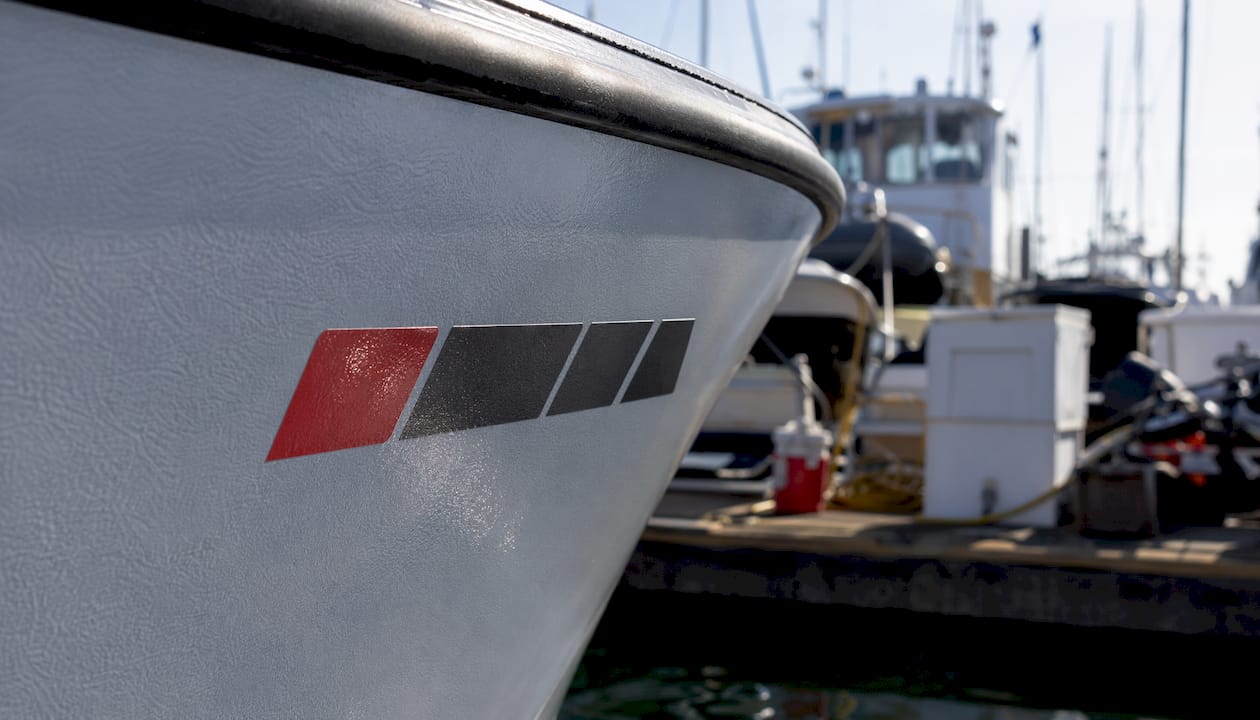
Marine-grade materials are the baseline for any signage that lives on a boat. For registration decals, that means cast marine vinyl with UV-stable inks and a tested adhesive system. Cast vinyl conforms to curved hull surfaces better than calendared (budget) vinyl and resists shrinking and cracking over time. Calendared vinyl costs less but tends to lift at the edges within a season or two in saltwater environments.
For decorative nameplates, the material options expand considerably:
- Marine vinyl decals: Affordable, DIY-friendly, replaceable. Best for registration numbers and simple name graphics.
- 316L stainless steel letters: Corrosion-resistant, long-lasting, professional appearance. Requires mechanical fastening.
- Teak nameboards: Classic aesthetic, hand-finished, requires regular varnishing to maintain the bond and appearance.
- Illuminated acrylic or LED signs: High visibility at night, striking look. Significantly more complex to install.
Gloss finishes hide minor surface texture on the hull but show scratches more readily than matte. For registration decals specifically, gloss tends to read more clearly at a distance, which matters for enforcement visibility.
Pro Tip: For a decorative nameplate on a saltwater vessel, 316L stainless or properly varnished teak will outlast painted aluminum or standard acrylic by years. The upfront cost difference is real, but so is the maintenance savings.
How do you order compliant registration decals?
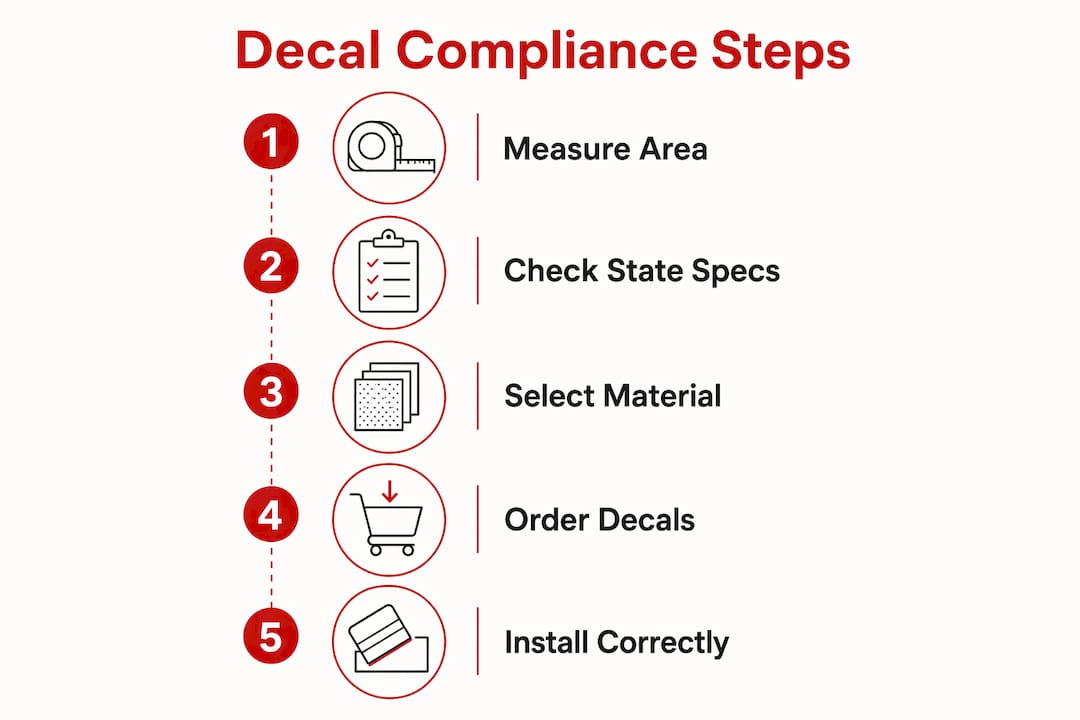
The ordering process has five steps, and skipping any of them is how you end up with a non-compliant decal you cannot legally display.
- Verify state specs. Pull the Massachusetts Environmental Police boating registration page. Write down the required character height, color contrast rule, placement zone, and number format before you touch a design tool.
- Measure and photograph. Measure the forward hull area on both sides. Photograph it with a tape measure visible. This is your proof reference.
- Use an online design tool. Enter your registration number, select a compliant font and color combination, and request a scaled proof. Registrationdecals's online design tool walks through this step with number entry and color selection built in.
- Review the proof carefully. Check character height against the state minimum, confirm color contrast, and verify the number format matches your registration card. Request revisions before approving.
- Approve and confirm production. Once the proof matches your state spec, approve it. Production on custom registration decals typically runs a few business days, which matters if you have a launch date on the calendar.
Marinas ordering for a fleet should build in a buffer. A 10-boat order with individual registration numbers still moves through production quickly, but proof review for each vessel takes time.
Installation and maintenance: DIY decals vs. professional installs
Vinyl registration decals are a legitimate DIY project when you follow the right process. Illuminated or metal nameplates are not.
For vinyl decal installation:
- Clean the hull surface thoroughly. Remove wax, oil, and any residue. Surface contamination is the leading cause of early adhesive failure.
- Apply only when the surface temperature is between 50°F and 90°F. Cold surfaces prevent the adhesive from bonding; hot surfaces cause the vinyl to stretch during application.
- Use the installation template that ships with your decals to position numbers accurately before committing the adhesive.
- Allow 24–72 hours of cure time before the vessel goes in the water.
- Inspect edges annually. Lift at a corner edge is the first sign of adhesive failure.
When to hire a professional:
Illuminated signs involve routing wiring through the hull, selecting IP-rated waterproof connectors, and integrating with onboard power. Mistakes cause water intrusion and electrical faults. The wiring and mounting complexity alone justifies professional installation for any sign with electrical components.
Pro Tip: Never drill through the hull for a sign mount without consulting a marine professional. A misplaced hole in a fiberglass hull can compromise structural integrity and void your insurance.
Maintenance schedule: Clean decals with a mild marine soap, not petroleum-based solvents. Replace when registration changes, when edges show significant peeling, or when UV fading makes numbers hard to read from 50 feet.
What does it cost, and how long does it take?
Standard production for custom registration decals runs a few business days from proof approval. That timeline covers most individual orders and small marina runs. Rush options may be available for an additional fee when a launch date is tight.
Cost drivers for registration decals and nameplates:
- Material: Marine vinyl decals are the most affordable. Metal or illuminated signs cost significantly more.
- Size and letter count: Larger characters and longer names use more material.
- Bulk orders: Marinas and dealerships ordering multiple sets typically qualify for volume pricing.
- Shipping: Free domestic shipping is available across the contiguous U.S. from Registrationdecals. Remote or expedited delivery adds cost and lead time.
When moving states, factor replacement decal costs into your re-registration budget. New state, new number format, new decals. That is not optional.
Key Takeaways
State-compliant marine-grade vinyl registration decals are the legal and practical core purchase for any registered vessel in Massachusetts.
| Point | Details |
|---|---|
| Two types of signage | Registration decals are legally required; decorative nameplates are optional but culturally common. |
| State specs vary | Verify character height, font, color contrast, and placement with your state boating agency before ordering. |
| Material matters | Cast marine vinyl with UV-stable inks outperforms calendared vinyl in saltwater and sun exposure. |
| Production timeline | Custom registration decals typically ship within 3–5 business days of proof approval. |
| Registrationdecals | Offers an online design tool, state-formatted proofs, and free shipping across the contiguous U.S. |
Why compliance beats creativity for registration signage
The boating community puts real thought into vessel names and how they look on the water. That instinct is worth respecting. But there is a practical line between the registration number on your hull and the nameplate on your transom, and blurring it creates real problems.
Registration numbers are not a design opportunity. They are a legal identifier, and enforcement officers read them at a distance, often in poor light or from a moving vessel. A decorative font that looks sharp at the dock may be genuinely hard to read from 100 feet away. Marinas that manage fleets know this well: standardized, legible decals reduce friction at every inspection point.
The better approach is to keep registration decals strictly compliant and put creative energy into a separate nameplate. A well-made teak board or stainless nameplate on the transom can be as distinctive as you want. It does not have to satisfy any state spec. That separation protects you legally and gives you full creative latitude where it actually belongs.
Registrationdecals makes state-compliant ordering straightforward
Getting registration decals right means matching your state's exact specs on character height, font, color, and placement. Registrationdecals handles that process with an online design tool built specifically for registration numbers: enter your number, choose a compliant font and color, and receive a scaled proof before anything goes to production.
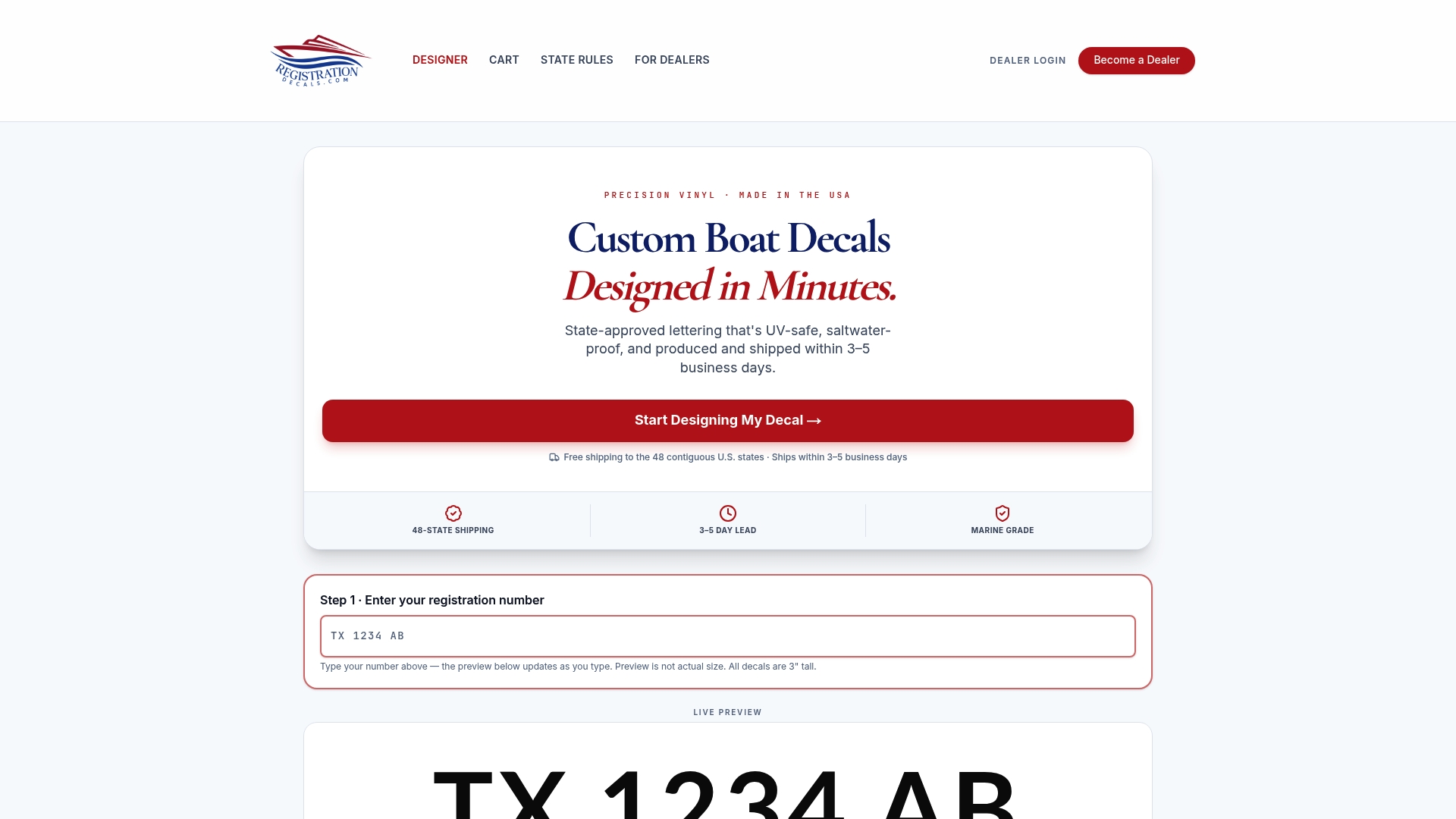
Decals are produced on marine-grade, UV-resistant vinyl with adhesives rated for saltwater exposure. Production runs 3–5 business days, and shipping is free across the contiguous U.S. Marinas and dealerships can order in bulk with individual proofs for each vessel, keeping fleet compliance organized without the back-and-forth of managing multiple vendors. Start your order at registrationdecals.com and have a compliant proof in hand before your next launch date.
Where to verify state rules and find reliable references
Before you finalize any order, confirm your state's current requirements directly:
- Massachusetts Environmental Police (MEP): The primary authority for Massachusetts vessel registration rules, including number placement, height, and format. Search "Massachusetts boat registration requirements" on the MEP site for the current spec sheet.
- Registrationdecals answer pages: Practical guidance on number height, placement templates, and font compliance consolidate the most common questions in one place.
- Your approved proof: Save a copy. If an officer questions your decals, the proof documents that your order matched the state spec at the time of production.
- Boating trade publications: Sources like Boating magazine cover installation techniques and material guidance for both registration decals and decorative signage.
This article provides general information about boat registration signage. Confirm current requirements with the Massachusetts Environmental Police or your state's boating authority before ordering.