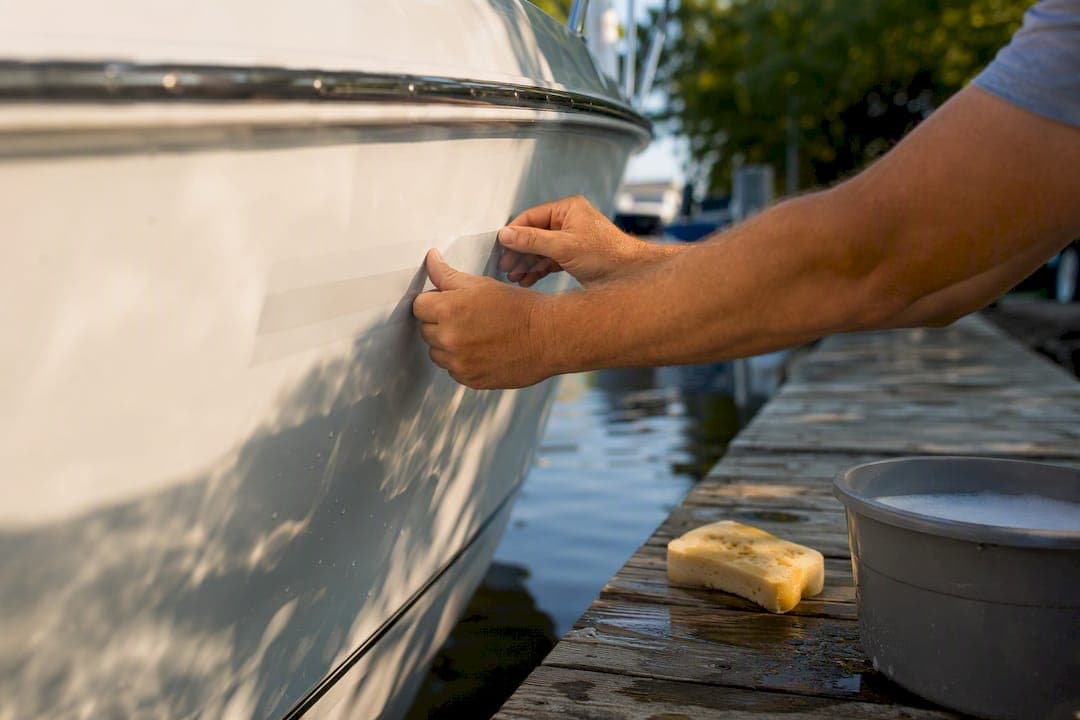
Yes, if Delaware is your boat's state of principal use for 60 or more consecutive days, you must register it and display "DL" prefixed registration numbers. The numbers need vertical block letters at least 3 inches high, placed on both sides of the forward half of the hull in a color that contrasts sharply with the boat's finish.
- Registration is required once your boat sits on Delaware waters for 60+ consecutive days.
- Numbers follow the pattern DL 1234 AB or DL-1234-AB, minimum 3 inches tall, readable left to right.
- Validation decals go within 6 inches of the number, in line with it.
- Register or renew through DNREC or an authorized agent. Full process details are below.
Key Takeaways
Delaware requires boat registration once the vessel's principal use exceeds 60 consecutive days, and the DL-prefixed numbers must meet exact size, font, and placement standards to pass inspection.
| Point | Details |
|---|---|
| Confirm principal use | Register with Delaware once your boat is on state waters 60+ consecutive days. |
| Match the display specs | Use 3-inch vertical block letters with the DL prefix and strong hull contrast. |
| Renew on schedule | Renewal windows open October 1; registrations run up to three years at triple the annual fee. |
| Handle transfers correctly | Registration numbers stay with the boat; in-person transfers can skip the notarized bill of sale. |
| Order decals built to spec | Registrationdecals produces Delaware-compliant, marine-grade decals in 3 to 5 business days with free contiguous US shipping. |
Table of Contents
- Delaware Boat Registration Numbers: Display Requirements
- How to Register or Renew a Boat in Delaware
- Special Cases: Nonresidents, Transfers, and Dealer Boats
- Avoiding Citations: Common Display Mistakes
- Choosing Decals That Hold Up on Delaware Water
- Sources
Delaware Boat Registration Numbers: Display Requirements
Delaware's rules on registration-number display aren't suggestions. They're spelled out in 7 Del. Admin. Code §3100, and a warden checking your boat at a ramp or a marina is comparing what's painted on your bow against a specific legal standard, not eyeballing it for general legibility.
Here's what that standard actually requires:
- Letter height and style. Numbers must be vertical block letters, minimum 3 inches high. Script fonts, italics, or anything decorative fails the requirement even if it's technically readable.
- The DL prefix and spacing. Every Delaware number starts with "DL," followed by four digits and two letters, separated by a space or hyphen: DL 1234 AB or DL-1234-AB. Skip the hyphen entirely and you're out of compliance.
- Placement on the hull. Numbers go on both the port and starboard sides of the forward half of the vessel, positioned as high above the waterline as practical, and oriented to read left to right.
- Color contrast. The lettering has to contrast sharply against the hull. White numbers on a white hull, or dark gray on navy, routinely draw citations because DNREC and Boat-Ed both flag poor contrast as a common failure point.
- Decal placement. Your current validation decal mounts within 6 inches of the registration number and lines up with it, not off on its own somewhere on the hull.
- No extra clutter. No other numbers should appear on either side of the bow. A boat name or hailing port is fine elsewhere, but nothing that could be confused with the registration sequence.
Pro Tip: Measure twice before you order. A decal cut at 2.75 inches instead of 3 inches looks fine from ten feet away but will still fail inspection, and you'll be paying for a replacement set.
How to Register or Renew a Boat in Delaware
Registering a boat in Delaware runs through a few channels, and which one makes sense depends on how fast you need the paperwork. You can register online, in person at an authorized agent, or by mail directly to DNREC. Renewal windows open October 1 each year, and no registration runs longer than three years at a stretch.
Fees scale with vessel length according to Delaware's official registration classes and fee tiers.
Choosing a multi-year registration option costs proportionally more than the annual rate. Fees for duplicate registration cards and transfers also apply and can be handled at agent locations.
One credential worth knowing about separately: anyone born on or after January 1, 1978 needs an approved boating safety course certificate to legally operate a motorized vessel. That certificate has nothing to do with your registration and doesn't expire, but you're required to carry it while operating the boat. Keep your registration card onboard at all times. It's your legal proof of registration, separate from the safety certificate and separate from the decal on your hull.
Special Cases: Nonresidents, Transfers, and Dealer Boats
Not every boat on Delaware water needs a Delaware registration, and knowing the exceptions saves you from either overpaying or getting cited.
- The 60-day rule in practice. If you trailer your boat in for a weekend regatta and take it home, you're fine on your home state's registration. Dock it at a Delaware marina for the summer, though, and you cross into "state of principal use" territory once you pass 60 consecutive days.
- Tidal Access Boat Ramp Certificate. Out-of-state boats using Delaware's tidal launch sites short-term can often get by with a Tidal Access Boat Ramp Certificate instead of full registration, as long as that 60-day threshold isn't crossed.
- Selling or transferring a boat. The registration number stays attached to the vessel, not the owner. A notarized bill of sale is required for the transfer unless both buyer and seller show up in person with valid photo ID at a registration agent, which skips the notary step entirely.
- Dealer and demo boats. Dealers typically operate under separate demo provisions rather than individual registrations for each boat on the lot, so don't assume a dealership vessel follows the same numbering timeline as a personally owned one.
Avoiding Citations: Common Display Mistakes
Most citations for registration-number violations trace back to a small handful of repeat offenses, and nearly all of them are fixable in an afternoon.
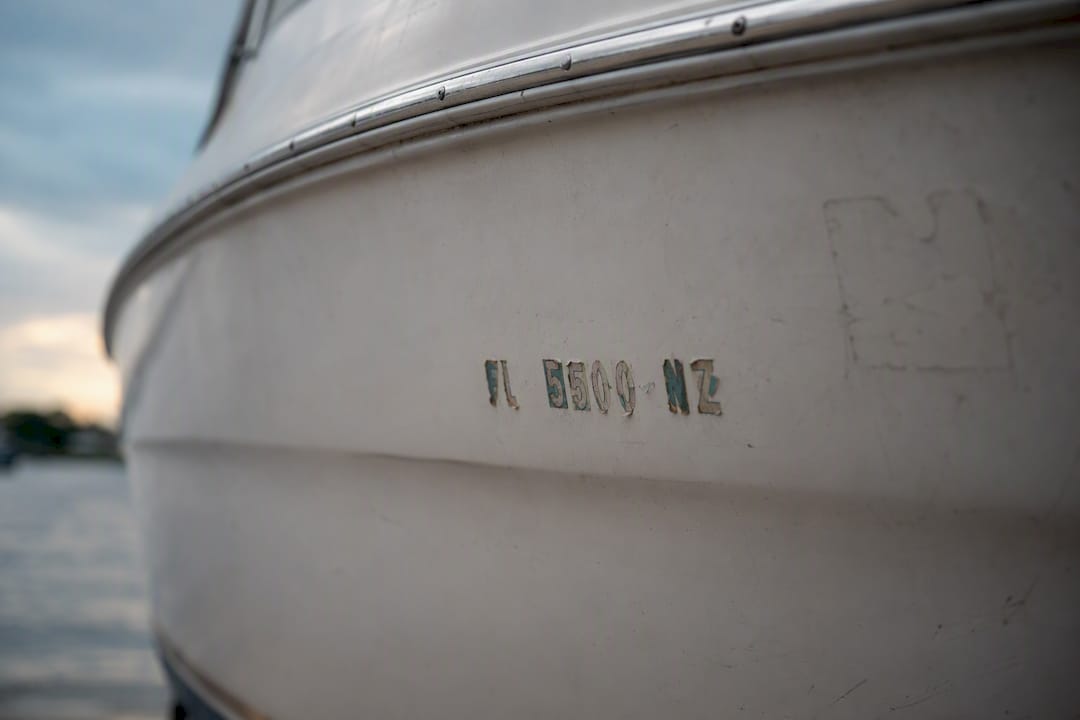
The usual suspects: letters under the 3 inch minimum, a font that isn't a true vertical block style, weak contrast between the numbers and the hull color, numbers mounted too low relative to the waterline, extra numbers cluttering the bow, and decals that expired months ago but never got peeled off.
Placement matters as much as size. Curved bow sections and rub rails distort lettering and accelerate peeling, so pick the flattest section of the forward hull you can find. Clean the surface thoroughly before applying anything, and think about where your boat typically takes fender contact at the dock. Decals mounted right where a fender rubs every time you tie up won't last a season.
Keep your registration card onboard as your official proof of registration. The decal on the hull only tells an officer or dockside inspector when your registration expires, so if it's peeling or faded past readability, that's a compliance problem even if your paperwork is current.
Pro Tip: If a decal is more than half lifted at the edges, replace it rather than trying to press it back down. A decal that's failing at the corners usually fails completely within weeks, and a citation for an unreadable expiration decal costs more than a new one.
Choosing Decals That Hold Up on Delaware Water
Getting the size and font right solves the legal side. Getting the material right solves the part that actually costs you money over time, which is why what the decal is made of matters as much as what it says.
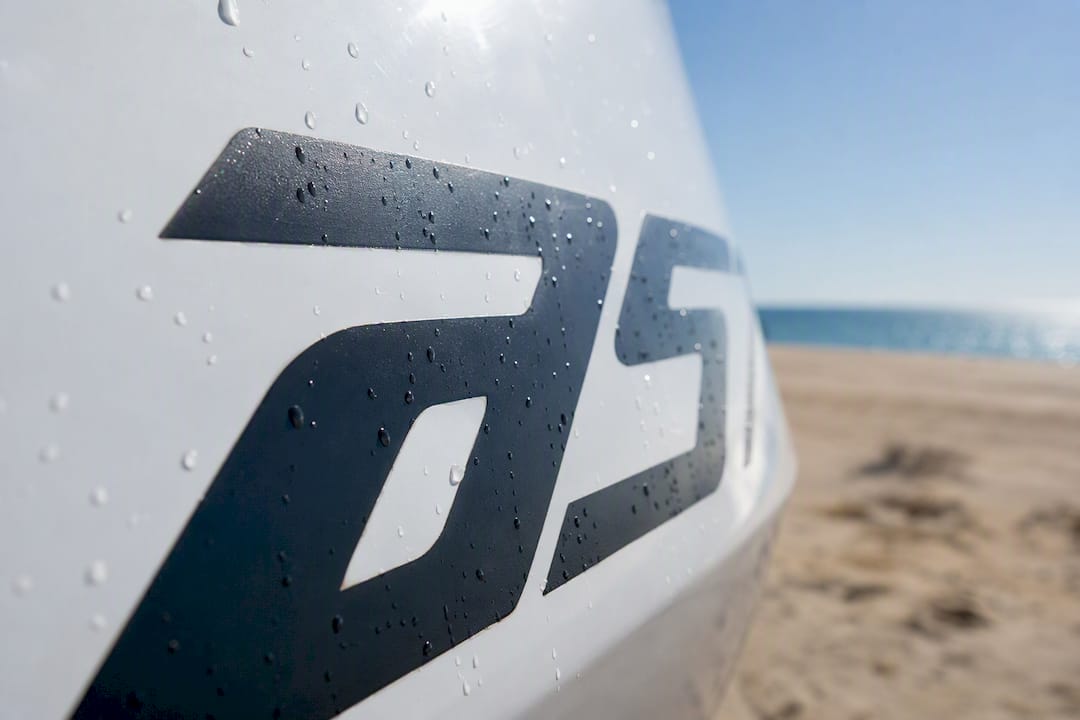
Marine-grade vinyl that's UV-safe and saltwater-proof handles the Delaware Bay's salt exposure and summer sun far better than generic sign vinyl, which tends to fade or curl at the edges within a season or two on Delaware's tidal waters. When you're picking colors, choose a shade that reads as a strong contrast against your specific hull color rather than a generic "boat blue" or "safety red." A dark hull needs a light number; a white or light hull needs a dark one, and there's no gray area DNREC or the Boat-Ed display standard will accept.
Registrationdecals builds decals to those exact specifications through an online design tool where you enter your registration number, pick your font and colors, and get a proof before ordering. Production runs 3 to 5 business days with free shipping across the contiguous United States.
Getting a decal that's the right size on paper doesn't guarantee it survives a Delaware summer on the water. Material and application matter just as much as the numbers printed on it.
Application checklist for longer-lasting results:
- Clean and degrease the mounting surface completely before applying.
- Avoid curved sections, rub rails, and any spot that regularly contacts a fender.
- Apply at the temperature range the manufacturer recommends, and press out air bubbles evenly rather than working from one edge.
- Check the edges after the first week on the water. Lifting early usually means the surface wasn't fully clean.
Why Correct Numbering Actually Matters
Boat owners ask us the same question constantly: does the font really matter that much? It does, because a citation for a display violation is entirely avoidable, and it's usually the surface prep or the font choice that fails first, not the vinyl itself. For the legal specifics, DNREC is the final word. For getting decals that meet those specifics and hold up on the water, that's where we can help.
Get Delaware-Compliant Decals Without Guessing on Specs
Ordering a boat decal that meets Delaware's 3-inch, block-letter, high-contrast standard usually means either trial and error with a local sign shop or hoping a generic online template happens to match state code. Registrationdecals skips both problems: every decal is built on a design tool that locks in the correct height, font, and spacing for Delaware before you ever submit an order.
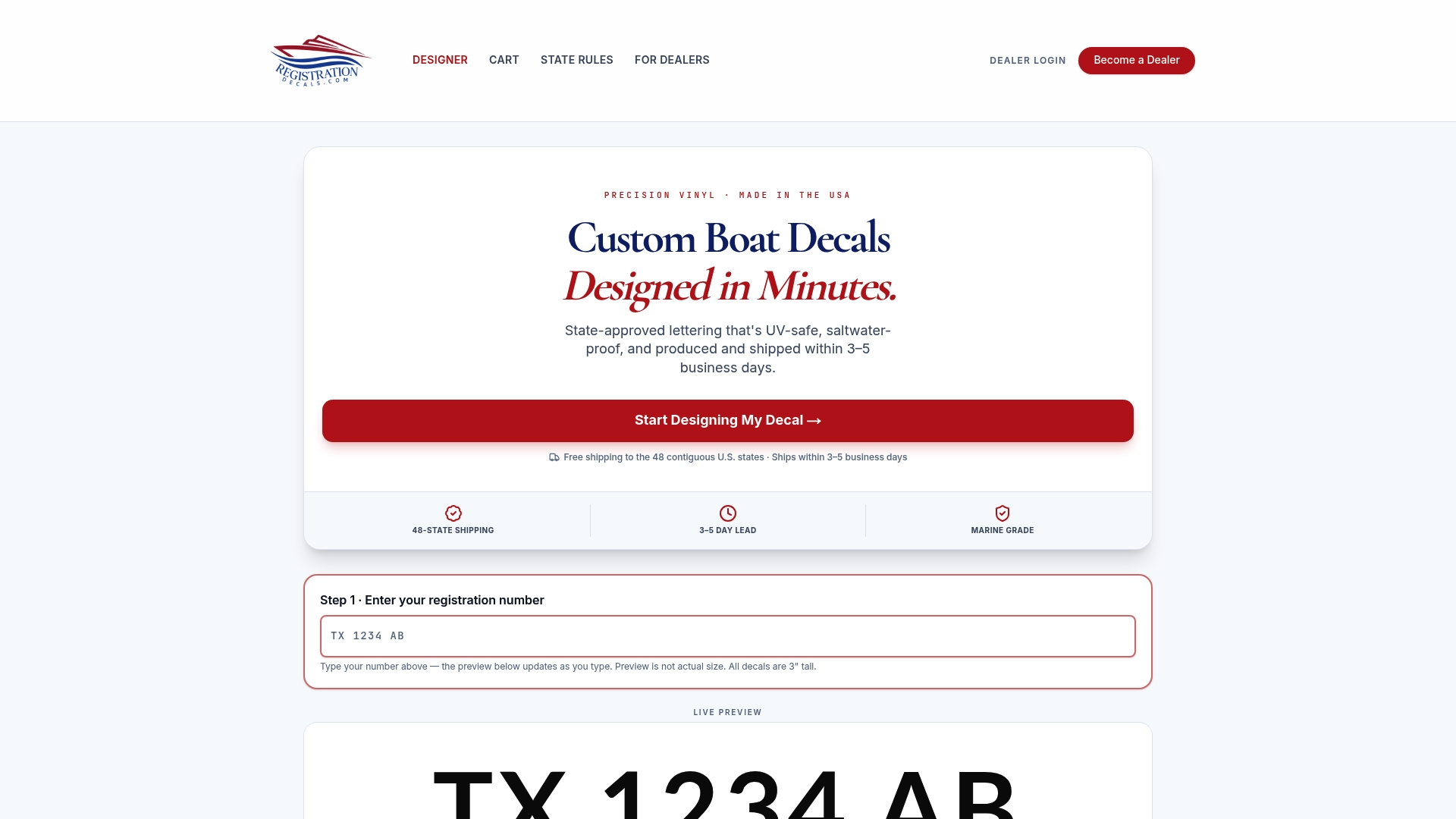
Enter your DL registration number, pick a color that contrasts with your hull, and the marine-grade vinyl is UV-safe and saltwater-proof for the long haul on Delaware's tidal waters. Orders ship free across the contiguous US and produce in 3 to 5 business days, so you're not waiting weeks before you can legally get back on the water. Visit the Delaware regulations page to confirm your specs, then head to the design tool to order your set today.
Sources
- Boating Registration - DNREC - Delaware.gov
- Displaying the Registration Number and Validation Decals - Boat-Ed
- Delaware Regulations - Title 7 3100