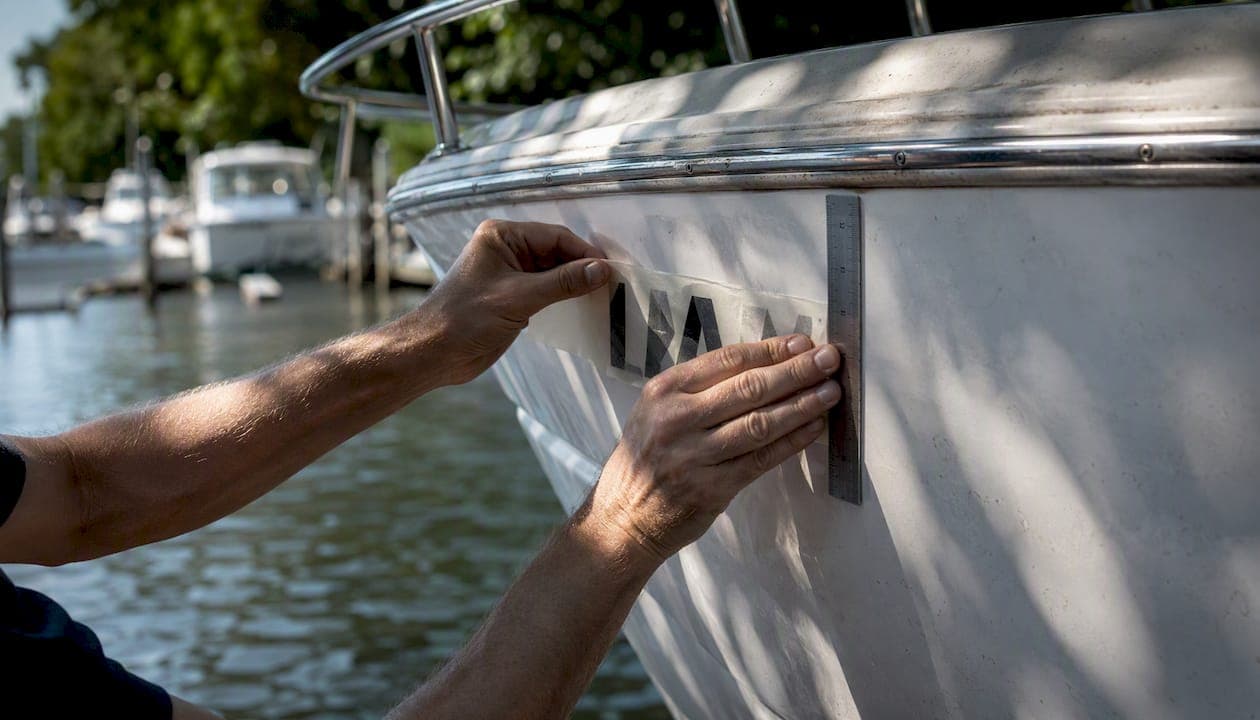
Your validation decal goes within six inches of your registration number, on the forward half of the vessel, on the port (left) side at minimum. Most states require this exact positioning, though some states demand decals on both sides. Before you peel anything, check your state's boating agency page — the distance requirement alone varies enough between states to get you cited if you guess wrong.
- Place the validation decal within 3–6 inches of your registration number (exact distance depends on your state).
- Port (left) side is the standard minimum; some states require decals on both sides.
- Registration numbers go on the forward half of the hull, in block characters at least the federally required minimum height.
- Check your state agency: Florida FLHSMV, Ohio DNR, Texas TPWD.
Pro Tip: Save your state's boating registration page as a bookmark on your phone. Rules update at renewal cycles, and having the official page handy takes 30 seconds to verify before you apply new decals.
Key Takeaways
Correct boat registration sticker placement requires the validation decal within your state's specified distance from the registration number, on the forward half of the vessel, in plain block characters at least 3 inches tall.
| Point | Details |
|---|---|
| Distance from registration number | Most states require the decal within 3–6 inches; Texas specifies exactly 3 inches, Ohio requires 6 inches. |
| Forward-half and 3-inch minimum | Numbers must appear on the forward half of the hull in block characters at least 3 inches tall per federal rules. |
| Remove expired decals | Layer stacking triggers enforcement stops; remove old decals before applying new ones for clean adhesion. |
| High-contrast materials matter | Numbers that blend into a dark or wet hull fail legibility standards even at the correct size. |
| Registrationdecals | Offers marine-grade, UV-safe, saltwater-proof custom decals with 3–5 day production and free U.S. shipping. |
Table of Contents
- What does federal law say about boat registration sticker placement?
- How do placement rules differ across common states?
- How do you apply registration decals so they pass inspection?
- What mistakes get boat owners cited during inspections?
- How do you choose decals that are durable and state-compliant?
- Registrationdecals makes compliant ordering straightforward
- Sources
What does federal law say about boat registration sticker placement?
The federal baseline comes from 33 CFR Part 173, which sets the floor that every state numbering system must meet or exceed. Registration numbers must appear on the forward half of the vessel, in plain block characters at least 3 inches high, in a color that contrasts with the hull. Spaces or hyphens separate the letters from the numbers. The validation sticker must be displayed within a short, specified distance of the registration number as required by federal regulations.
Federal regulations under 33 CFR Part 173 require that the validation sticker be displayed within six inches of the registration number on vessels subject to state numbering systems. Numbers must be in plain block characters, at least 3 inches in height, and in a color that contrasts with the hull background.
States establish additional rules on top of this federal minimum. Some require a shorter distance, specify port-side placement only, or require decals on both sides of the bow. None can go below the federal minimum. That means a 2-inch number or a sticker placed 8 inches from the registration number fails regardless of which state you're in.
One detail that catches boat owners off guard: backing plates are explicitly permitted under federal guidance when the hull color or curvature would otherwise impair visibility. If your hull is dark and your numbers are close to the waterline, a contrasting backing plate keeps you compliant and readable from a patrol boat.
How do placement rules differ across common states?
The table below covers the most frequently referenced states. Exact language comes from each state's official agency page.
| State | Decal sides required | Distance from registration number | Key notes |
|---|---|---|---|
| Florida | Both sides (port and starboard) | Immediately before or after the number | Port side is the primary rule; expired decals must be removed. FLHSMV |
| Texas | Both sides | Exactly 3 inches toward the stern of the TX number | In line with the number, not above or below. TPWD |
| Ohio | Both sides | 6 inches from the OH number on each side | Decal colors change periodically for visual validation. Ohio DNR |
| Wisconsin | Varies by vessel type | Within 6 inches | Remove old stickers before applying new ones for adhesion and legibility. Wisconsin DOT |
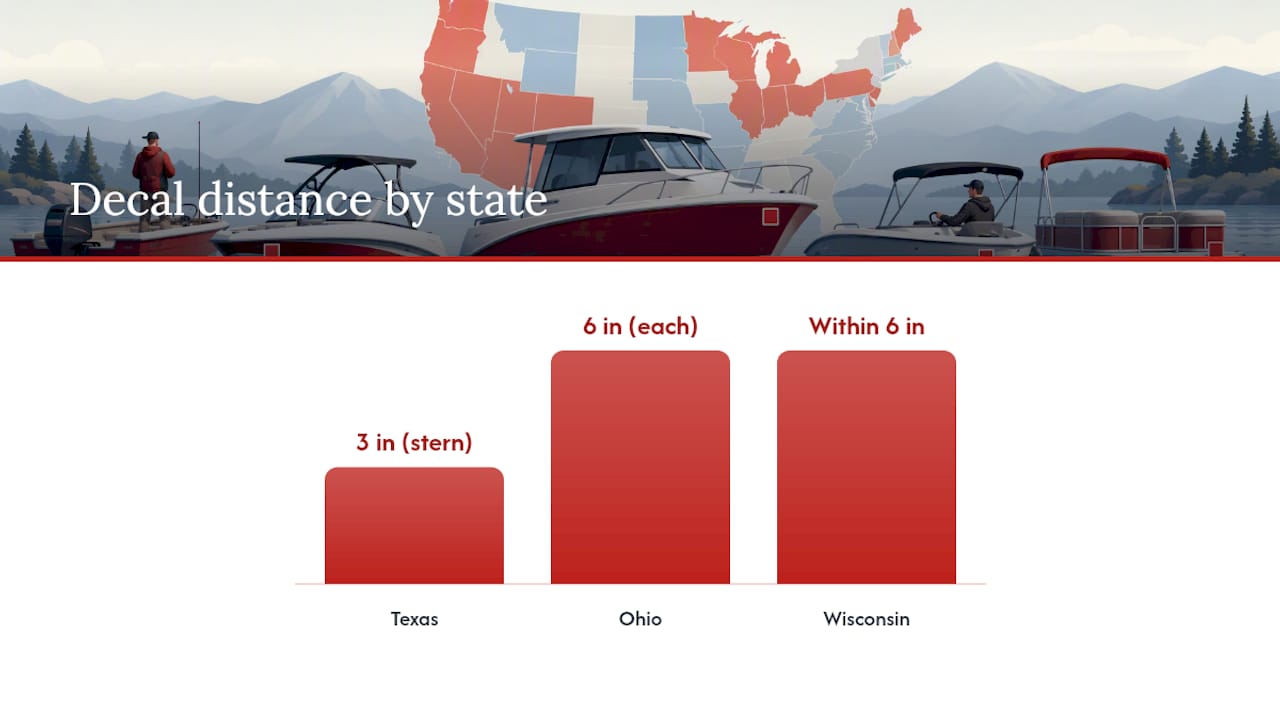
When one state says "within 6 inches" and another specifies "exactly 3 inches toward the stern," the practical difference is small but legally meaningful. Texas officers can cite you for a decal placed 4 inches out. Ohio officers look for the decal at the 6-inch mark, not flush against the number. Read your state's exact phrasing, not a paraphrase of it.
A few other patterns worth knowing:
- Antique or documented vessels often have exemptions from standard numbering requirements; check your state's specific carve-outs.
- If you move states, your registration number changes entirely. New decals are required when you re-register in the new state.
- Jet ski sticker placement follows the same forward-half and distance rules as any other motorized vessel in most states. Jet ski number requirements mirror the 3-inch minimum and port-side decal standard.
How do you apply registration decals so they pass inspection?
Prep and alignment matter as much as the decal itself. A correctly sized sticker applied crooked or over a dirty surface can still fail a visual inspection.
Materials you need:
- Isopropyl alcohol (70% or higher) and a lint-free cloth
- Low-tack masking tape for dry-fitting
- Measuring tape or ruler
- Squeegee or credit card
- Marine-grade decal sized to your state's specs
Steps:
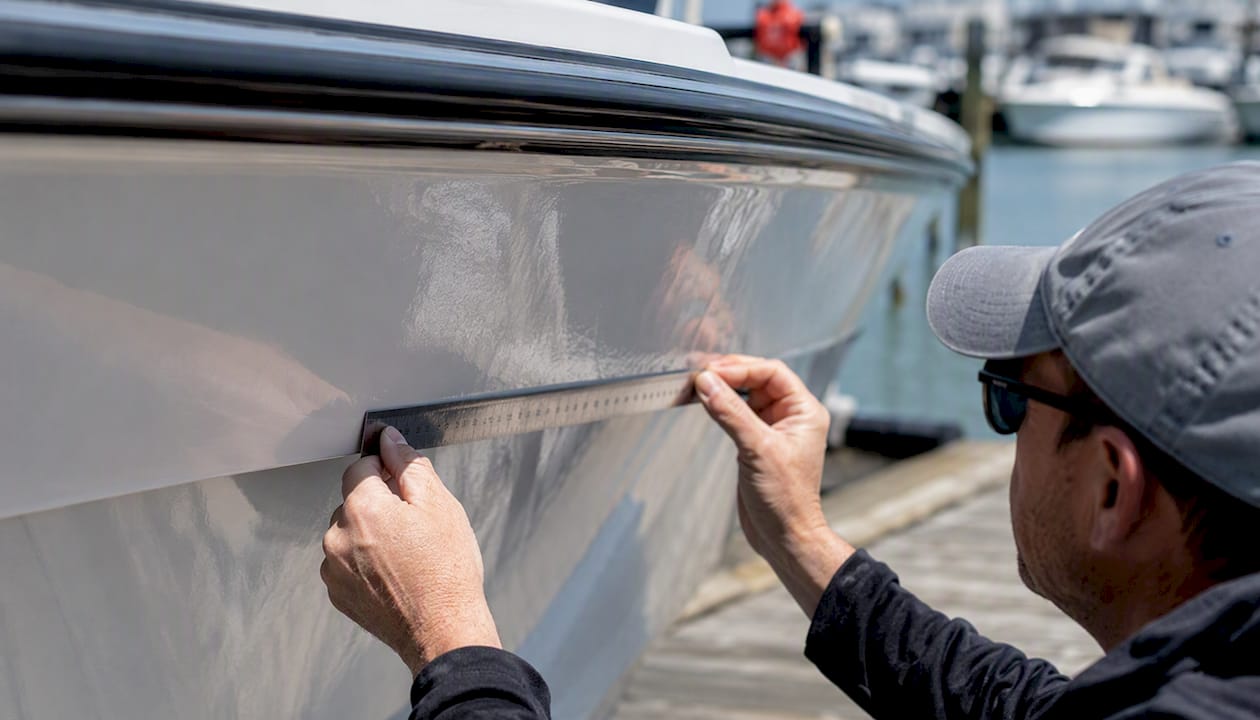
- Measure and mark the exact placement point using a ruler. For Texas, that's 3 inches toward the stern from the last character of your TX number. For Ohio, it's 6 inches from the OH number.
- Dry-fit the decal with low-tack tape. Step back and check alignment from 10 feet away — this is how an officer sees it.
- Clean the hull surface with isopropyl alcohol and let it dry fully. Any wax, salt residue, or moisture under the decal causes lifting within weeks.
- Peel the backing, align the decal to your marked position, and press the center first.
- Squeegee outward from center to edges to push out air bubbles.
- Remove the application liner slowly at a low angle. If any edge lifts, press it back immediately.
- Final check: legibility from 10 feet, correct distance from the registration number, no bubbles.
Pro Tip: On curved hulls, warm the decal slightly with a heat gun on low for 10–15 seconds before applying. It conforms to the curve instead of bridging across it, which prevents edge lifting in saltwater.
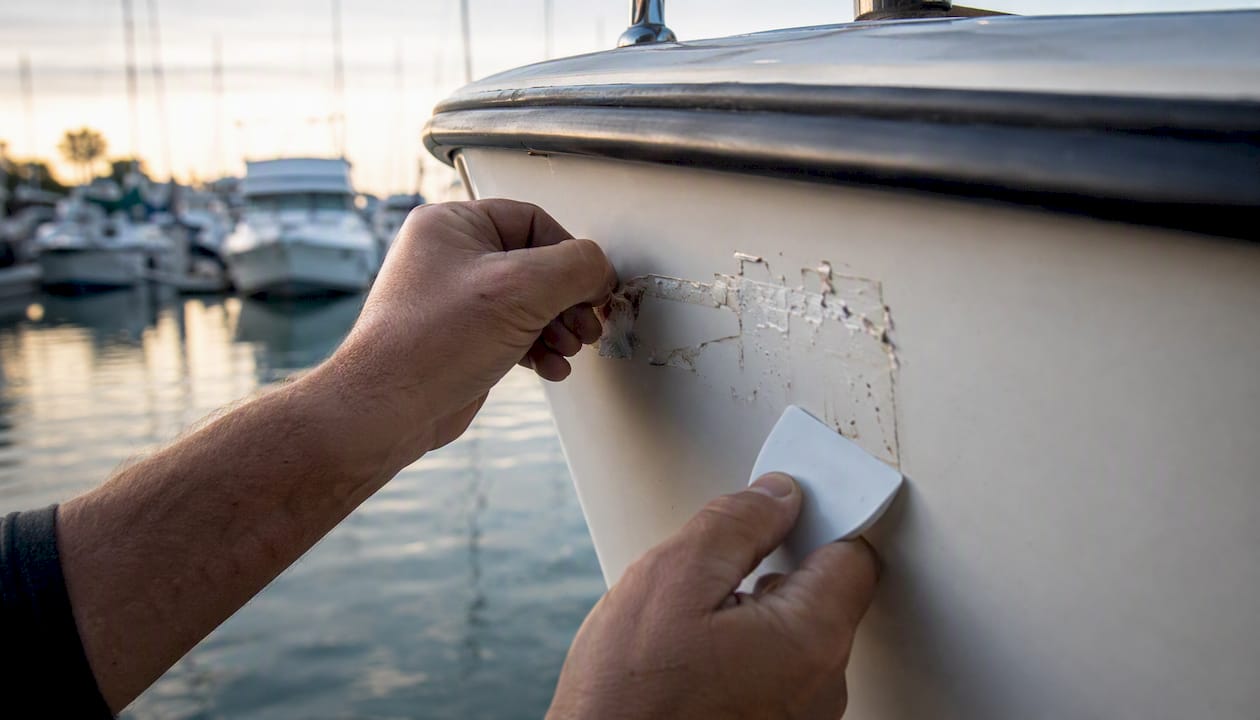
For expired decal removal, use a plastic scraper and adhesive remover to avoid gouging the gelcoat. Wisconsin DOT guidance specifically recommends removing old stickers before applying new ones to maintain adhesion and legibility. Layering a new sticker over a faded one is one of the most common enforcement triggers on the water.
What mistakes get boat owners cited during inspections?
Officers checking registration compliance look for a short list of problems. Most citations come from the same handful of errors.
- Decal too far from the number. Placing it 8 inches out when your state requires 6 inches is a citable violation, even if the decal is current.
- Wrong side. Port is left when facing forward. Starboard is right. Putting the decal on the starboard side only in a state that requires port-side placement fails inspection.
- Decorative lettering near the number. Boat name graphics, custom fonts, or decorative elements placed adjacent to the registration number create confusion. Federal rules require the number to stand alone in plain block characters. See what separates decorative graphics from required numbers if you're unsure where to position your boat name.
- Insufficient contrast. Numbers that blend into a dark hull when wet fail the legibility standard even if they're the right size. Industry guidance is direct on this: choose colors that stay readable when damp.
- Undersized numbers. Anything below 3 inches in character height is non-compliant under federal rules.
If you're stopped, carry your registration card and certificate of title. Officers can issue warnings or citations depending on the violation and your state's statutes. Replacing a non-compliant decal promptly after a warning typically resolves the issue before a follow-up inspection.
How do you choose decals that are durable and state-compliant?
The material matters as much as the placement. A decal that fades, peels, or loses contrast within a season puts you back in violation territory at your next renewal.
Look for these features when ordering:
- Marine-grade vinyl rated for UV exposure and saltwater immersion. Standard vinyl degrades quickly in direct sun and salt spray.
- UV-resistant inks that hold color contrast through multiple seasons. Faded numbers fail the legibility standard even if they were compliant when applied.
- Saltwater-proof adhesive that bonds to fiberglass, aluminum, and painted hulls without lifting at the edges.
- Minimum 3-inch character height to meet the federal floor, with sizing options that accommodate your hull's available space.
- Plain block character fonts that match federal requirements. The font requirements for registration numbers are specific: no script, no decorative faces.
For curved hulls or hulls with dark paint, consider a backing plate sized to maintain contrast. The 33 CFR guidance explicitly allows backing plates where visibility would otherwise be impaired. Before finalizing your order, pull up your state agency page one more time and confirm the exact distance and side requirements. State rules update at renewal cycles, and a decal ordered to last year's spec can still be wrong.
For a broader look at compliant material options, custom registration decal alternatives covers the tradeoffs between standard flat vinyl, domed numbers, and backing-plate configurations.
The placement rules are clear, but the execution is where most owners slip up
Most registration violations aren't from ignorance of the rules. They're from applying a decal by eye instead of by ruler, skipping surface prep, or assuming last year's placement is still correct after a state rule update. The federal floor is consistent. The state variations are narrow but enforced. Getting it right the first time takes about 15 extra minutes and a ruler.
Registrationdecals makes compliant ordering straightforward
Knowing the rules is half the job. Getting decals that actually hold up to the conditions is the other half.
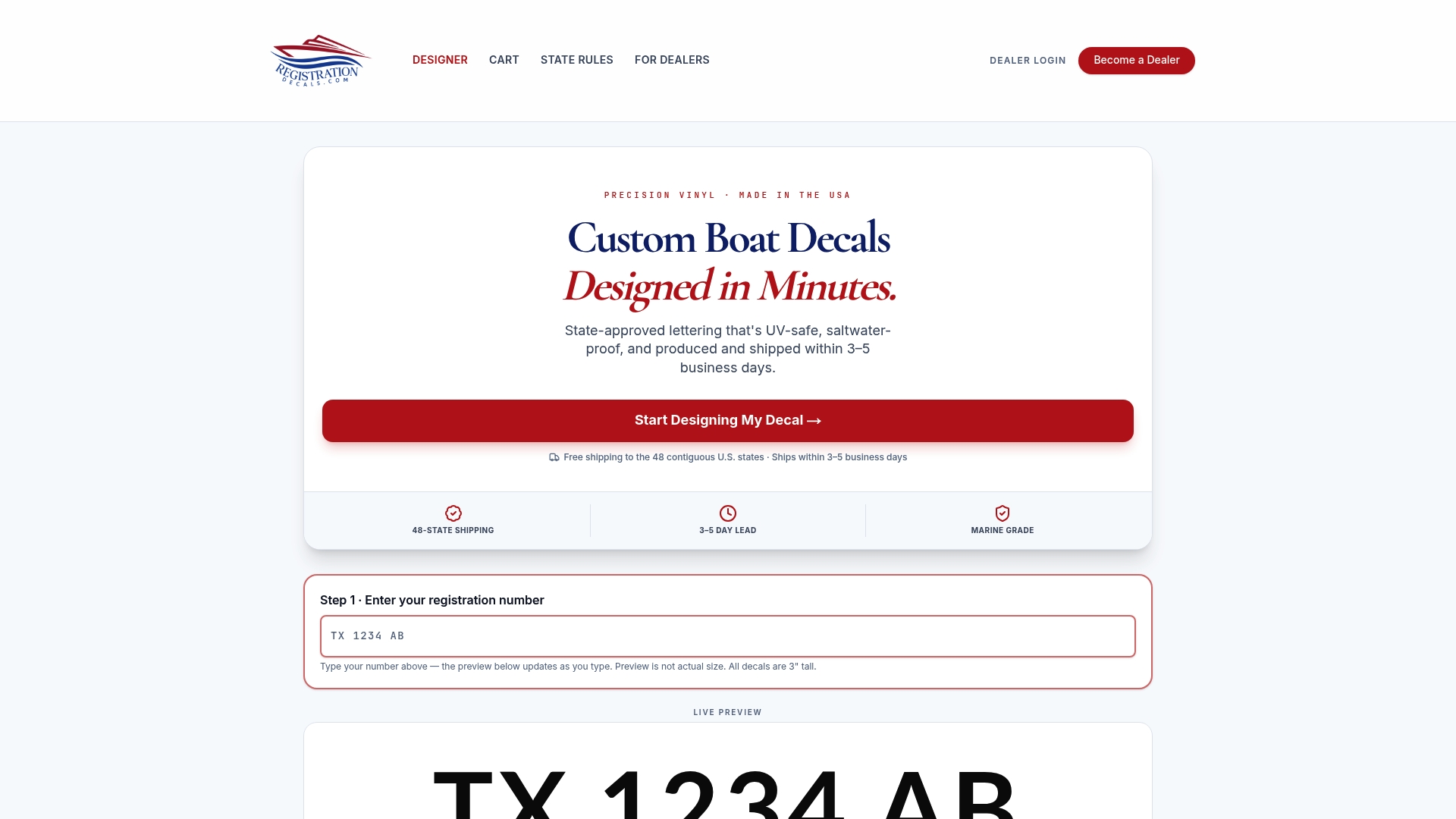
Registrationdecals produces custom marine-grade registration decals built to meet federal and state specs: UV-safe inks, saltwater-proof adhesive, plain block characters in the sizes and colors your state requires. The online design tool lets you enter your registration number, pick your colors, and preview the finished decal before you order. Production runs 3–5 business days, with free shipping throughout the contiguous U.S.
Before you finalize your order, verify your state's exact distance requirement and which sides need decals. Registrationdecals also provides detailed placement guidance for every state, so you're not guessing when you apply. Marina operators and dealers can access bulk pricing through the wholesale program.
Sources
Bookmark these pages and check them at each renewal. State language is the final authority, not summaries of it.
- SUBCHAPTER S—BOATING SAFETY (CFR excerpt)
- Boat Registration Number Display Rules: Size, Placement & Format (2026)
Carry your registration card every time you operate. If you're unsure whether your state's rules have changed since your last renewal, your state's boating agency page takes two minutes to check and is always the definitive source.