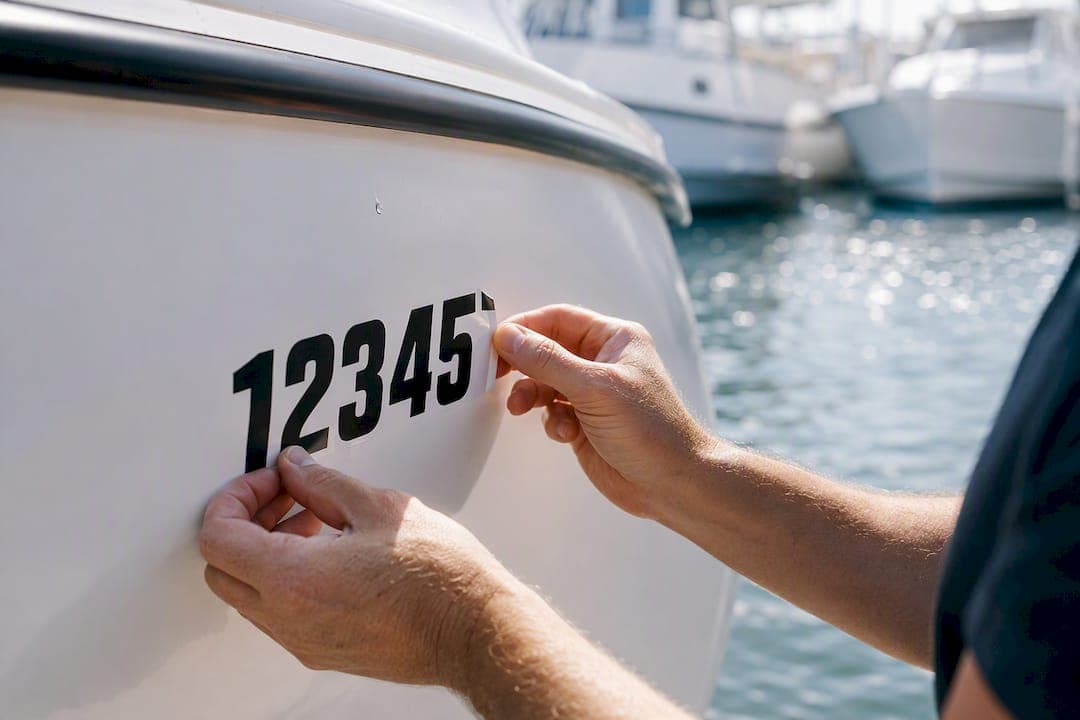
Italic boat registration numbers are not legal in the United States. Federal regulation 33 C.F.R. § 173.27 requires "plain vertical block characters," and italics, scripts, and other slanted or decorative styles don't meet that standard. Almost every state boating agency echoes this federal baseline word for word, so the answer holds true whether you registered your boat in Texas, Florida, or Maine.
Here's what to check right now if you're not sure your boat is compliant:
- Measure the height. Numbers must stand at least the minimum height required by federal regulations.
- Look at the slant. If the characters lean or have serifs, curls, or shadow effects, they're not "plain vertical block" characters.
- Check the contrast. The numbers need to stand out clearly against your hull color.
If your current numbers fail any of these checks, the fix is straightforward: strip the old decals or paint, and replace them with plain block-style numbers, either repainted by hand or applied as marine-grade decals cut in a compliant font.
Key Takeaways
Compliance with 33 C.F.R. § 173.27 requires plain vertical block registration numbers at least 3 inches tall, in a contrasting color, correctly spaced and placed on the forward hull.
| Point | Details |
|---|---|
| Italic fonts fail federal rules | 33 C.F.R. § 173.27 requires plain vertical block characters, which rules out italic, script, and shadowed styles. |
| Height minimum is 3 inches | Measure with a flexible tape along the hull curve, not a straight ruler, to confirm the true character height. |
| States mostly mirror the federal rule | Texas, Florida, and Hawaii each restate the block character and 3-inch standard, with added placement or spacing detail. |
| Contrast and spacing cause real violations | Low contrast against light hulls and incorrect prefix/number spacing trip up more owners than font choice does. |
| Registrationdecals builds compliance in | Its design tool applies compliant block fonts, correct sizing, and marine-grade vinyl automatically when you order. |
Table of Contents
- Italic Boat Numbers Legal Status Under Federal Rules
- How State Rules Build on the Federal Baseline
- How to Check and Fix Noncompliant Boat Numbers
- Where Boat Owners Get Caught Out on Number Compliance
- How RegistrationDecals.com Builds Compliance Into Every Decal
- What Actually Matters Here, and What Doesn't
- Order Compliant Boat Numbers Without the Repaint Guesswork
- Sources
Italic Boat Numbers Legal Status Under Federal Rules
The federal standard comes from one specific regulation, and it's worth reading closely because it answers almost every follow-up question a boat owner might have. 33 C.F.R. § 173.27 requires that registration numbers be painted on or permanently attached to each side of the forward half of the vessel. They must be plain vertical block characters, not less than 3 inches in height, in a color that contrasts with the boat's background color, and they must read left to right. The regulation also specifies spacing: a space or hyphen equal to the width of a letter must separate the registration prefix, the number sequence, and the suffix letters.
"Plain vertical block characters" is doing a lot of work in that sentence. It rules out italics because italics lean. It rules out script because script isn't block lettering. It rules out shadowed, outlined, or embossed styles because those aren't plain. The regulation isn't vague on this point. It's specific enough that a marine patrol officer can check compliance in about ten seconds.
Think of it less like a style guideline and more like a highway speed limit sign. Nobody argues that a sign in cursive is "close enough" to the posted limit. The government picked one format because it's the fastest one to read from a moving patrol boat or a passing dock inspection, and consistency across a fleet of thousands of registered vessels only works if everyone uses the same font family.
Why does the height minimum matter so much? A consolidated guide to boat number display rules notes that the minimum height requirement exists specifically so numbers stay legible at a working distance on open water, not just up close at the dock. Drop below that height, even with a perfectly plain font, and you're still out of compliance.
This federal rule functions as the floor, not the ceiling. States can add requirements. They can specify exactly where the validation decal goes, or how far apart your registration decal needs to sit from your county sticker. What states cannot do is loosen the font requirement, because 33 C.F.R. § 173.27 sets the baseline every state program has to meet. If you want to see what a compliant font actually looks like next to a noncompliant one, RegistrationDecals.com's breakdown of font requirements for boat registration numbers lays out the visual difference clearly.
How State Rules Build on the Federal Baseline
Every state boating agency operates its own registration program, but almost none of them deviate from the federal font rule. What varies is the fine print around placement, decal position, and a handful of narrow exceptions.
Texas Parks & Wildlife Department restates the plain block character and minimum height requirement directly, and adds a specific placement detail: the validation decal has to sit close to the registration number, with examples showing formats like TX 0001 GG or TX-0001-GG. That spacing detail trips up more boat owners than the font rule does, honestly, because it's easy to eyeball wrong.
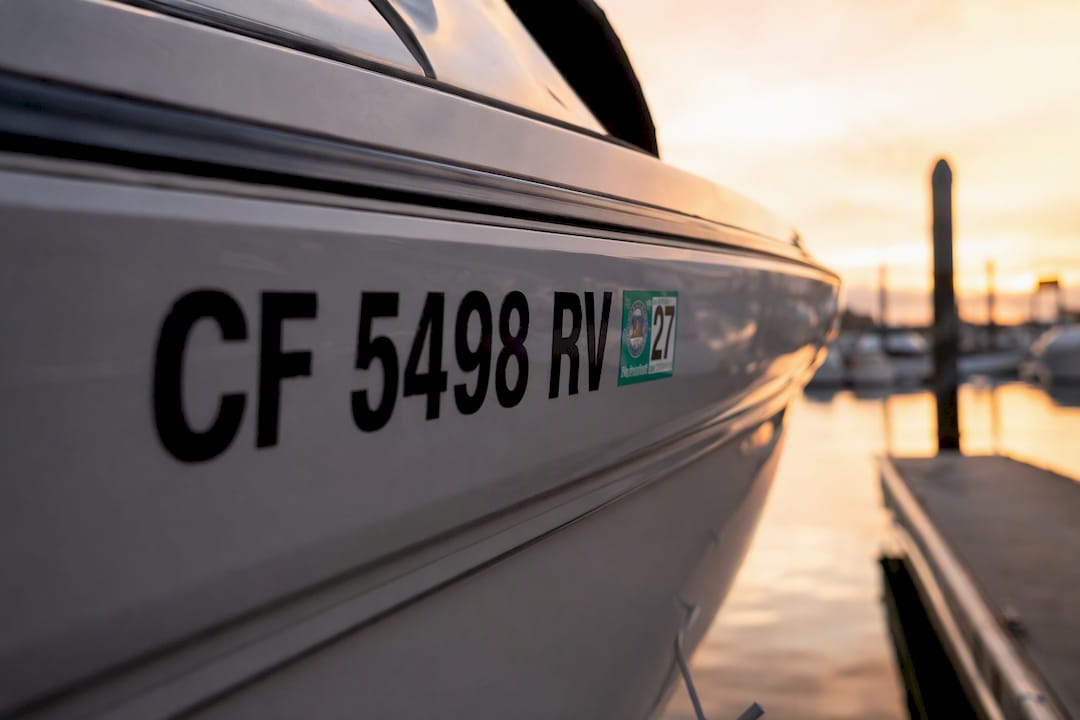
Florida's guidance goes further than most states by spelling out the spacing formula: the gap between your prefix, numbers, and suffix should equal the width of one letter or number, excluding the letter I or the numeral 1 (since those are too narrow to use as a measuring stick). Florida's motor vehicle and vessel guidance also emphasizes contrast and placement on the forward half of the hull.
Hawaii's Division of Boating and Ocean Recreation is the most explicit of any state on this exact question. Hawaii's numbering rules name shaded, slanted, and script numbers as specifically unacceptable, and emphasize legibility from a reasonable distance.
A few things to keep in mind as you check your own state:
- Search your state's DMV or wildlife/boating agency site directly rather than a general search engine, since third-party boating forums sometimes repeat outdated rules.
- Look for the terms "vessel numbering," "certificate of number," or "decal placement" on the agency's site.
- Antique or historic vessels sometimes carry limited exceptions, but these are rare and almost always require separate paperwork, not just a stylistic choice.
- If your boat is federally documented rather than state-registered, different rules apply to your bow markings entirely, and you should confirm what your state still requires for decals.
How to Check and Fix Noncompliant Boat Numbers
Fixing a compliance problem is usually a weekend job, not a haul-out project. Here's the sequence that gets you there fastest.
- Measure the character height with a flexible tape. Hull curvature throws off a rigid ruler, so run a fabric tape measure along the surface of the hull, following the same curve the numbers sit on, rather than measuring in a straight line across open air.
- Compare your font against a plain block reference. If you're unsure whether your current numbers qualify, pull up a reference chart like RegistrationDecals.com's guide on what font is required for boat registration numbers and hold your boat's numbers next to it. If your characters lean, curl, or have any decorative flourish, they fail the test.
- Check contrast in daylight and shade. Numbers that look fine in bright sun can wash out under an overcast sky or against a reflective white hull. If your hull color makes contrast weak, a backing plate in a contrasting color behind the numbers solves this cleanly.
- Verify spacing and hyphen placement. The gap between your prefix, digits, and suffix should equal the width of one character, per most state guidance.
- Confirm your decal sits within roughly 6 inches of your registration numbers, and check your specific state's rule for exact placement, since some states specify a set distance.
- Choose your marine-grade decals for a cleaner edge and durable, compliant boat numbers. Repainting works if you're handy with a brush and stencil, but marine-grade permanent decals hold a cleaner edge and won't chip the way hand-painted numbers can. RegistrationDecals.com's application guide walks through getting the placement right the first time.
- Photograph the finished result and keep your certificate of number on board. A dated photo is useful if a compliance question ever comes up.
Pro Tip: Take your measuring tape and a photo of your current numbers before you order anything new. Having exact height and spacing on hand means you order the right size decal once, instead of guessing and reordering.
Where Boat Owners Get Caught Out on Number Compliance
Most compliance problems aren't dramatic. They're small oversights that stack up over a few boating seasons.
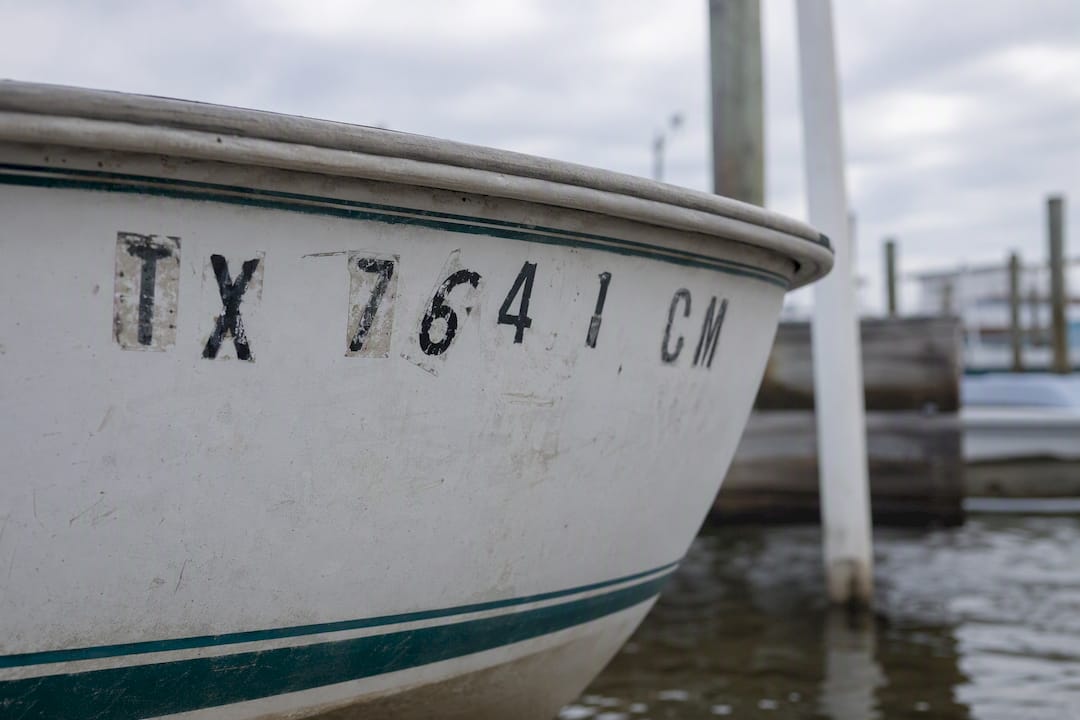
- Italic or script fonts, usually chosen because a previous owner thought they looked sharper, are the single most common style violation.
- Faded or low-contrast numbers, especially white-on-white or pale colors against a light hull, that technically exist but are hard to read from any distance.
- Undersized characters, often on smaller boats where 3 inches feels tight against the available hull space, but the requirement doesn't scale down.
- Incorrect placement, numbers mounted too far aft or on the wrong panel of the hull instead of the forward half.
- Old decals left in place after a state or ownership change, creating confusing duplicate numbers on the same hull.
During a routine safety check or a boarding, an officer typically scans for exactly these issues: is the number legible, is it the right height, does it match your registration paperwork, and is the validation decal current. Most first-time issues result in a warning with a deadline to fix it, according to industry guidance on registration display, though repeat or willful violations can bring a citation. A temporary fix, like a magnetic number set, might satisfy an officer on the water in some states, but it's not a long-term answer. Permanent, compliant markings are the only fix that removes the issue for good.
How RegistrationDecals.com Builds Compliance Into Every Decal
RegistrationDecals.com designs every template around the plain vertical block standard 33 C.F.R. § 173.27 requires, so italic and decorative styles simply aren't offered as an option. The online design tool lets you enter your exact registration number, pick a contrasting color for your hull, and set the height to meet your state's minimum, typically 3 inches or more.
A decal that's cut wrong once is a decal you'll be reordering twice. Building the federal font and size rules into the design tool itself removes the guesswork before it becomes a compliance problem.
Every decal ships in marine-grade vinyl that resists UV fading and saltwater exposure, which matters because a decal that peels or fades within a season creates the exact contrast and legibility problems that draw a warning. Production runs 3 to 5 business days, with free shipping across the contiguous United States.
A few practical notes when ordering:
- Specify your state, since state-by-state regulatory pages flag any local placement quirks.
- If your hull color runs light or reflective, ask about a backing plate option to guarantee contrast.
- Decals suit most owners better than repainting because they hold a sharper edge and go on in minutes, not hours.
What Actually Matters Here, and What Doesn't
The font question gets more attention online than it deserves, honestly, because the answer is short and settled: plain block characters, period. What doesn't get enough attention is everything downstream of that rule. Spacing errors, faded contrast, and decals mounted a few inches off from where the state wants them cause more real-world compliance headaches than font choice ever does, because those mistakes are easy to make even when you know the italic rule cold.
The conventional advice treats this as a legal research project. It isn't. It's a measuring and matching project. Read your state's page once, measure your hull, and order to that spec. Where I'd push back on the usual guidance: don't treat a backing plate as a cosmetic upgrade. If your hull is white, cream, or a reflective metallic, a plate isn't optional polish, it's often the only way your numbers pass a contrast check at all.
Prioritize the font first, since it's the fastest fail point, then verify height and spacing before you ever order a decal. Skipping straight to checkout without measuring is the single most avoidable mistake in this entire process.
— Taylor
Order Compliant Boat Numbers Without the Repaint Guesswork
Fixing noncompliant numbers yourself means guessing at font templates, hand measuring spacing, and hoping your paint job holds up to a season of saltwater. Registrationdecals removes that guesswork by building the federal spec directly into the design tool, so every decal you order already matches the plain block, 3 inch, high contrast standard before it ships.
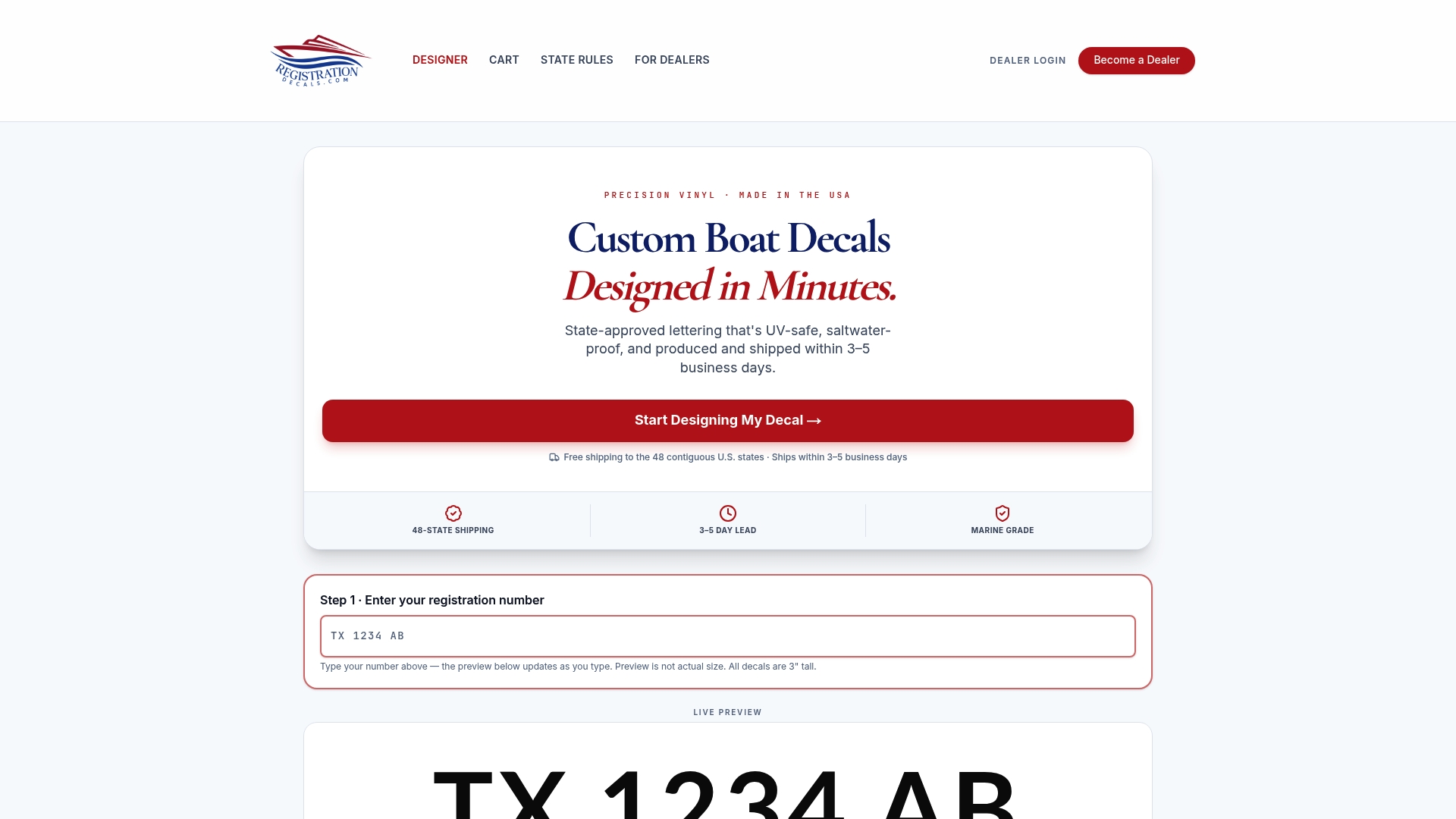
You pick your state, enter your exact registration number, choose a hull-contrasting color, and the tool handles sizing and spacing automatically. The vinyl is UV and saltwater resistant, so you're not repainting again next season, and orders ship in 3 to 5 business days with free delivery across the contiguous U.S. If you recently moved states and aren't sure your old decals still qualify, RegistrationDecals.com's guide on decal requirements after a state move walks through what changes. Ready to fix your numbers for good? Design your compliant decal set now and have it on your hull before your next trip out.
Sources
- SUBCHAPTER S—BOATING SAFETY (33 C.F.R. part 173)
- Numbers and Decals on Vessels — Texas Parks & Wildlife Department
- Boat Registration Number Display Rules: Size, Placement & Format (2026)
- Florida Highway Safety and Motor Vehicles: Numbering and decals for vessels