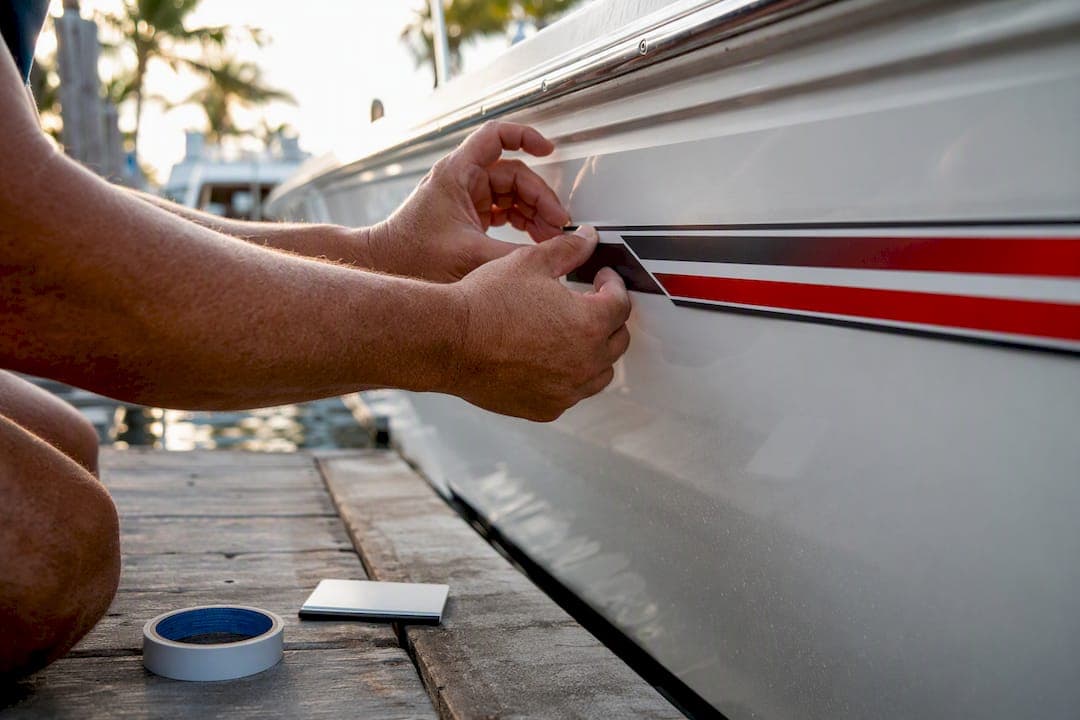
No. Federal law treats registration numbers as permanent equipment, not decoration you can peel off. Under 33 CFR §173.27, numbers must be painted on or permanently attached to the hull, and the only carve-out for removable plates is manufacturer or dealer testing, not everyday boat ownership. Run afoul of this and you risk a citation during a routine safety check. Before your next trip out, check your state boating agency's specific rules and take a hard look at whether your current numbers would survive a fingernail scratch test.
Key Takeaways
Removable vinyl boat numbers fail federal law because 33 CFR §173.27 requires registration numbers to be painted on or permanently attached, with removable plates reserved only for manufacturer and dealer testing.
| Point | Details |
|---|---|
| Federal baseline is strict | Numbers must be permanently attached, at least 3 inches tall, and contrast with the hull. |
| States add their own layers | Placement, sticker proximity, and temporary-registration rules vary by state, so check your agency's page. |
| Material choice matters | Marine-grade vinyl with UV-stable adhesive meets the permanence standard; low-tack stickers usually don't. |
| Installation determines compliance | Clean surface prep, correct temperature, and sealed edges keep decals from lifting and triggering a citation. |
| Registrationdecals offers a direct fix | Its marine-grade vinyl sets are built to federal and state specs, with a design tool and 3 to 5 day production. |
Table of Contents
- Federal Rules That Set the Baseline for Boat Registration Numbers
- How Do State Boat Number Rules Vary?
- What Materials Actually Count as Permanent?
- How to Install Vinyl Numbers So They Meet Federal and State Rules
- How to Remove Old Boat Numbers Without Damaging the Hull
- What to Do If Your Boat Currently Has Removable Numbers
- Why We Recommend Marine-Grade Permanent Decals
- Get Compliant Numbers Without the Guesswork
- Frequently Asked Questions
- Sources
Federal Rules That Set the Baseline for Boat Registration Numbers
Every state builds its boat numbering rules on top of one federal standard. That standard, 33 CFR §173.27, is specific almost to the point of being fussy, and that specificity is exactly why so many boat owners get tripped up.
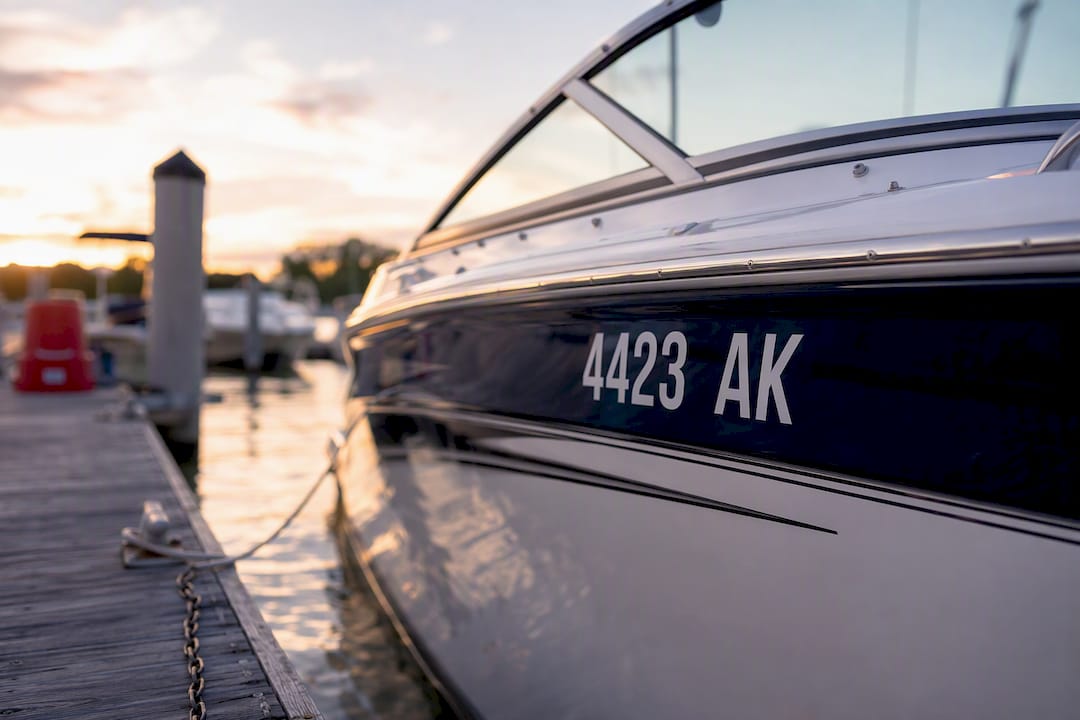
Numbers must be plain, vertical block characters of not less than three inches in height, contrast with the background color, and be either painted on or permanently attached to each side of the forward half of the vessel.
The regulation also spells out spacing: a hyphen or equivalent space must separate the state prefix, the numeral sequence, and the state suffix (so "FL 1234 AB," not "FL1234AB"). The validation sticker showing your current registration year typically sits within six inches of the number itself, a detail confirmed by state boating guidance that many owners never bother to check until an officer points it out.
Pro Tip: Before you leave the dock, measure your numbers with a tape measure, not your eye. Anything under three inches, even by a fraction, fails inspection regardless of how good it looks from the dock.
How Do State Boat Number Rules Vary?
States can't lower the federal bar, but they can raise it or add their own procedural wrinkles, and this is where a lot of confusion starts. What passes in one state might draw a warning in the neighboring one.
Common differences show up in a handful of areas:
- Placement specifics. Some states detail exactly how far forward on the hull the numbers must sit and how they interact with rub rails or trim.
- Validation sticker rules. A few states require the sticker on a specific side or within a tighter distance than the federal norm.
- Temporary registration windows. States like Georgia allow up to 60 days of temporary registration while a permanent decal is in production, provided you carry the temporary paperwork onboard.
- Permanence tolerances. Some agencies are more explicit than others about what "permanently attached" means in practice for vinyl decals.
If you want a real-world example, Texas Parks and Wildlife publishes detailed placement guidance that goes beyond the federal minimum, right down to how numbers should read against the hull color. Georgia's temporary-registration process is another useful illustration of how states handle the gap between buying a boat and receiving your final decals.
The fastest way to get a straight answer for your own boat: search your state boating agency's website for "boat numbers" or "vessel decals," and check RegistrationDecals.com's state regulation hub for a side-by-side reference while you're at it.
What Materials Actually Count as Permanent?
"Permanent" doesn't mean welded on. It means the number won't come off in normal use, weather, or a season of saltwater spray. That's a lower bar than owners assume, and it's also why marine-grade vinyl clears it while a dollar-store sticker doesn't.
Methods that generally satisfy the law:
- Painted numbers, applied directly to the hull with marine paint.
- Factory-applied numbers from the boat manufacturer.
- Marine-grade permanent vinyl, correctly applied with UV-stable adhesive and, ideally, an overlaminate layer for added protection.
Methods that typically do not hold up to scrutiny:
- Temporary vinyl or contact paper with a low-tack adhesive.
- Painter's tape stencils or anything explicitly marketed as removable.
- Dollar-store decals without UV inhibitors, which fade and lift within a season.
Look for products backed by a manufacturer durability statement, such as 3M's MCS warranty language, since that kind of backing signals the vinyl was engineered for years on the water, not weeks. Properly installed marine-grade vinyl commonly lasts several years before fading enough to need replacement, which is a fair trade against the cost of a citation.
How to Install Vinyl Numbers So They Meet Federal and State Rules
Compliance lives or dies in the installation, not just the material. A great marine-grade decal applied carelessly can still fail the "permanent" standard if it bubbles, lifts at the edges, or sits crooked enough to obscure a character.
- Clean and prep the hull. Wash the surface with soap and water, then wipe with isopropyl alcohol to remove wax and residue.
- Check the temperature. Most vinyl adhesives bond best between 50 and 90 degrees Fahrenheit; cold application is the top cause of early lifting.
- Mark your placement. Use painter's tape as a guide to keep numbers level and on the forward half of the hull, where federal and state rules require them.
- Apply and squeegee. Work from the center outward to push out air bubbles, then seal the edges firmly so water can't work underneath.
- Inspect the details. Confirm three-inch minimum height, correct hyphen spacing, strong color contrast, and sticker placement within six inches of the number.
Pro Tip: After the vinyl sets, step back twenty feet and read your numbers the way an officer would from a patrol boat. If you have to squint, your contrast or size is off.
How to Remove Old Boat Numbers Without Damaging the Hull
Replacing noncompliant or worn numbers starts with getting the old ones off cleanly, and rushing this step is how owners end up with gouged gelcoat.
- Warm the vinyl with a heat gun on low, moving constantly to avoid scorching the surface.
- Lift the edges with a plastic scraper, never metal, and peel slowly at a low angle.
- Remove adhesive residue with a marine-safe adhesive remover rather than an all-purpose solvent, which can dull gelcoat or damage paint.
- Wash and dry the area thoroughly before applying new numbers.
If your hull is older, has brittle gelcoat, or is painted rather than gelcoated, it's worth having a marine detailer or boat shop handle removal. A cracked or discolored patch is far more expensive to fix than the decal itself.
What to Do If Your Boat Currently Has Removable Numbers
If you've read this far because your numbers are the temporary kind, here's the short path to getting square with the law:
- Inspect your current numbers for height, contrast, spacing, and whether they're actually adhered or just resting on the surface.
- Photograph the current setup as a record of your starting point.
- Check your state agency's page for any placement or permanence rules beyond the federal minimum.
- Order and install marine-grade permanent decals sized and spaced to spec.
- Keep your registration certificate, decal receipt, and any temporary-authority paperwork onboard whenever you're on the water.
That last step matters more than owners expect. An officer can't verify your compliance history from a hull alone, so paperwork onboard closes the gap.
Why We Recommend Marine-Grade Permanent Decals
Our position is simple: skip the shortcuts. Numbers that meet 33 CFR §173.27 and your state's specifics, installed correctly, save you from citations and reapplication headaches. Registrationdecals builds decal sets to those exact specs, which is the whole reason the company exists.
Get Compliant Numbers Without the Guesswork
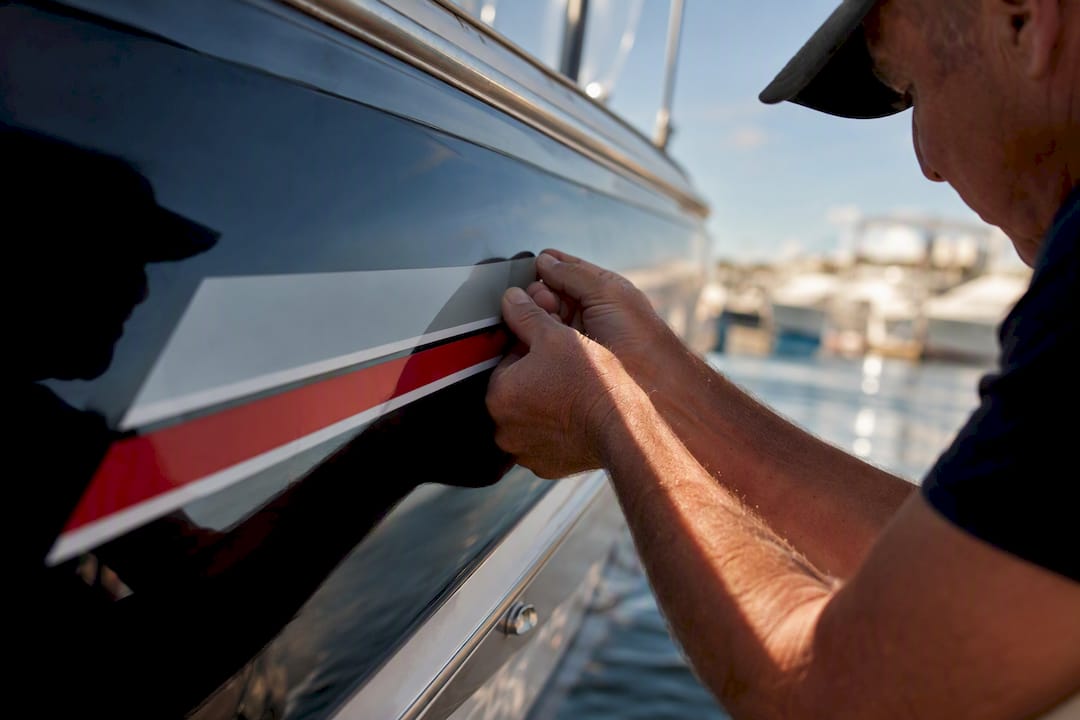
If you've been putting off replacing removable vinyl, the actual fix takes less effort than most owners assume. Registrationdecals builds every decal set to meet the federal three-inch height minimum, correct block fonts, and state-specific spacing and contrast rules, so you're not left guessing whether your numbers will pass inspection.
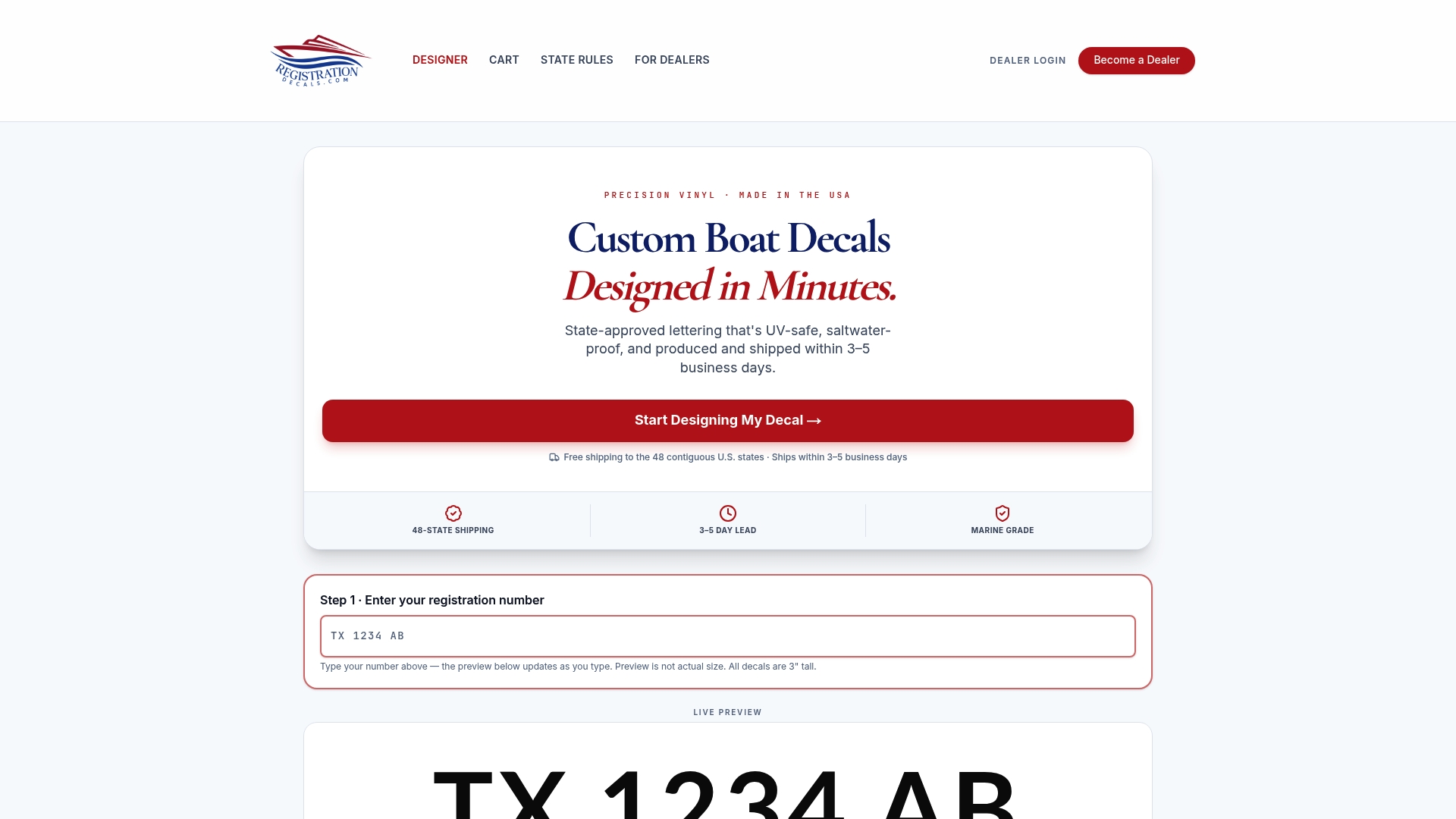
Each set uses marine-grade vinyl rated for UV exposure and saltwater, the same durability profile covered in our breakdown of how long marine vinyl decals last. The online design tool lets you enter your state, registration number, and color preferences and see a proof in minutes, with production running three to five business days and free shipping across the contiguous United States. Whether you're outfitting one boat or ordering for a marina's fleet, you can design your compliant decal set now and have it installed before your next inspection.
Frequently Asked Questions
Is removable vinyl ever legal for boat registration numbers? Only in narrow federal exceptions for manufacturer or dealer testing. For everyday boat owners, numbers must be painted on or permanently attached under 33 CFR §173.27.
Can marine-grade vinyl decals count as permanent? Yes, when applied correctly with UV-stable adhesive and proper edge sealing. Many boating guides note that vinyl, paint, and raised characters are all acceptable as long as they meet the size, contrast, and durability standards regulators look for.
What happens if my boat gets inspected with faded or peeling numbers? Illegible or lifting numbers are a common trigger for citations, since officers can't confirm the registration matches the vessel. Replacing worn decals before they fail visibility checks avoids that risk entirely.
How do I find my state's exact requirements? Search your state boating agency's website for "vessel numbers" or "decal placement," or check a state-by-state regulation hub for a faster overview.
Sources
- SUBCHAPTER S—BOATING SAFETY (33 CFR part 173) — govinfo
- Boat Registration Number Display Rules: Size, Placement & Format (2026)
- Numbers and Decals on Vessels - Texas Parks and Wildlife
- Georgia