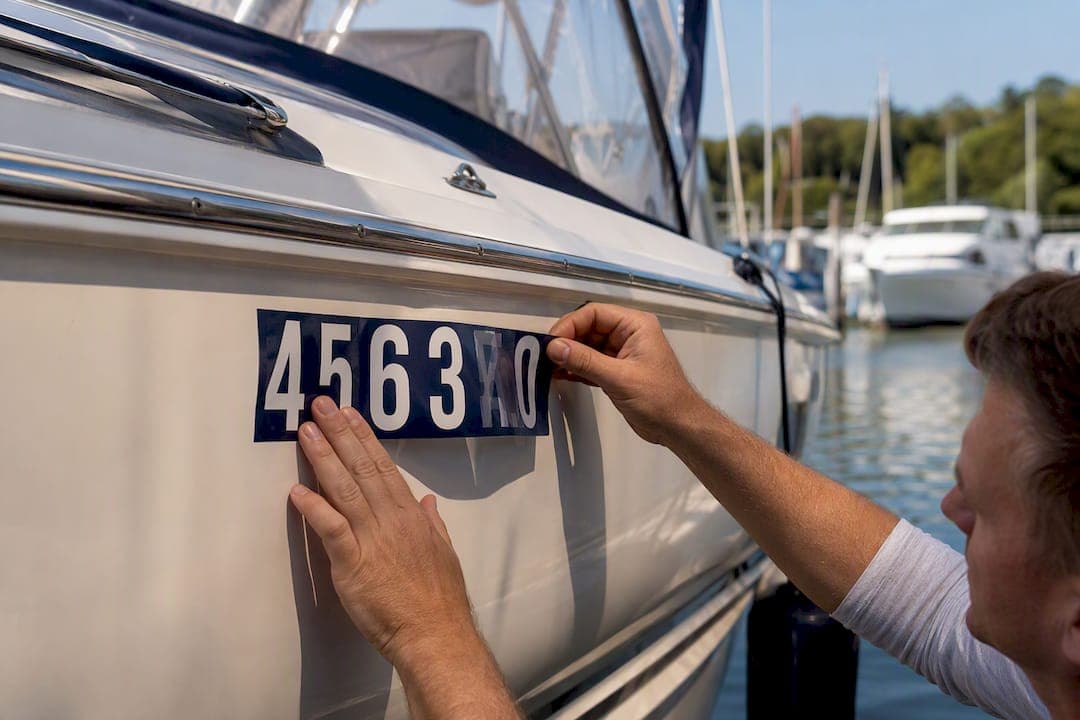
You can use outlined-style registration numbers only if the primary character remains a plain, solid block letter or numeral that meets federal size and contrast rules. Federal law under 33 CFR 173.27 requires registration numbers to be at least three inches high and have strong contrast against the hull. Measure one applied character before you commit to a full set, check it reads clearly from a reasonable distance, and confirm your state agency hasn't added stricter specifics on top of the federal floor.
TL;DR:
- Registration numbers must be at least three inches high, in solid contrasting color, and placed on both sides of the forward half of the hull.
- Proper spacing between groupings and correct placement within three to six inches of the number are critical to avoid citations.
- Outlined numbers are permitted only if the fill remains solid, minimum three inches tall, and the outline does not compromise legibility.
- Use marine-grade vinyl for long-term contrast, and always measure the fill height after installation to ensure compliance.
- State-specific rules may add requirements, such as placement exactness and decal proximity, which owners must verify to avoid violations.
Table of Contents
- What Does 33 CFR Part 173 Actually Require for Boat Number Lettering?
- Where Should Registration Numbers and Decals Go on the Hull?
- Can Outlined Boat Numbers Meet the Font Requirements?
- How Do You Choose Materials That Keep Outlined Numbers Legible Long Term?
- Does Your State Add Rules Beyond the Federal Minimum?
- Common Mistakes Owners Make With Outlined Numbers
- Order Compliant Outlined Numbers Without the Guesswork
- Where to Verify the Exact Rules for Your Boat
- Sources
What Does 33 CFR Part 173 Actually Require for Boat Number Lettering?
Federal regulation sets the floor every state builds on. 33 CFR 173.27 governs boat registration numbers nationwide, and it's more specific than most owners expect.
The rule requires numbers to appear on both sides of the forward half of the hull, in plain vertical block characters, at least three inches tall, in a color that contrasts sharply with the hull background. Numbers must read left to right. Between the state prefix, the numerals, and the suffix letters, you need a space or hyphen equal in width to a letter other than "I" or "1," so the groupings don't run together into an unreadable string.
A few practical points get missed constantly:
- The minimum height is measured on the applied character, not the file you approved on a screen.
- Contrast means genuine color separation, not just a different shade of the same hue (navy on black hulls routinely fails inspection).
- Spacing violations are one of the most common citations, according to boating compliance guides that track common display errors like undersized characters and poor contrast.
33 CFR 173.27 in one line: at least 3 inches high, solid contrasting color, plain block style, left to right, with proper spacing between groupings.
Documented vessels get an exemption from state numbering entirely, since they display their federal documentation instead. That's a narrow carve out, though, and it doesn't apply to the vast majority of recreational boats registered through a state agency. The full numbering subpart also covers when you're required to carry a certificate of number aboard, which matters if a marine patrol officer asks for it during a stop.
Once your decals are on, measure with a tape, not your eyes. Step back 100 feet on the dock or water and confirm the numbers are still legible. If you squint, an inspector will too.
Where Should Registration Numbers and Decals Go on the Hull?
Placement mistakes get boats flagged more often than font mistakes. Here's how to get it right the first time.
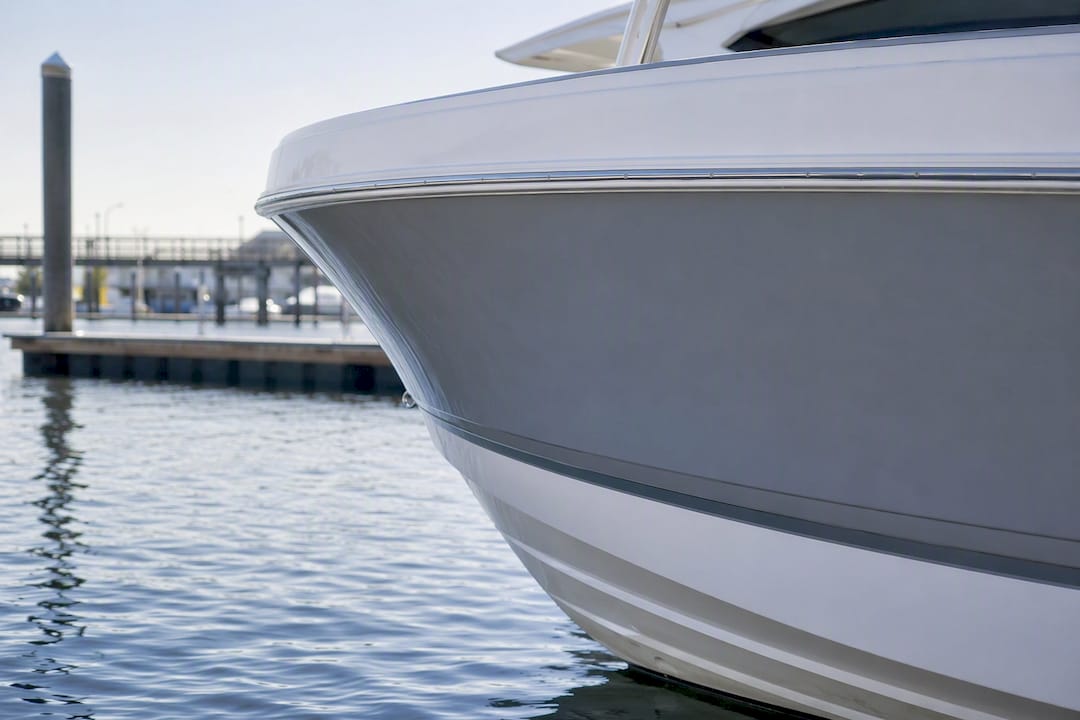
- Find the forward half of your hull. Measure the total length from bow to stern, mark the midpoint, and everything ahead of that line is fair game. Most installers center the numbers just aft of the bow curve, where the hull is flattest.
- Use a backing plate when the hull surface fights you. Sharp curves, rub rails, or textured gelcoat can distort a decal's visible height and hurt contrast. A flat, contrasting backing plate solves both problems at once and is often the simplest fix, as covered in Registrationdecals' guide on where boat registration numbers go.
- Place the validation decal correctly relative to the number. Most states want it within roughly 3 to 6 inches of the registration number, though the exact spot varies. Texas is specific: the decal must sit in line with the number and three inches toward the rear, according to Texas Parks & Wildlife Department guidance.
- Check both sides match. Numbers go on port and starboard, identical in size, color, and spacing.
Pro Tip: Do a "dockside inspection" the day you install: stand at the far end of the slip, look at both sides of the bow, and photograph each side straight on. If you can't read the numbers cleanly in the photo, an officer won't either.
The most common mistake isn't the font. It's numbers placed too far aft, past the true midpoint, because the bow curve made the forward section look smaller than it actually was.
Can Outlined Boat Numbers Meet the Font Requirements?
Here's where most owners get tripped up: the federal rule doesn't ban outlining outright, but it does ban anything that compromises the plain block character underneath. That distinction is everything.
Outline styling is compliant when it's decorative trim on top of a solid, readable base, not a substitute for one. Practical guides on lettering rules note that stylized, shadowed, or shaded fonts that reduce legibility don't pass, and a heavy or busy outline can absolutely qualify as one of those.
Here are the design rules that keep outlined numbers on the right side of legal:
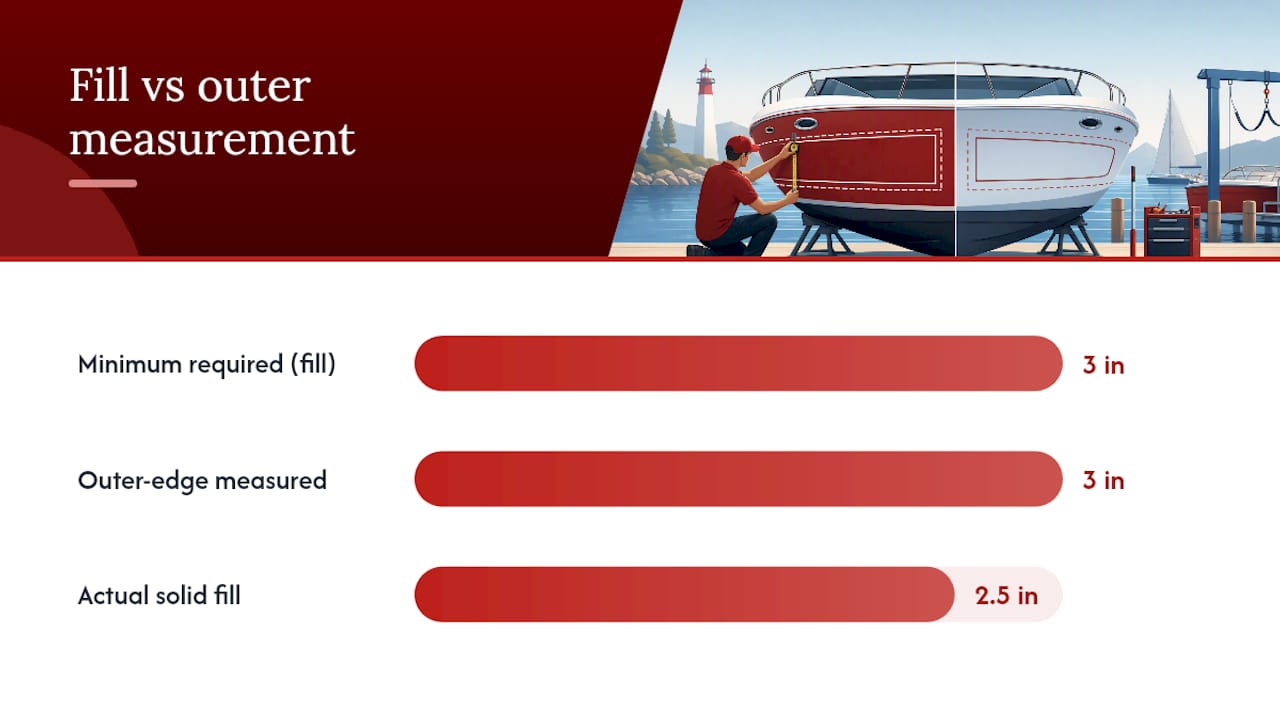
- The primary fill must still hit the 3 inch minimum height in solid block form, measured on the fill itself, not the outer edge of the outline.
- A thin outline stroke (roughly 1/8 to 1/4 inch, depending on overall character size) adds visual pop without eating into the block shape.
- Choose color pairings where the fill contrasts with the hull and the outline contrasts with the fill. White numbers with a black outline on a red hull works. Red numbers with a red outline on a maroon hull does not.
- Skip outline-only or hollow characters entirely. A number with no solid fill, just an outer line, almost never survives inspection because it reads as decorative rather than a registration mark.
Picture two versions of the same number 7. One has a solid white fill with a thin navy border, fully legible at a glance from across a marina. The other is a hollow outline of a 7 with no fill at all, which from any distance looks like a smudge. The first passes. The second fails the moment an officer eyeballs it.
The measurement trap catches more boats than any other single error. If you measure the outline's outer edge and call it 3 inches, but the solid fill inside is only 2.5 inches, you're out of compliance even though your tape measure told you otherwise. Always measure the fill.
How Do You Choose Materials That Keep Outlined Numbers Legible Long Term?
A compliant design on day one doesn't stay compliant if the vinyl fades, lifts, or yellows within a season. Material choice matters as much as font choice.
Marine-grade vinyl built for UV resistance and saltwater exposure holds its color and edge definition far longer than general-purpose craft vinyl, which is a real risk for outlined designs since a fading outline stroke blurs into the fill and kills the contrast that made it legal in the first place. Look for vinyl rated specifically for marine use, not just outdoor use. The difference in longevity between the two categories is significant.
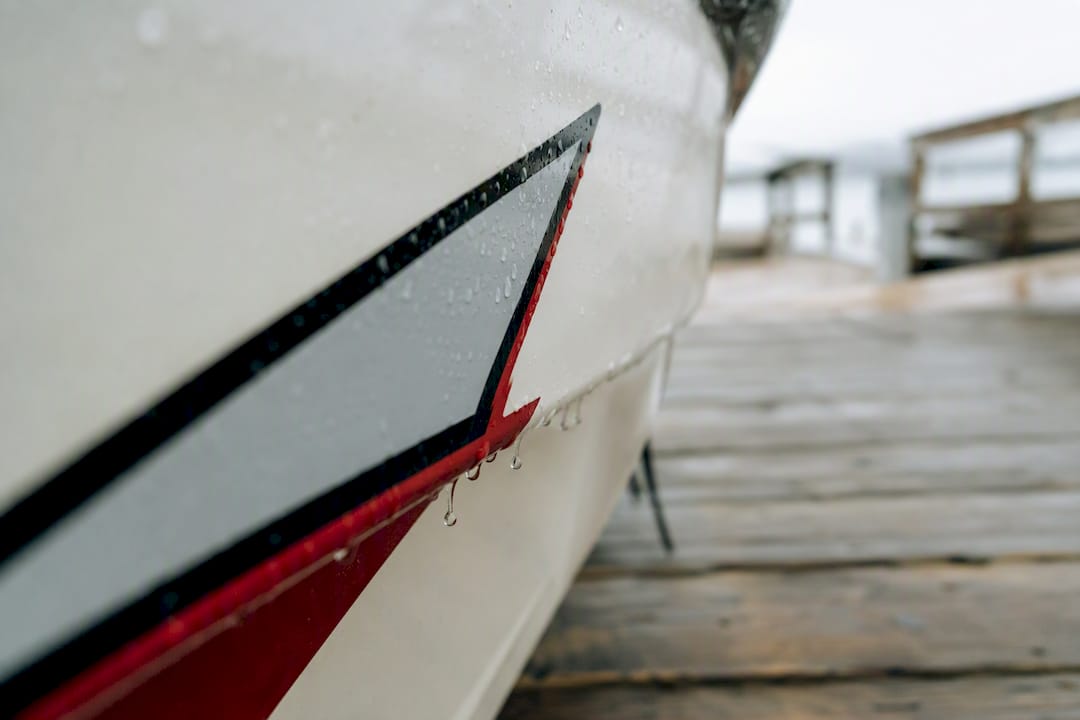
Pro Tip: If your hull sees heavy sun exposure, a boat covered in a full-time slip under direct sun ages decals faster than a trailered boat stored in a garage. Factor your storage habits into how often you'll need to re-measure and, eventually, replace your numbers.
Installation basics that protect both compliance and appearance:
- Clean the hull surface with isopropyl alcohol and let it fully dry before applying anything. Dust and wax residue cause bubbling and edge lift within weeks.
- Use a wet application method on curved surfaces to reduce trapped air, and a dry method on flat gelcoat where alignment precision matters more.
- Use painter's tape as a level guide across both sides so port and starboard numbers sit at the same height.
- Peel transfer tape slowly at a low angle after application, not straight up, to avoid pulling the vinyl edge with it.
Once installed, re-measure the fill height, not the outline, and repeat your 100 foot legibility check. Mark your calendar to inspect the decals every six months. Salt film buildup can dull contrast well before the vinyl itself fails, and a quick freshwater rinse restores most of that lost visibility. For a deeper look at expected material lifespan, Registrationdecals breaks down how long marine vinyl decals last under different exposure conditions.
Does Your State Add Rules Beyond the Federal Minimum?
Federal law sets the floor, not the ceiling, and plenty of states build additional requirements on top of it that a national guide won't catch.
Texas, for example, doesn't just require a validation decal near the number. It specifies exact placement (in line with the number, three inches toward the rear), which is a level of precision the federal rule doesn't dictate. Hawaii's boating division goes further on the design side, recommending solid-color characters and backing plates when hull contrast is poor, essentially steering owners away from delicate outline styling on boats with tricky hull colors.
Before you finalize an outlined design, run through this checklist against your own state's boating or wildlife agency page:
- Confirm your state's exact prefix and suffix format, since the numeral count and letter placement vary by state.
- Verify the spacing or hyphen rule between groupings matches what your state agency shows in its own examples.
- Check your state's specific decal placement distance, since "near the number" can mean anywhere from 3 to 6 inches depending on the state.
- Ask whether documented vessels in your state carry any different display expectation.
- Confirm which fonts and styling your state explicitly rejects, since some publish example images of noncompliant lettering.
Registrationdecals maintains a state-by-state regulation hub that's worth checking against whatever your local agency publishes, especially if you've recently moved states, since a new registration often means new decals are required entirely, not just an update to your old set.
Common Mistakes Owners Make With Outlined Numbers
The single biggest error is treating the outline as the design and the fill as an afterthought. It's the reverse. The fill is the legal character. The outline is trim.
I'd rather see a boat owner skip outlining altogether and use a backing plate when their hull color makes contrast difficult, particularly on dark navy, forest green, or maroon hulls where almost no outline color reads cleanly at a distance. A solid white or black backing plate under a standard block number solves the problem in one step instead of fighting with stroke widths and color theory.
Curved bows cause a specific, sneaky problem: a decal that measures correctly flat can visually compress once it wraps around a curve, making a legal 3 inch character look closer to 2.5 inches from certain angles. Order slightly larger than the minimum if your bow has real curvature, and always verify height after the wrap, not before.
When in doubt, preview your design at true scale before ordering, and request a sample or a backing plate option rather than guessing.
— Taylor
Order Compliant Outlined Numbers Without the Guesswork
Registrationdecals turns the compliance details above into a design tool that builds the legal groundwork in automatically, so an outlined look doesn't turn into a rejected inspection. The online design tool lets you enter your state, your registration number, and your preferred colors, and it applies state-compliant spacing, sizing, and font rules as you build the decal, including safe outline and border options that keep the solid fill intact.
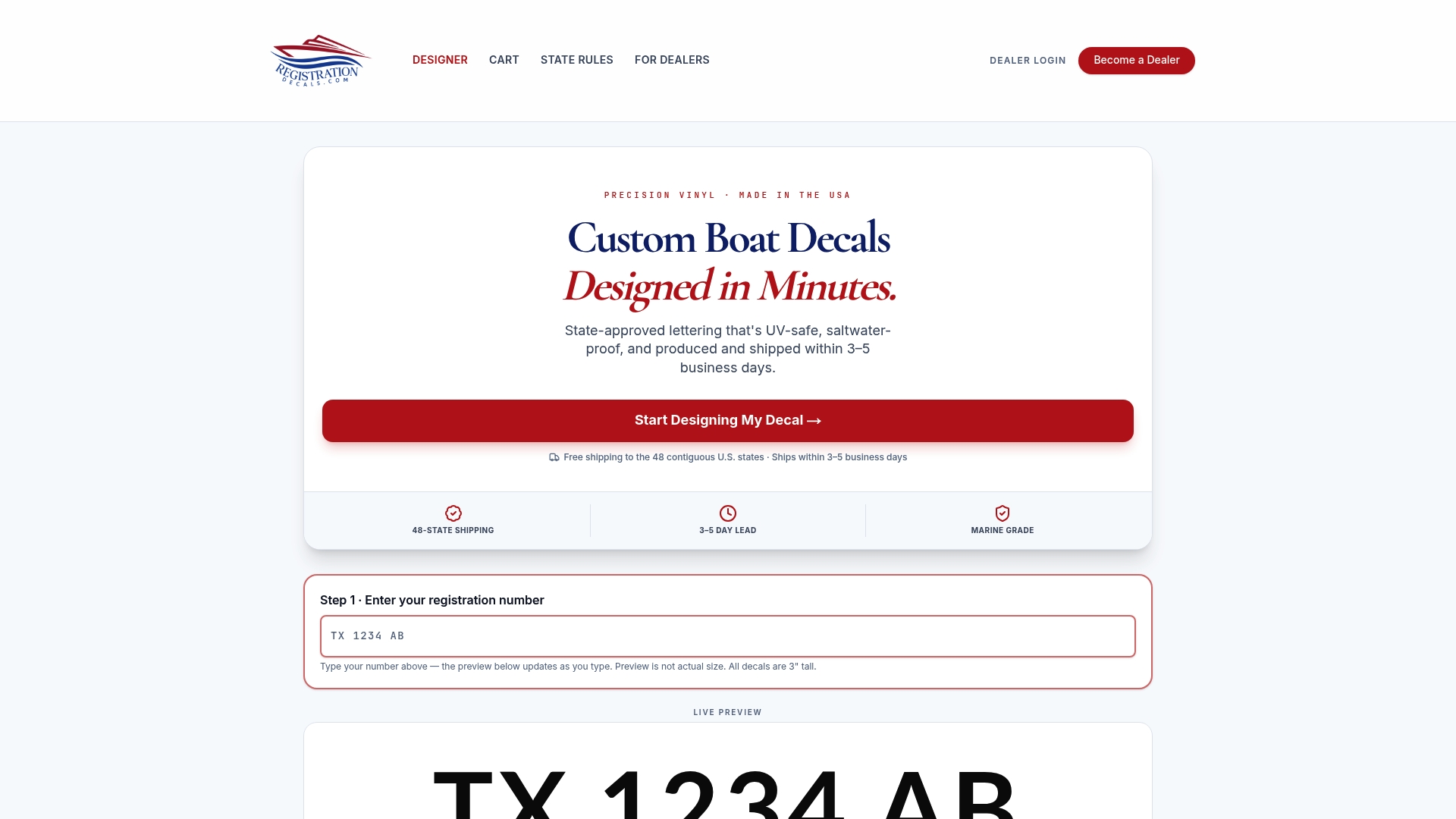
Every set ships in marine-grade vinyl rated for UV and saltwater exposure, the same category of material that holds contrast far longer than standard outdoor vinyl. Production runs 3 to 5 business days, with free shipping across the contiguous United States, whether you're ordering one set for a personal boat or a bulk order for a marina or dealership. If you want the outlined look, choose a solid fill with a thin border in the design tool rather than a hollow outline, or add a backing plate at checkout if your hull color makes contrast tricky. When it arrives, measure the fill height against your state's minimum before you apply it, and you're set for inspection season.
Where to Verify the Exact Rules for Your Boat
Federal regulation 33 CFR 173.27 is the baseline every state number must meet, covering size, contrast, and spacing. The broader 33 CFR Part 173 subpart covers exemptions and display obligations beyond just lettering.
For state-specific placement, Texas Parks & Wildlife Department publishes exact decal placement measurements, and Registrationdecals' regulation hub rounds up rules across all 50 states in one place.
Sources
- eCFR — 33 CFR 173.27 – Numbers: Display; size; color.
- CFR — SUBCHAPTER S—BOATING SAFETY: Part 173 — Numbering
- Texas Parks & Wildlife Department — Placement of TX Number and Decal on Vessels
- LegalClarity — USCG boat lettering requirements for recreational vessels