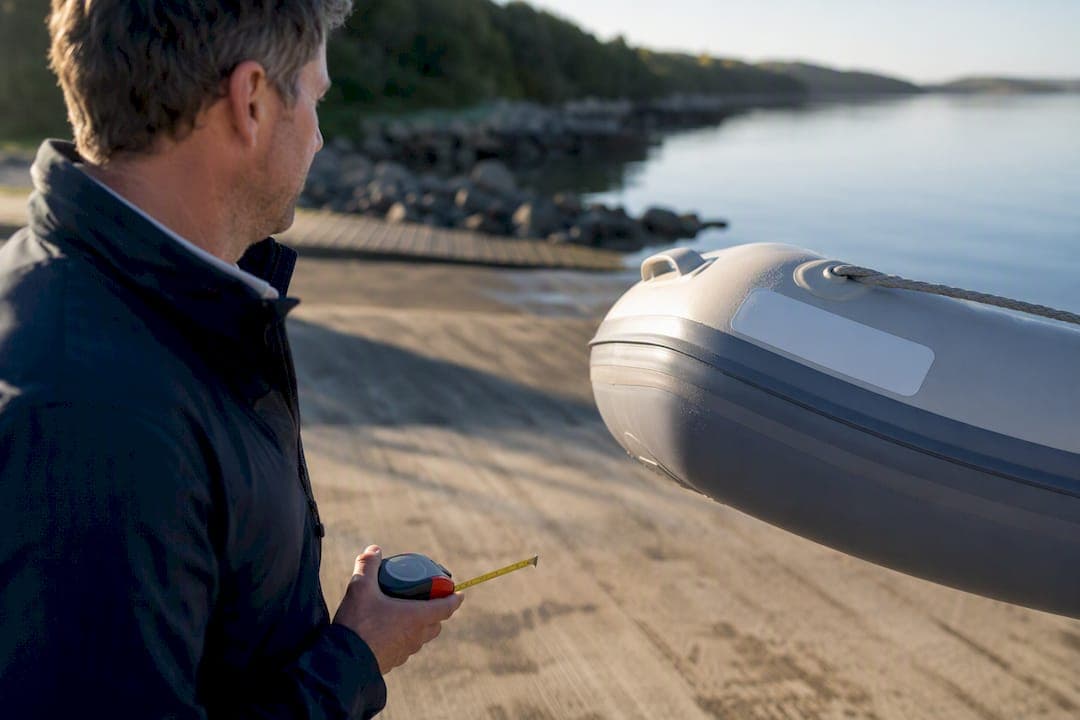
Tender registration numbers are the state-issued hull ID plus its matching validation decal for a small boat towed or carried by a larger vessel. To stay compliant, display block-style numbers on both sides of the bow with the decal positioned within roughly 6 inches of the number, unless your state allows parent-vessel marking instead.
TL;DR:
- Most states require tenders to have separate registration numbers and decals, especially if they operate independently on public waters, unless exempted by size or propulsion type.
- Place registration numbers on the forward half of the hull, on both sides of the bow, with the decal within six inches and aligned with the number, using high-contrast block letters.
- Exemptions for tenders include low horsepower, manual propulsion, or displaying the parent vessel's number with a suffix, but these rules vary by state and must be verified locally.
- Marine-grade vinyl decals with UV and saltwater resistance are essential for durability, and proper installation, including surface cleaning, ensures longevity and compliance.
- Always keep the certificate of number aboard during water use, and verify format accuracy through your state's registration database before ordering or applying decals.
Table of Contents
- What counts as a tender and when it needs its own registration
- Placement, size, and format: the practical spec most states expect
- Tender-specific rules and common exceptions
- Materials and durability: why marine-grade decals matter for tenders
- How to order compliant tender decals: a preflight checklist
- Inspection realities and three habits that prevent fines
- Order compliant decals built for tenders
- Sources
- FAQ
What counts as a tender and when it needs its own registration
A tender is a small boat, often a dinghy or inflatable, used to ferry people or gear between shore and a larger vessel. Many states treat a tender as its own vessel for registration purposes, separate from the boat that carries it, which surprises new owners who assume the parent vessel's paperwork covers everything aboard it.
Whether a tender needs its own certificate of number typically depends on:
- Motor size: many states exempt tenders under a certain horsepower or with manual propulsion only.
- State residency and use: some states only require registration if the tender operates on public waters independently of the parent vessel.
- Documentation status: a tender is registered under state rules unless it qualifies for a federal exemption.
The certificate of number is the paperwork proving a vessel is registered, and most states require it to be kept aboard whenever the boat is in use. Losing it or leaving it behind can trigger the same citation as having no registration at all, even if the decal on the hull is current and correctly placed.
Placement, size, and format: the practical spec most states expect
Getting the number on the hull correctly matters as much as having it at all. Boatus's registration guidance and most state agencies converge on the same basic format, even though exact wording varies by state.
- Place the number on the forward half of the vessel, on a flat vertical surface rather than a curved or flared area.
- Display the number on both sides of the bow, port and starboard, unless your state's parent-vessel marking option applies.
- Position the validation decal in line with the number and within about 6 inches of it, following the sequence shown on your certificate of number.
- Use block letters with a minimum height commonly set around a few inches, in a color that contrasts sharply with the hull.
- Separate the letter and number segments with hyphens or spaces to match the format on your certificate, such as FL 1234 AB.
Avoid script fonts, decorative outlines, or heavy shadow effects. They read fine up close but blur into noise at a distance, which is exactly when an officer is checking your numbers. Skip flared bow sections or rub rails where the number will curve or partially disappear from certain angles.
Pro Tip: Stand back about 100 feet and see if you can read your own numbers without squinting. If you can't, an officer on patrol won't either.
Tender-specific rules and common exceptions
Tenders come with a few carve-outs that trip up owners who assume the same rules apply across every state.
- Parent-vessel marking: Some states let a tender display the parent vessel's registration number followed by a suffix, such as adding a "1," instead of getting a fully separate number. Check your state's rules on both-side placement before assuming this applies to you.
- Low horsepower or manual propulsion: A number of states exempt tenders under a certain motor size or those propelled only by oars or paddles from registration entirely.
- Federally documented vessels: Under 33 CFR part 173, a federally documented vessel cannot display state-assigned hull numbers, though it may still need state registration decals or paperwork depending on where it operates.
None of these exceptions are universal. A tender exempt in one state may need full registration the moment it crosses into another, so confirm the rule with the issuing authority before assuming an exception applies.
Materials and durability: why marine-grade decals matter for tenders
Tenders live a harder life than most boats. They get dragged onto beaches, stacked on deck, and left exposed to sun and salt spray more than the vessels that carry them, which means the decal material matters more here than almost anywhere else on a boat.
- Marine-grade vinyl resists UV fading and salt exposure, keeping numbers legible instead of chalky or peeling after a season.
- Inflatable hulls need flexible adhesive that moves with the fabric, while aluminum and fiberglass tenders hold a rigid decal without issue.
- High-contrast colors and solid block fonts stay readable years longer than thin or light-colored lettering.
Decals can be produced in-house from marine-grade vinyl selected for UV and saltwater resistance, with online design tools that let an owner enter a state, registration number, and color scheme directly.
Pro Tip: On inflatable or flared-bow tenders, a rigid backing pad behind the decal keeps the surface flat, which noticeably improves how long the lettering stays readable and adhered.

How to order compliant tender decals: a preflight checklist
Ordering the wrong format is the most common reason owners end up reordering decals. Working through a short checklist before you buy avoids that.
- Confirm your state and the exact certificate number, including prefix letters, digits, and any suffix.
- Note your tender's hull material (inflatable, aluminum, or fiberglass) since it affects adhesive choice.
- Measure the flat vertical space available on each side of the bow to pick a letter height that clears your state's minimum.
- Choose a decal color that contrasts with your hull rather than one that simply matches it.
- Decide on parent-vessel marking versus a separate number before placing your order, since the format differs.
Marine vinyl decals typically hold up for multiple boating seasons before fading or peeling enough to need replacement, assuming proper surface prep during installation. RegistrationDecals.com turns most orders around in 3 to 5 business days, which matters if you're registering a tender right before a trip. Clean and dry the hull surface thoroughly before applying anything, since oil or salt residue is the single biggest cause of early peeling.
Inspection realities and three habits that prevent fines

Most citations I've seen described in state guidance come down to the same three failures: low-contrast lettering, decals placed too far from the number, and fonts too small or stylized to read quickly. None of these require a redesign to fix.
Three habits solve most of it. Check legibility from 100 feet before you ever launch. Confirm decal placement against your state's specific guide rather than assuming it matches another state's rule. Keep the certificate of number aboard every time you're on the water, even for short runs.
— Taylor
Order compliant decals built for tenders
Getting the format right on paper is only half the job. Online design tools can let you enter your state, registration number, and color preferences and get a proof in minutes, rather than guessing at spacing and font size yourself.
- Customizable, state-compliant decals for tenders, jet skis, pontoons, and more.
- Marine-grade vinyl built to resist UV fading and saltwater exposure.
- A design tool that lets you set number, font, and color before you order.
- Production in 3 to 5 business days with free shipping across the lower 48 states.
Marinas and dealerships outfitting multiple tenders can order in bulk through the same design tool, and individual owners can build a set for a single boat just as quickly. If your tender is closer to a pontoon or aluminum skiff in shape, RegistrationDecals.com also carries dedicated pontoon and aluminum boat number templates built around those hull shapes.
Sources
State rules vary enough that it's worth checking the primary text before you order or install anything.
FAQ
Do tenders need their own registration number?
In many states, yes, unless the tender qualifies for a low-horsepower or manual-propulsion exemption or the state allows parent-vessel marking with a suffix. Check your state's specific rule before assuming either exception applies.
How close does the decal need to be to the registration number?
Practical guidance from boating safety educators and state agencies commonly places the validation decal within about 6 inches of the registration number, positioned in line with it. Exact distance and sequencing can vary slightly by state, so confirm against your certificate of number.
What size should the numbers be on a tender?
Most states set a minimum letter height around 3 inches in a block font with strong contrast against the hull color. Script fonts, outlines, and shadow effects are generally not accepted even if they meet the height requirement.
Can a federally documented vessel use a tender with state numbers?
A federally documented vessel itself cannot display state-assigned hull numbers under federal rules, but its tender may still need state registration decals depending on where it operates. The tender's requirements are typically separate from the parent vessel's documentation status.
How do I verify a tender registration number is valid?
Check the number against your certificate of number and confirm the format, letters, digits, and suffix, matches what your state issued. If you're unsure whether a decal or format is current, your state boating agency's registration lookup or office is the authoritative source.