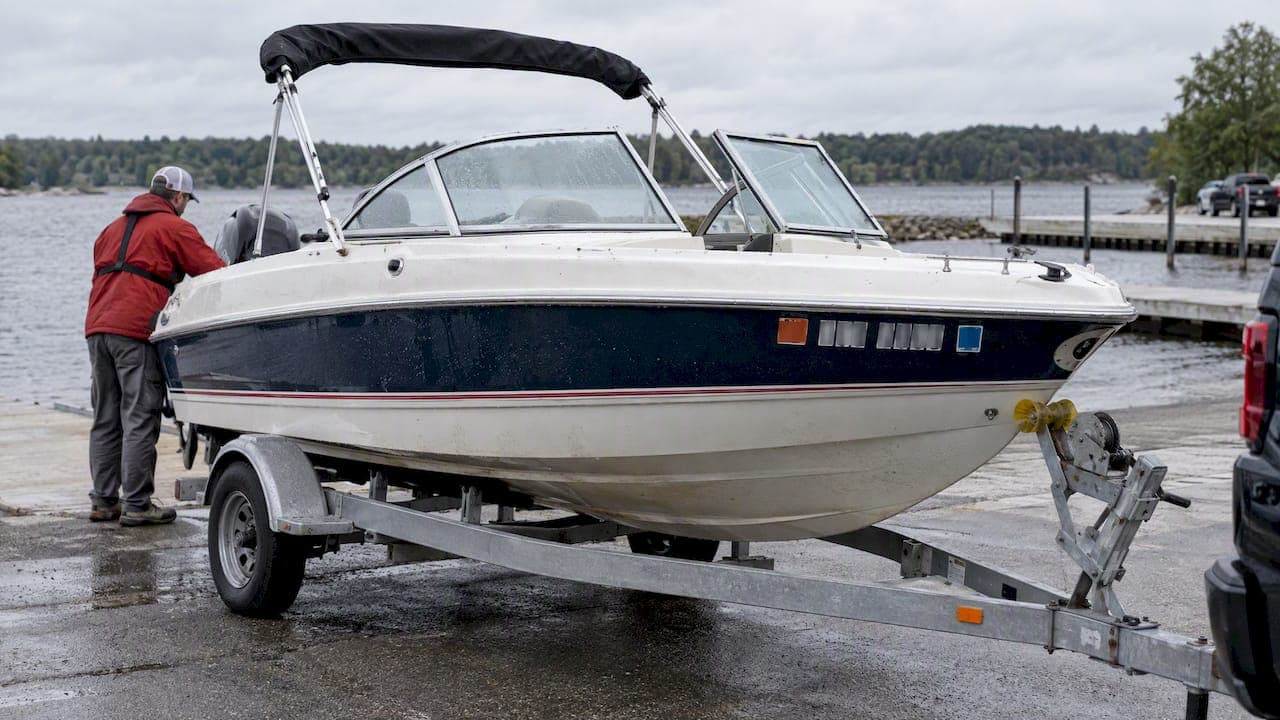
Registration numbers must be a solid color that contrasts with the hull where they're placed, light on dark or dark on light, and the numbers must appear in plain block characters at least 3 inches high. That's the federal floor under 33 CFR §173.27, but your issuing state sets its own exact wording, so confirm the current rule before you finalize any color choice.
TL;DR:
- Check your issuing state’s current statute for decal placement, vessel exceptions, and font rules; federally documented boats may follow a different numbering scheme.
- Photograph the planned color pair on the actual hull from about 50 feet away in morning and afternoon light, including an angled view.
- Use a matte backing plate when patterns, metallic finishes, or texture obscure the numbers, and place it on each side of the vessel’s forward half.
- Separate letter and number groups with a space or hyphen of the required width, and ensure trim or hardware does not obscure the sequence.
Table of Contents
- Quick checklist: the color and contrast rules to follow now
- Federal baseline (33 CFR §173.27): the legal text that sets color and visibility rules
- How states vary and how to check your state's exact rule
- Practical color-pair recommendations and real-world examples
- When and how to use a backing plate or alternate mounting to meet contrast rules
- Decal materials and durability: why marine-grade vinyl is a practical compliant choice
- A short workflow to verify compliance before ordering or applying numbers
- What matters most when choosing registration number colors
- RegistrationDecals.com: compliant decals, color previews, and ordering
- FAQ
- Sources
Quick checklist: the color and contrast rules to follow now
Before you order decals or paint numbers by hand, run through this list. It covers the points that trip up most boat owners, from the wrong character height to a color pair that looks fine in a catalog but disappears on the water.
- Confirm which state issued your registration and look up that state's specific wording on number color and placement, since the federal rule is only a baseline.
- Pick your color pair by holding a sample against the exact spot on the hull where the numbers will sit, then step back and check it from a distance, not just up close.
- Use plain vertical block characters of a size consistent with federal minimum height rules, and keep the spacing or hyphen pattern your state requires between letter and number groups.
- If your hull has a pattern, decals, or a metallic finish at the bow, plan for a backing plate rather than hoping the numbers read clearly on their own.
- Save a copy of your state's guidance page or statute text and keep it with your registration paperwork in case an officer asks about your setup.
That last point matters more than it sounds. Marine officers who check registration numbers are comparing what they see on your bow to a legal standard, and having the citation handy settles any question fast. Our state regulation guide lists the current wording for all 50 states if you want a single place to check before you order.
Federal baseline (33 CFR §173.27): the legal text that sets color and visibility rules
The federal rule that governs boat numbering sits in 33 CFR §173.27, and it's shorter than most owners expect. Numbers go on each side of the forward half of the vessel, they must be plain vertical block characters, and they must meet the federal minimum size requirements. The text also requires that the number contrast with the background color and be distinctly visible and legible, with no overlap from trim, railings, or other hardware. Numbers must read from left to right.
Spacing matters too. The federal text requires a space or a hyphen, equal in width to a letter other than "I" or a number other than "1," between the letter group, the number group, and the trailing letters. A properly spaced number looks like DC 5678 EF or DC-5678-EF, never run together. This same compiled text appears in the govinfo CFR volume, which is useful if you want a citable government PDF rather than the online code reader.

Backing plates are allowed under this same section when hull color, texture, or shape would prevent the numbers from being easily visible. That's the regulatory escape hatch for boats with dark gelcoat, metallic flake, or busy graphics packages near the bow, and we cover how to use one correctly later in this guide.
What the federal rule doesn't do is name a specific color. There's no official "approved list" of hues. The requirement is functional: contrast and legibility. That's why state language so often echoes "solid color that contrasts with the background" rather than naming blue, black, or white outright, and it's why your state's exact phrasing is what actually governs your boat.
How states vary and how to check your state's exact rule
States build on the federal baseline, but the wording and emphasis shift from one agency to the next. Florida Statutes §328.48 requires numbers to be a solid color that contrasts with the background and stay maintained so they remain clearly visible and legible, alongside the same 3-inch minimum height and forward-half placement. Texas Parks and Wildlife repeats the baseline almost word for word but adds detail on exactly where the validation decal sits relative to the numbers. Washington's administrative code and New Jersey's boating rules both require contrast and legibility using similar language, though the exact phrasing and any placement exceptions differ by agency.
What tends to vary from state to state:
- Treatment of documented vessels, which sometimes follow a separate numbering or decal scheme instead of standard state registration.
- Exactly where the validation decal must sit next to the registration number.
- Whether a state's guidance names acceptable fonts or character styles beyond "plain block."
- Exceptions for certain vessel types, like homebuilt boats, rental fleets, or government vessels.
Documented vessels are a common source of confusion. Some states, including guidance from Maryland's Department of Natural Resources, treat federally documented boats differently from state-registered ones, sometimes requiring a documented-vessel decal instead of standard registration numbers. If your boat carries a Coast Guard document, check your state's specific treatment before assuming the standard color rule applies the same way.
Here's a reproducible process for finding your state's exact rule:
- Search for your state's boating or wildlife agency website and look for a "vessel registration" or "titling and registration" section.
- Find the specific statute or administrative code section on number display, not just the general registration overview page.
- Save a PDF or screenshot of that page, including the date you accessed it, since agencies update guidance periodically.
- Note any effective date listed on the statute, since older guidance you find through a search engine may not reflect current law.
- Keep that saved copy with your boat's registration card so you can produce it if a marine patrol officer questions your setup.
This small amount of homework avoids the most common and avoidable problem: ordering decals in a color that technically meets the federal rule but conflicts with a specific state requirement you didn't know about. Our regulations index pulls together current state-by-state wording in one place if you'd rather skip the search-engine step.
Practical color-pair recommendations and real-world examples
Once you know your state's rule, picking an actual color comes down to contrast and real-world visibility, not personal taste. A few combinations consistently work well across hull types:
- Black on white or cream: the most reliable pair for light-colored fiberglass hulls, with contrast that holds up in full sun and overcast conditions alike.
- White on navy or black: the standard choice for dark hulls, and the pairing most likely to meet a "distinctly visible" standard at a glance.
- Dark gray on white: a softer alternative to pure black that still reads clearly from a normal inspection distance.
Yellow and metallic finishes deserve caution. Yellow can wash out against light hulls in direct sun, and metallic or chrome-look vinyl can create glare that actually reduces legibility rather than improving it, even though it looks sharp in a design preview. If you're drawn to either option, test it on the actual hull before committing, not just on a screen.
Patterned, graphic-heavy, or multi-color hulls create a different problem. Rather than trying to find the one small patch of solid color near the bow where numbers might technically contrast, most owners get a cleaner and more defensible result from a backing plate, which creates a dedicated, uniform surface for the numbers regardless of what's painted around it.
Pro Tip: Photograph your planned number placement from about 50 feet away in both morning and afternoon light before you order anything. A color pair that looks crisp on your phone screen indoors can lose contrast fast once gelcoat glare and water reflection get involved.
A simple testing protocol catches most problems before they become expensive:
- Stand back roughly 50 feet from the bow and photograph the planned location in morning light and again in afternoon light.
- Check the photos at an angle, not just straight on, since officers and other boaters rarely view your numbers head-on.
- Compare what the camera shows against what your own eye sees standing at the same distance, since phone cameras sometimes boost contrast that isn't really there in person.
The regulatory purpose behind all of this, as reflected in the legal interpretation of 33 CFR §173.27, is identification under real viewing conditions, not a styling preference. A color choice that looks good in a catalog but fails the 50-foot daylight test hasn't actually met the standard, even if it technically "contrasts" on paper.
When and how to use a backing plate or alternate mounting to meet contrast rules
Federal rules under 33 CFR §173.27 specifically allow a backing plate when hull color, texture, or design would prevent registration numbers from being easily visible directly on the hull or superstructure. This isn't a workaround or a gray area: it's a built-in solution for exactly the hulls that cause the most trouble, including dark gelcoat, metallic flake, and heavily graphic-wrapped boats.
A well-designed backing plate follows a few simple principles. Choose a neutral, matte finish rather than gloss, since a glossy plate under direct sun can create glare that undermines the contrast you're trying to establish. Size the plate generously enough to create a clean, uncluttered field around the numbers rather than a tight rectangle that looks cramped against the hull. And pick the plate's color specifically to maximize contrast with your chosen number color, usually white or light gray behind dark numbers, or charcoal behind white numbers.
Mounting location matters as much as the plate itself. The plate and numbers still need to sit on each side of the forward half of the vessel, following the same placement rule that applies to numbers painted or applied directly on the hull. Keep your state's validation decal near the registration numbers as most states require, but positioned so it doesn't overlap or crowd the number sequence itself. A backing plate makes this easier, since it gives you a defined, flat surface to work with instead of negotiating around a curved or textured bow.
If you're unsure whether your hull needs a backing plate, the 50-foot distance test described earlier settles it quickly. If the numbers are hard to pick out from that distance even with a carefully chosen color, a backing plate solves the problem more reliably than adjusting the color pair further.
Decal materials and durability: why marine-grade vinyl is a practical compliant choice
Color choice only holds up over time if the material underneath doesn't fade, peel, or discolor within a season. Marine-grade vinyl designed for UV resistance and saltwater exposure keeps its original color and contrast far longer than general-purpose vinyl or hardware-store decals, which tend to chalk out or yellow after repeated sun exposure.
Finish affects perceived contrast as much as color does. A glossy white number on a glossy navy hull can reflect enough light at certain viewing angles to wash out the contrast that looked strong in the shade. Matte or satin finishes in white or off-white tend to read more reliably against dark matte hulls under direct sunlight, since they scatter light rather than bouncing it straight back at the viewer. Our vinyl materials guide goes into more depth on how finish and grade affect longevity if you want the technical background.
Painted numbers are still an option some owners prefer, usually for a more permanent, built-in look or on older boats where a previous owner already painted the hull. The trade-off is practical: paint is harder to remove or update if you sell the boat or change your number sequence, it typically costs more in labor if you're not doing it yourself, and matching an exact factory gelcoat color precisely enough to maintain contrast standards takes real skill. Vinyl decals avoid all three problems while meeting the same legal standard, which is why they've become the default choice for most recreational boat owners.
Pro Tip: Rinse registration numbers with fresh water after saltwater use just like the rest of your hull, and inspect them each spring for lifting edges or fading. A number that's technically still visible but noticeably duller than when installed is worth replacing before it becomes a compliance question on the water.
Keeping gelcoat itself in good condition also helps decal performance, since a chalky or oxidized hull surface can affect how well vinyl adheres and how long its finish holds up. Resources on gelcoat protection, like Diamondbrite's guidance on guarding your boat's finish, cover the maintenance side of that equation if your hull needs attention before you apply new numbers.

A short workflow to verify compliance before ordering or applying numbers
A few deliberate steps before you order anything save you from reordering decals in the wrong color or redoing an installation that doesn't pass inspection.
- Locate and save your issuing state's exact registration-number display rule, whether that's a statute, an administrative code section, or an agency guidance page, and note the date you accessed it.
- Take staged photos of the planned placement on your actual hull, testing contrast from roughly 50 feet away in both morning and afternoon light, and at an angle rather than only straight on.
- Choose a backing plate or fall back to a black-on-white or white-on-black default if you're still unsure after testing, then keep your saved state guidance with your boat's registration paperwork.
This workflow takes less time than most owners expect, usually under an hour including the search for your state's rule, and it removes the guesswork that leads to mismatched colors or placement that fails a routine check on the water.
What matters most when choosing registration number colors
The federal contrast rule gets treated like a formality by a lot of boat owners, something to satisfy quickly so they can move on to picking a color they like. That's backward. Contrast and legibility are the actual point of the regulation, and a color pair that looks sharp in a design preview but fails at 50 feet in open water hasn't met the standard, even if it technically qualifies as "contrasting" on paper.
The conventional advice to "just pick a color that stands out" undersells how much lighting, glare, and hull finish affect real-world legibility. Matte versus gloss, morning versus afternoon sun, and viewing angle all change what actually reads clearly on the water, and none of that shows up in a flat online preview.
If you take one thing from this guide, test your color choice on your actual hull before you commit. A five-minute photo check from a distance catches problems that no amount of comparing swatches on a screen will reveal.
— Taylor
RegistrationDecals.com: compliant decals, color previews, and ordering
Once you know the color pair your state requires, we make it simple to turn that decision into decals that actually hold up on the water. We produce custom registration decals from marine-grade vinyl built to resist UV fading and saltwater exposure, and our online design tool lets you preview your exact number sequence in different colors and fonts before you commit to an order.
Production typically takes 3 to 5 business days, and shipping is free across the contiguous United States for both small and bulk orders. Before you finalize anything, run through the verification workflow above and check our state regulations page to confirm the current wording for your boat's issuing state. Once you're confident in your color choice, preview it on our design tool and place your order.
FAQ
Can boat registration numbers be any color?
No single color is mandated by name under federal law. The requirement under 33 CFR §173.27 is that the numbers be a solid color contrasting with the background, distinctly visible, and legible, with your specific state's statute or agency guidance setting any additional wording.
How do you read boat registration numbers?
Boat registration numbers are read left to right and follow a set pattern: a state abbreviation, then a number sequence, then a trailing letter pair, with spacing or hyphens separating each group as required under 33 CFR §173.27. A properly formatted example looks like DC 5678 EF or DC-5678-EF.
How should boat registration numbers be displayed?
Numbers must appear on each side of the forward half of the vessel in plain vertical block characters at least 3 inches high, contrasting clearly with the hull color, per 33 CFR §173.27 and reflected in state guidance such as Texas Parks and Wildlife's placement rules. A backing plate is allowed when the hull's color or texture would otherwise make the numbers hard to see.
What is the 12-digit hull number on a boat?
The hull identification number, often called the HIN, is a permanent manufacturer-assigned code stamped into the boat's transom, separate from the state-issued registration numbers that go on the bow. The HIN identifies the specific vessel for title and ownership records, while registration numbers are the display requirement covered by this guide.
Sources
- eCFR :: 33 CFR Part 173 -- Vessel Numbering and Casualty and Accident Reporting
- CFR-2025 title33 vol2 part173 (govinfo PDF)
- Chapter 328 Section 48 - Florida Statutes
- Numbers and Decals on Vessels - Texas Parks and Wildlife