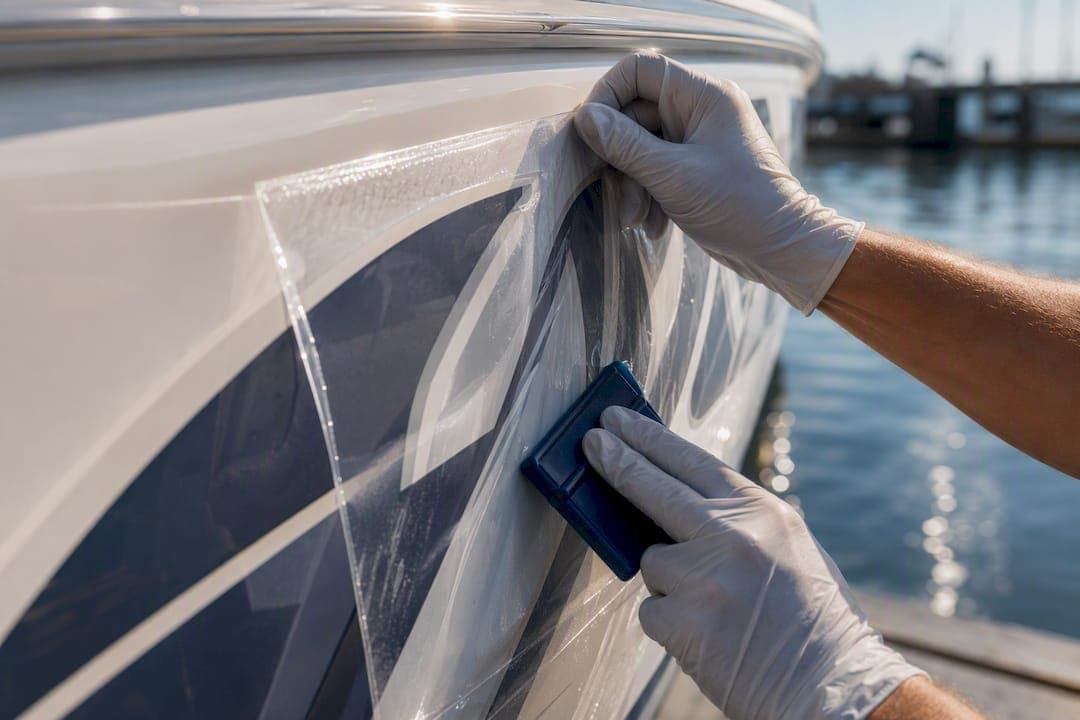
For most boat graphics, a marine-grade overlaminate over cast vinyl is the single most effective way to protect boat decals from UV fading and salt damage. Sprayed clear coats carry real risk for printed inks and adhesives, so use them cautiously. Between outings, rinse with fresh water and skip any wax containing silicone.
TL;DR:
- Overlaminate provides the best protection for printed boat decals, significantly extending their lifespan against UV, salt, and abrasion.
- Proper surface preparation, including removing wax and contaminants and ensuring correct temperature, is crucial for decal adhesion and durability.
- Edges are the most vulnerable area for water ingress, making edge-seal pens and protective patches essential for preventing delamination.
- Regular rinsing with fresh water after saltwater exposure and avoiding silicone-based products can greatly improve decal longevity.
- When signs of widespread adhesive failure, bubbling, or edge lift occur, replacing decals is more cost-effective than repeated repairs.
Table of Contents
- What's the Best Way to Protect Boat Decals?
- Getting the Surface Ready Before You Apply Anything
- Sealing Edges and Handling Small Repairs
- Cleaning and Seasonal Maintenance That Actually Works
- When to Repair vs. Replace Your Decals
- What I Wish More Boat Owners Understood About Decal Care
- Where to Get Decals Built to Handle All This
- Sources
What's the Best Way to Protect Boat Decals?
Overlaminate wins for printed graphics, and it isn't close. A clear film bonded over the printed vinyl acts as a sacrificial layer, taking the UV hit, the abrasion, and the chemical exposure so the ink underneath doesn't have to. Laminated prints often last significantly longer than unlaminated ones exposed to the same sun and salt.
Sprayed clear coats sound like a cheaper fix, but the chemistry gets tricky fast. A 2K urethane or hobby acrylic clear has to be matched to the vinyl and ink underneath, because solvents in the wrong clear coat can cloud a print or eat into the adhesive bond. That risk gets worse with printed graphics specifically. Spray clears can chemically interact with vinyl plasticizers, causing clouding or premature failure that shows up months after the job looked perfect.
Topical protectants sit at the bottom of the durability ladder, but they still have a job. They're fast, cheap, and fine as interim protection between bigger maintenance steps, as long as you avoid anything with silicone.
A rough guide for picking your method:
- Printed graphics (registration numbers, boat names, custom art): overlaminate, full stop.
- Single-color cut vinyl: overlaminate is optional, since there's no ink layer to protect from fading.
- Boats that see heavy saltwater use: professional lamination beats DIY every time.
Getting the Surface Ready Before You Apply Anything
Skipping prep is the number one reason decals fail early. Contamination from wax, silicone, or oil residue is the most common cause of adhesive failure, and it's almost always preventable.
Work through the surface in this order:
- Strip old wax and grease with a marine-grade wax remover, working the whole panel, not just the decal area.
- Wipe the surface with 70% isopropyl alcohol on a lint-free cloth. Change cloths often. A dirty cloth just redistributes the grime you're trying to remove.
- Let the surface sit for at least 30 minutes before applying decals or any protective coating. Rushing this step is where most owners go wrong.
- Check the temperature. Hull and decal should both be above 50°F, and you want to be out of direct sun. Heat makes vinyl tacky and unpredictable; cold makes it brittle and resistant to bonding.
- Test on a scrap piece or hidden spot first, especially with a new clear coat or overlaminate brand.
- Respect cure times for both adhesives and sprayed clears before the boat goes back in the water.
One detail people miss: match your film types. Cast overlaminate belongs over cast vinyl. Mixing brands or film types causes shrinkage and edge lift down the line, particularly on compound curves like a bow or transom corner.
Sealing Edges and Handling Small Repairs
Water doesn't attack a decal head on, it sneaks in at the edges. An edge lifting even a sixteenth of an inch gives water a path underneath, and once it's in, the clock starts on delamination.
- Edge-seal pens lay down a thin, continuous bead around the decal perimeter, blocking capillary action before it starts. They work best applied immediately after installation, on new, well-bonded decals rather than as a rescue attempt.
- Clear overlaminate patches protect high-abrasion zones, near swim platforms, cleats, or anywhere lines and gear rub against the hull.
- Pressure washing should always run parallel to the decal edge, never straight into it. A perpendicular blast at 2,000 PSI will find any weak edge and finish the job.
Pro Tip: If you catch a lifted edge within the first inch or two and the vinyl underneath still looks clean, an edge-seal pen usually holds. If the lift has spread past a few inches or you see discoloration creeping under the film, you're looking at replacement, not repair.
Cleaning and Seasonal Maintenance That Actually Works
Your post-trip routine matters more than any product you buy. After saltwater outings, rinse the hull with fresh water, dry it, and inspect decal edges while you're at it. If the boat is going to sit in direct sun for more than a day, follow up with a vinyl-safe protectant.
- Rinse after every trip. Salt left to dry becomes an abrasive film that grinds away at laminate finish.
- Reapply a vinyl-safe protectant every two to three months during heavy-use seasons.
- Inspect edges and seams closely before winter storage, catching small lifts before months of freeze and thaw make them worse.
- Cover the boat with breathable material. A tight, non-breathable cover traps condensation against the decal, which is its own kind of slow damage.
Skip anything silicone-based. Silicone migrates under decal edges and breaks down adhesive bonds over time, along with ammonia-based cleaners and abrasive pads. A pH-neutral marine soap and a dedicated vinyl protectant do the job without the side effects.
When to Repair vs. Replace Your Decals
Not every problem is worth chasing with a patch kit. A few signs mean it's time to stop repairing and start planning a reinstall:
- Widespread yellowing across the laminate, not just a faded spot.
- Bubbling that covers more than a small patch.
- Adhesive failure across a large section rather than one lifted corner.
- Edge lift that keeps coming back after resealing.
Longevity depends heavily on material. Cast vinyl with a proper marine overlaminate can run several seasons up to 7 to 10 years depending on sun and salt exposure. Calendered vinyl tops out closer to 3 to 5 years, and it struggles more on curved surfaces to begin with.
Once you're past the small-repair stage, professional reinstallation with matched materials almost always costs less over time than another round of patchwork.
What I Wish More Boat Owners Understood About Decal Care
The failures I see traced back aren't material problems, they're protocol problems: skipping the IPA wipe, applying below 50°F, grabbing whatever wax is on the shelf without checking for silicone. Match your film types, respect cure times, and don't skip the post-trip rinse. None of it is complicated. Most of it just gets skipped because it feels optional until it isn't.
— Taylor
Where to Get Decals Built to Handle All This
Every step above works better when you start with the right material, and marine-grade, UV-resistant, saltwater-proof vinyl with optional overlaminate is recommended for printed graphics that need the extra layer of protection.
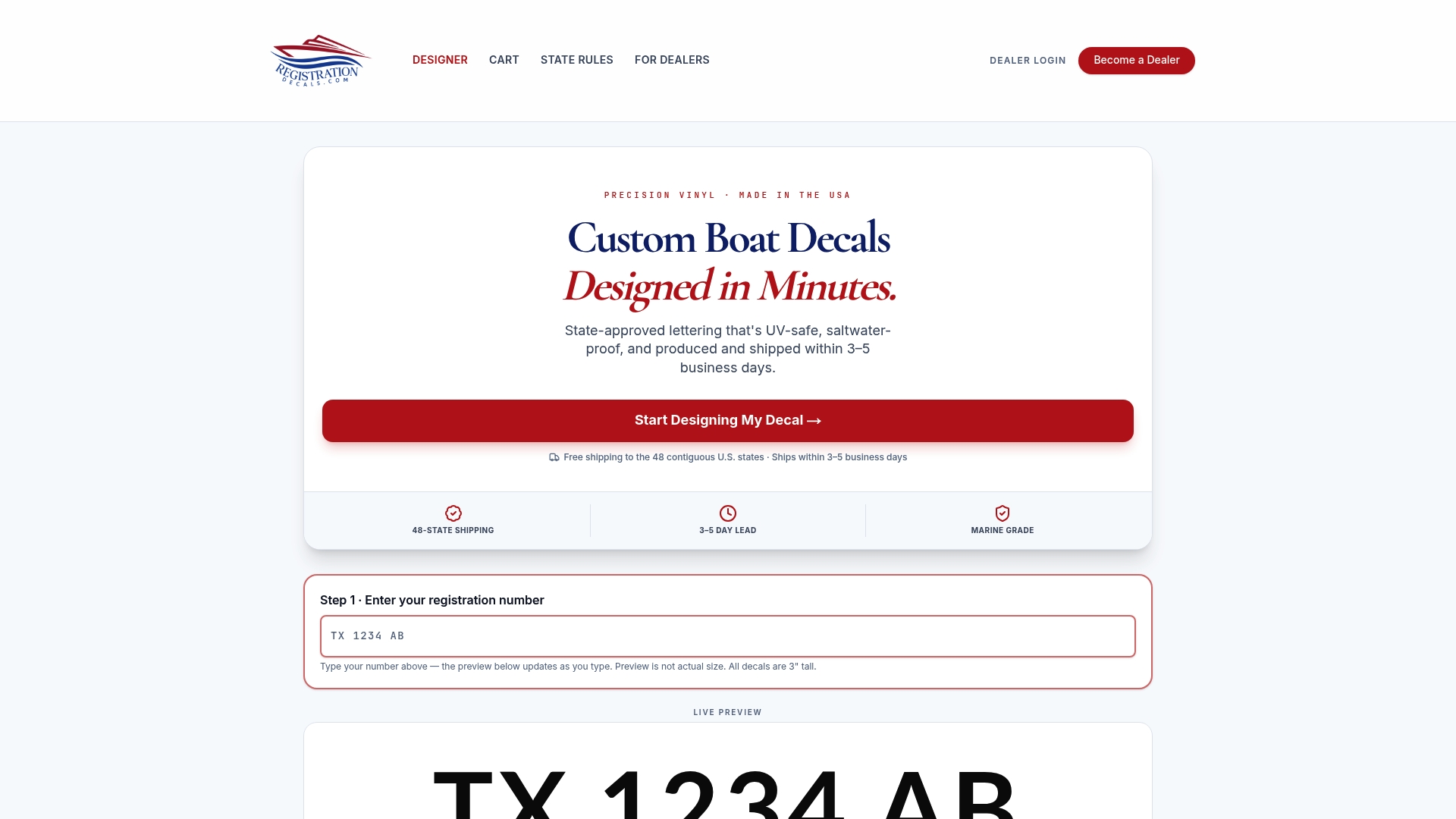
You can design your decal online by entering your registration number, picking colors and fonts; shipping times and costs vary, so check the provider's website for details. Marinas and dealerships needing volume can order through the wholesale program instead of one-off retail pricing.
| Situation | Better fit |
|---|---|
| New registration numbers, standard hull | Order custom decals direct with matched overlaminate |
| Large printed graphics, curved surfaces | Professional lamination install |
| Moving to a new state | Check state-specific requirements before reordering |
If you're unsure how long your current decals have left, the lifespan breakdown walks through what to expect by material type. And if you're handling registration paperwork alongside decal replacement, vessel flag registration services can help sort out documentation at the same time. Start your design now and have new decals in hand before your next trip out.
Sources
- What Is Boat Decal Overlaminate? A Clear Guide
- How to Make Waterproof Vinyl Decals for Boats and Outdoor Use — Printable Press