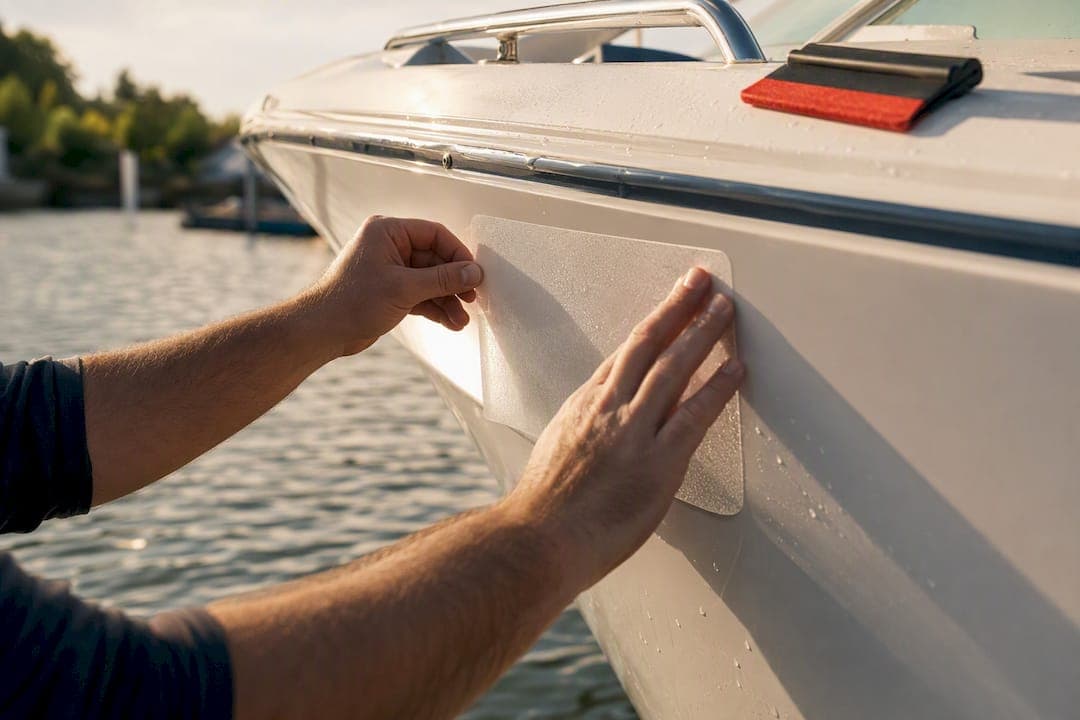
A boat registration number follows a fixed structure: a two letter state code, a numeric group, and often a two letter suffix, with a space or hyphen separating each part (think TX 1234 AB). Federal rule 33 CFR 173.27 requires that number to appear on both sides of the bow, in plain vertical block characters of a minimum specified height, in a color that contrasts sharply with the hull.
The number has to read left to right, and nothing else can share that space on the forward half of the boat. Validation decals sit close by, usually within a few inches of the number and lined up with it, and any decal past its expiration date needs to come off.
- Format: state code + numbers + suffix, separated by a space or hyphen
- Size: minimum 3 inches high, block style, no italics or script
- Placement: both sides of the bow, left to right, decals aligned nearby
These aren't style suggestions. A boat that shows up on the water with faded, undersized, or misplaced numbers is an easy stop for a marine patrol officer, and the fix afterward usually costs more time than getting it right the first time.
Key Takeaways
Boat registration numbers must follow a three-part state prefix, numeric group, and suffix format, displayed in 3-inch block characters on both sides of the bow per 33 CFR 173.27.
| Point | Details |
|---|---|
| Format structure | Use state prefix, numeric group, and optional suffix, separated by a space or hyphen the width of a standard letter. |
| Minimum size | Characters must stand at least 3 inches tall in plain vertical block style, never script or italic. |
| Bow placement | Numbers go on both sides of the forward half, reading left to right, in a color that contrasts with the hull. |
| Decal proximity | Validation decals sit within about 6 inches of the number and align with it; remove them once expired. |
| Material choice | Marine-grade vinyl resists UV fade and saltwater degradation better than standard vinyl or paint over time. |
Table of Contents
- Boat Registration Number Format Rules: Prefix, Numbers, and Suffix
- Where Boat Registration Numbers Go and How Big They Need to Be
- Validation Decal Placement Next to Your Registration Number
- When You Don't Need a State Number: Exemptions and the HIN Question
- How to Legally Affix Boat Numbers: Materials That Hold Up
- How to Confirm Your Exact State's Numbering Rules
- Mistakes That Get Boats Stopped on the Water
- What Owners Get Wrong About Registration Compliance
- Sources
Boat Registration Number Format Rules: Prefix, Numbers, and Suffix
Every state-issued number breaks into three pieces, and the order never changes. First comes the state prefix, which is the two-letter postal abbreviation for whichever state issued the registration, like FL, WA, or TX. Next is the numeric group, typically containing a group of digits, though the exact length depends on the state. Last is an optional two-letter suffix that most states tack on once they've cycled through enough numeric combinations in a given prefix.
Federal guidance under 33 CFR 173.27 says the break between these groupings needs a space or hyphen roughly the width of a standard letter, and specifically not the width of a letter like "I" or the numeral "1," since those are too narrow to register as a clear separator at a glance.
Here's what a compliant number actually looks like:
- FL 1234 AB — space-separated, standard four-digit format
- WA-5678-CD — hyphenated, same structure
- TX 9012 EF — space-separated with suffix
- CA-3456-GH — hyphenated with suffix
And here's what fails:
- FL1234AB — no separator at all, characters run together
- WA 5 678 CD — inconsistent spacing that breaks up the numeric group incorrectly
If your registration paperwork lists the number without visible spacing, don't assume you can skip the separator on the hull. The certificate format and the display format serve different purposes, and the display version always needs that clear break between segments.
Where Boat Registration Numbers Go and How Big They Need to Be
Numbers belong on both the port and starboard sides of the forward half of the hull, commonly called the bow section, and they must read left to right when the boat is viewed from the side. That's not negotiable under federal rule, and every state we've checked, including Florida, Washington, and Wisconsin, echoes the same placement standard.
Character height is the most commonly missed detail. The federal floor is 3 inches, measured on plain vertical block characters, meaning no cursive, no italics, no stylized fonts. If your hull has metallic paint, wraps, or a busy graphic pattern where the numbers would otherwise land, a solid-color backing plate solves the contrast problem. The plate gets permanently attached, and the numbers go on top of it in a color that stands out clearly against that plate rather than getting lost against the original hull finish.
- Both sides of the bow, left to right
- Minimum 3 inches tall, block style only
- Use a backing plate on patterned, dark, or reflective hulls
- Inspect annually and repaint or replace when characters crack, peel, or fade
Pro Tip: Check your numbers from about 50 feet away in full daylight. If you have to squint or guess at a character, so will the marine officer running you down on the water.
For a closer look at exact height math and how it's measured, see this guide on how tall boat numbers need to be.
Validation Decal Placement Next to Your Registration Number
Decals aren't decoration. They're the visual proof that your registration is current, and they need to sit close enough to the number that an officer can confirm both at a glance. Most states, including Washington under its Department of Licensing guidance, place that proximity requirement at roughly 6 inches from the registration number, aligned with it rather than floating somewhere else on the hull.
- One decal per side, matching the pair of registration numbers
- Positioned within about 6 inches of the number, in line with it
- Must match exactly what's printed on your certificate of number
- Expired decals come off immediately, no exceptions for "just a few weeks late"
Wisconsin's administrative code gets even more specific, calling for decals affixed about 3 inches aft of the number on certain vessel classes, which shows how much the exact inch count can shift depending on where you're registered. If your hull shape makes standard placement awkward, a backing plate or your state's boating agency can tell you the accepted workaround. For a visual walkthrough of how this looks in practice, where registration numbers go on a boat breaks down the alignment step by step.
When You Don't Need a State Number: Exemptions and the HIN Question
Not every vessel carries a state-issued number. Boats that are federally documented, meaning they hold a Certificate of Documentation through the U.S. Coast Guard rather than a state title, skip the state numbering requirement entirely. Instead, they display the vessel's name and hailing port, a completely different identification system governed by its own federal rules.
A few other carve-outs show up depending on where you operate:
- Racing-only vessels, used exclusively in organized competition, often follow separate numbering or exemption rules
- Certain small tenders and dinghies tied to a documented parent vessel may not need their own separate number
- Rented or leased vessels typically require the operator to carry the certificate of number or rental agreement on board, even though the boat itself is titled to someone else
Don't confuse the Hull Identification Number with your registration number. The HIN is permanently molded or stamped into the transom by the manufacturer and never changes, while your state registration number is assigned at registration and displayed on the bow. They serve entirely different functions, and mixing them up on paperwork is a common, avoidable error.
How to Legally Affix Boat Numbers: Materials That Hold Up
You've got three real options for putting numbers on your hull: paint, permanently attached plates, or marine-grade vinyl decals. Painting works but demands a steady hand and repeated touch-ups as marine exposure wears it down. Permanently attached plates solve the contrast problem on tricky hulls but add bulk and installation effort. Vinyl decals split the difference, offering clean, precise edges without the labor of freehand paintwork.
- Painted numbers: durable but require skill and periodic repainting
- Permanent plates: best for patterned or metallic hulls where contrast is an issue
- Marine-grade vinyl decals: precise, fast to apply, and easy to replace as needed
Material quality matters more than most owners realize. Standard vinyl fades and lifts under sustained UV and saltwater exposure, which is exactly the failure mode that leads to illegible numbers and, eventually, a stop from a marine patrol officer. Marine-grade vinyl built for UV resistance and saltwater exposure holds its color and edges far longer than generic sign vinyl, which matters if your boat sits in salt water more than a few weekends a year.
Pro Tip: Inspect your numbers every spring before the first launch. Cracking, curling edges, or dulled color are your cue to replace them before an officer flags it for you.
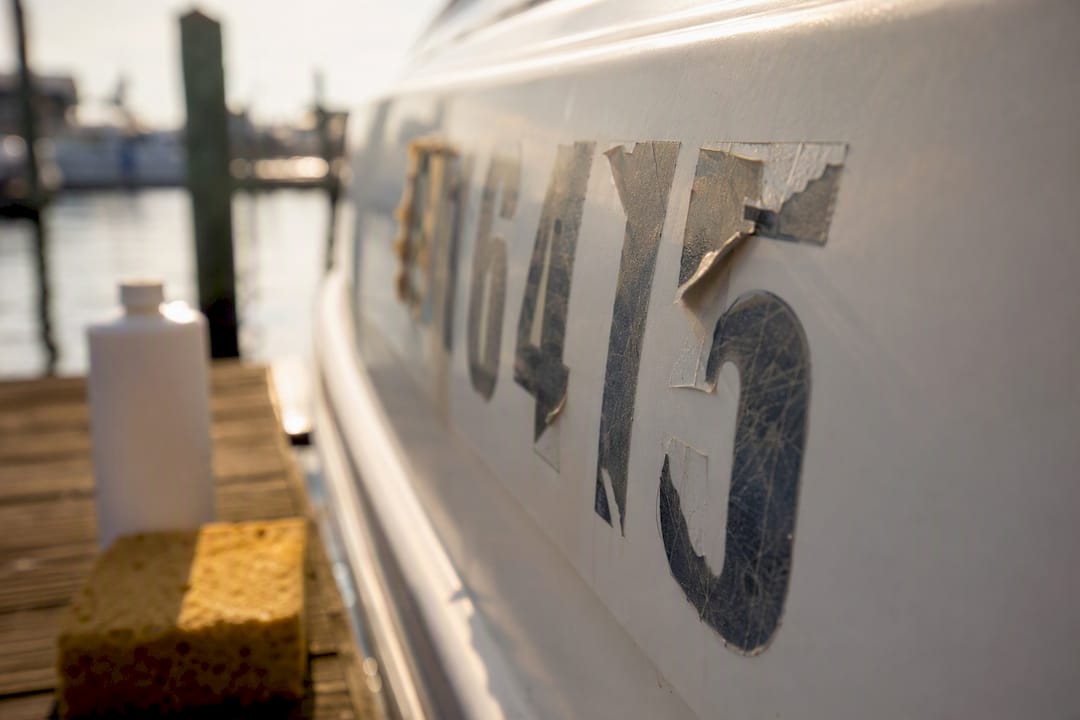
Registrationdecals produces custom, state-compliant decal sets in marine-grade vinyl with a 3-5 business day turnaround and free shipping across the contiguous United States, which makes replacing worn numbers a same-week fix rather than a summer-long project.
How to Confirm Your Exact State's Numbering Rules
The federal rule under 33 CFR 173.27 sets the floor every state builds on, but states layer on their own specifics, like exact digit limits or decal renewal schedules.
- Search "[your state] boat numbering and decals" or go straight to your state's boating or DMV site.
- Compare what you find against the federal baseline: 3 inch minimum height, block characters, bow placement.
- Note any added local detail, like Wisconsin's 3 inch decal offset or Florida's requirement that the number stay with the vessel while it's operated or stored in-state.
Florida and Washington both track the federal standard closely. Smaller states sometimes add wording around numeric length caps or renewal timing that's easy to miss if you're only skimming a summary page instead of the source text.
Mistakes That Get Boats Stopped on the Water
Most enforcement issues trace back to a short list of avoidable errors:
- Script or stylized fonts instead of plain block characters
- Numbers under the 3 inch minimum height
- Poor color contrast against the hull
- Extra decals or graphics crowding the forward half
- Expired validation decals still on display
Before you leave the dock: confirm numbers are visible from a distance, decals are current, your certificate of number is on board, and the HIN matches your title paperwork.
What Owners Get Wrong About Registration Compliance
The federal rule is short, specific, and almost never the actual source of confusion. What trips owners up is treating a state DMV summary page as the full picture when it's really a paraphrase of language that traces back to 33 CFR 173.27. That gap between paraphrase and source text is where errors creep in, things like assuming a hyphen is optional or that 2.5 inch numbers are close enough.
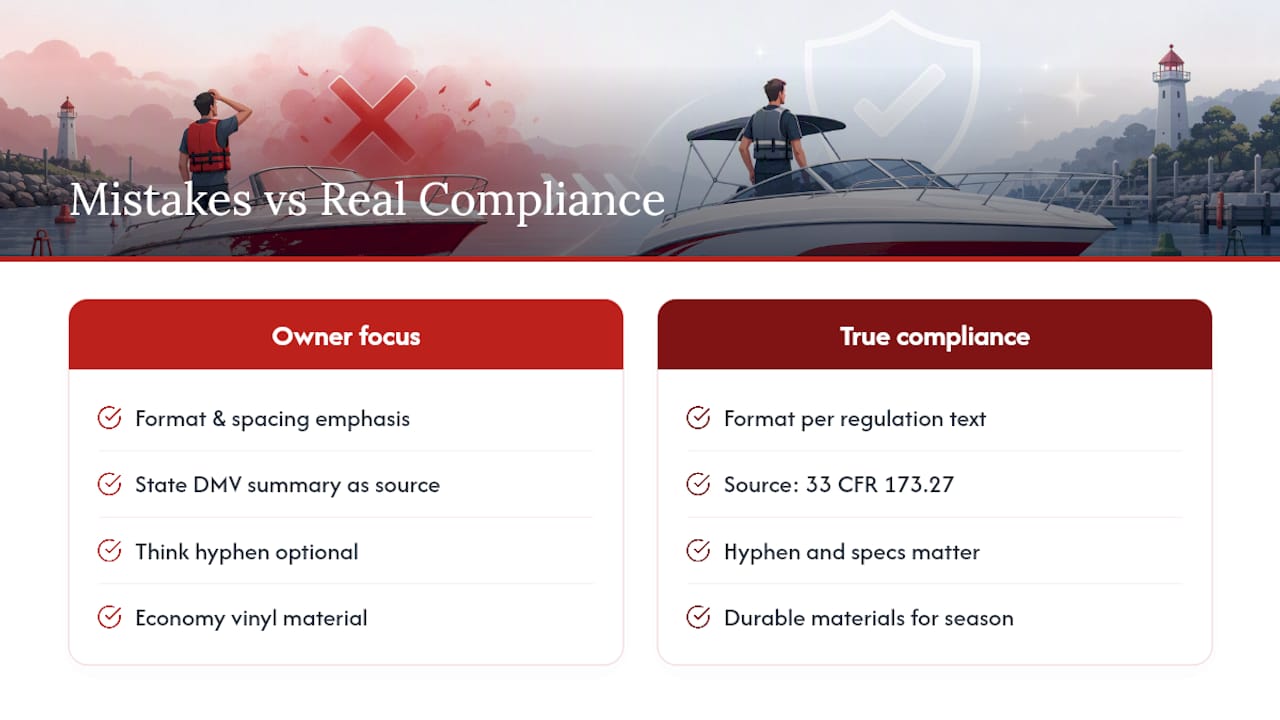
The bigger blind spot, though, is material choice. Owners spend real attention getting the format and spacing right, then slap on economy vinyl that clouds and lifts within a season of saltwater exposure. Compliance isn't a one-time event. It's something you have to maintain every time you launch, and a number that was legal in April but faded by August is still a violation in August.
Get the format right by reading the actual regulation text, not a secondhand summary. Then invest in materials that hold that compliance through an entire boating season instead of just the first few trips out.
— Taylor
Sources
- SUBCHAPTER S—BOATING SAFETY (33 CFR Part 173)
- Numbering and Decals - Florida Department of Highway Safety and Motor Vehicles
- Boat registration and hull identification numbers - Washington State Department of Licensing