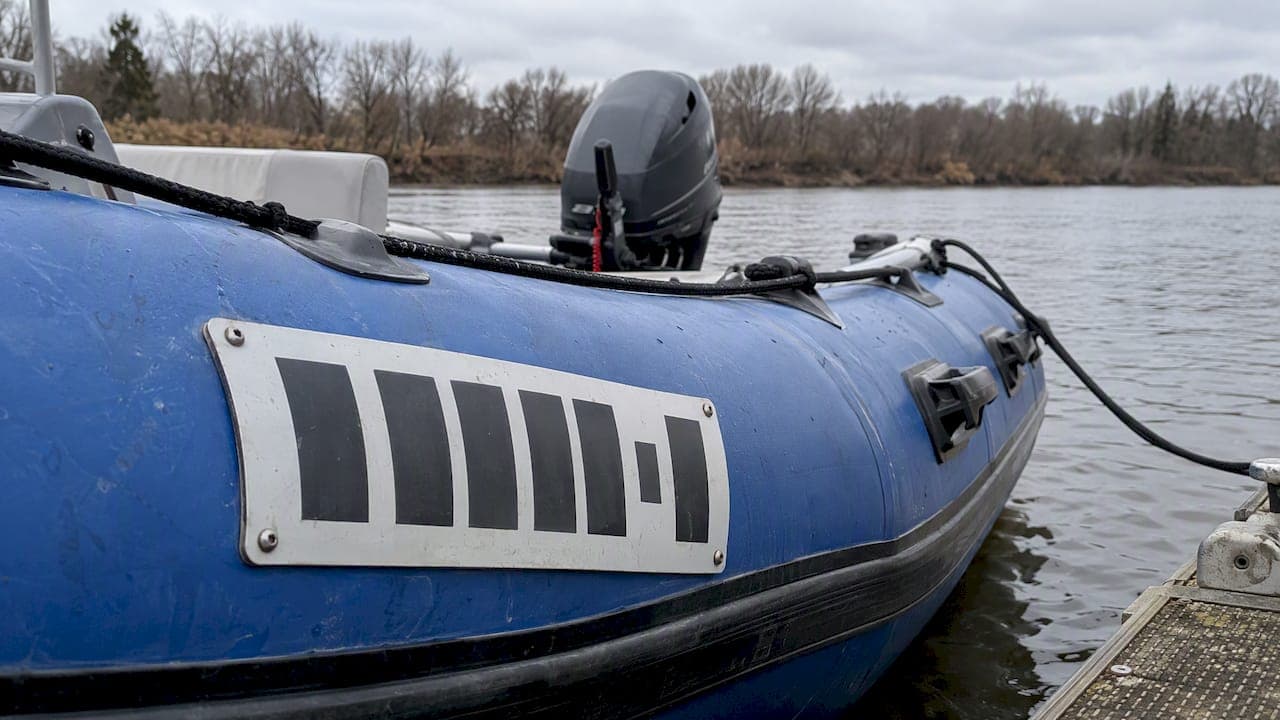
A practical compliant option for many U.S. boat owners is a marine-grade vinyl decal set with characters at least 3 inches tall, formatted to your state's rules. Before you order, have your exact registration number and state prefix in front of you. You will enter them into a design tool, so a single wrong character means a set you cannot legally use.
TL;DR:
- Federal rules require 3 inch block characters on both sides of the forward half, in contrasting colors, with validation decals within 6 inches.
- Check your state agency before ordering, because local rules can tighten decal spacing or specify hyphens; enter the assigned number and state prefix exactly.
- Marine grade vinyl suits smooth fiberglass or aluminum; inflatables and sharply curved surfaces need painted numbers or a rigid backing plate.
- Vinyl rated for UV exposure and saltwater resists sun damage, but raised characters catch more abrasion; inspect edges and replace decals when corners lift.
- Documented vessels need a permanently affixed official number preceded by NO, plus exterior name and hailing port lettering at least 4 inches tall.
Table of Contents
- What types of registration number panels can you choose from?
- What do federal and state display rules require?
- Which size, font, spacing and placement details must you get right?
- How do inflatables, PWCs, pontoons and documented vessels differ?
- What materials and finishes last longest on the water?
- How do you order and customize compliant panels?
- Why do we recommend marine-grade custom decals?
- How does RegistrationDecals.com get you compliant quickly?
- FAQ
- Sources
What types of registration number panels can you choose from?
Your hull and your tolerance for maintenance decide which panel type works best. Here is how the main options compare:
- Vinyl adhesive decals: Conformable and available as pre-spaced or custom sets. They suit flat or gently curved gelcoat and aluminum surfaces best.
- Raised or domed numbers: These give a dimensional look. Check how they mount and how permanent the adhesive is before you commit.
- Aluminum or rigid plate sets: A good choice when adhesives will not hold, or when you prefer a solid mounting point you can screw or rivet.
- Backing plates and mounts: Made for inflatables and sharply curved areas. Cable-tied plate options also exist for RIBs, where nothing sticks reliably.
Think about where the panel will sit and what rubs against it. A vinyl set on a smooth fiberglass bow is simple and cheap to replace. A tube of inflatable fabric is a different problem entirely. The panel type should follow the surface, not the other way around.
What do federal and state display rules require?
Start with the federal baseline, then layer your state's rules on top. Coast Guard boater's guide](https://www.uscgboating.org/assets/1/AssetManager/Boaters-Guide-to-Federal-Requirements-for-Receational-Boats-20231108.pdf), registration numbers must be painted on or permanently attached to each side of the forward half of the vessel. They must read left to right, use plain vertical block characters, stand at least 3 inches tall, and contrast with the hull color.
The validation decal has its own placement rule. The same federal guide says it must be affixed within 6 inches of the registration number on each side. Some states tighten that further, so do not assume six inches is always your limit.
States also add their own details. Virginia ties decals to the three-year registration, shows the month and year of expiration, and requires removing expired decals. New Mexico restates the federal-style rules and notes that numbers assigned there stay with the vessel for its life in the state.
Enforcement is real. The Oregon State Marine Board says that failing to display numbers and current decals properly can be a violation that carries fines.
The practical rule: meet the federal baseline first, then check your state boating agency for extra spacing, hyphen or decal-location requirements. Our state-by-state regulations hub is a handy place to confirm what applies to you before you order.

Which size, font, spacing and placement details must you get right?
These are the details inspectors notice, and they are easy to get right when you order carefully:
- Height and font: Characters must be at least 3 inches tall, in plain vertical block style. No script, no italics. Our page on how tall registration numbers need to be covers sizing in more depth.
- Spacing: Put a space or hyphen between letter and number groups. It must equal the width of a letter or number other than "I" or "1", per the federal guide. Both "FL 1234 AB" and "FL-1234-AB" are correct formats.
- Contrast: Choose white or bright numbers on a dark hull, and black or dark numbers on a light hull. A navy hull with navy numbers fails the rule no matter how neat it looks.
- Placement: Numbers go on each side of the forward half, with the validation decal within six inches. If you are unsure where exactly that is, see where registration numbers go on a boat.
One more point: a registration number appears on both sides, not just one. Our short answer on whether numbers go on both sides confirms it.
How do inflatables, PWCs, pontoons and documented vessels differ?
Unusual hulls can still comply. They just need a smarter mounting choice.
Inflatables and other highly curved surfaces rarely hold adhesive well over time. A rigid backing plate, or painted numbers, keeps the characters permanent and legible. The same logic applies to any flexible or ribbed surface.
Personal watercraft leave little room, so plan around small, flat areas. The numbers must sit on a permanent, non-removable part of the hull, never on a seat, cover or other piece that can be taken off. If you ride one, our guide to jet ski registration number rules walks through it.
Pontoons have their own quirks because of the tubes and the deck rail. See our pontoon placement guidance for the usual spots.
Documented vessels follow different marking rules altogether. According to LegalClarity, they carry an official number preceded by "NO." permanently affixed, plus name and hailing port lettering at least 4 inches tall on the exterior. That usually calls for a more permanent marking method than a standard decal.

What materials and finishes last longest on the water?
Sun, salt and abrasion are the three things that age a panel. Choose marine-grade vinyl rated for UV and saltwater resistance, paired with an adhesive made for gelcoat or aluminum. Raised or domed characters wear differently: they look great but catch more rubbing, so match the style to how your boat is used and docked.
Care is simple. Wash gently, skip harsh solvents, and glance at the edges and seams now and then. Lifting corners are your early warning that replacement is near. For more on lifespan, read how long marine vinyl decals last.
A vinyl care guide from Diamondbrite also explains how conditioning keeps boat vinyl flexible over time.
Pro Tip: Photograph your decals every season from the same angle, so you can spot early lifting or fading before it becomes a compliance issue.
How do you order and customize compliant panels?
Gather these before you open any design tool:
- Your registration number exactly as issued, plus your state prefix
- Preferred color and a block-style font
- The character height you need, at least 3 inches
- Your hull material and the dimensions of the mounting area
- Whether you need a backing plate or rigid option for a curved surface
Inside the tool, type the number exactly as shown on your registration, then check the preview for contrast, height and spacing. Before you finalize, compare that preview against the federal baseline and your state's specific guidance. Once your set arrives, our installation guide takes you through application step by step.
Why do we recommend marine-grade custom decals?
We make state-compliant decals and publish placement guidance, so we see which choices hold up. Marine-grade vinyl strikes the best balance: it is durable, looks clean, and is easy to replace when your number changes. Rigid solutions earn their place only on hulls where adhesive cannot work. Whatever you choose, put legibility and legal compliance first, and appearance second.
— Taylor
How does RegistrationDecals.com get you compliant quickly?
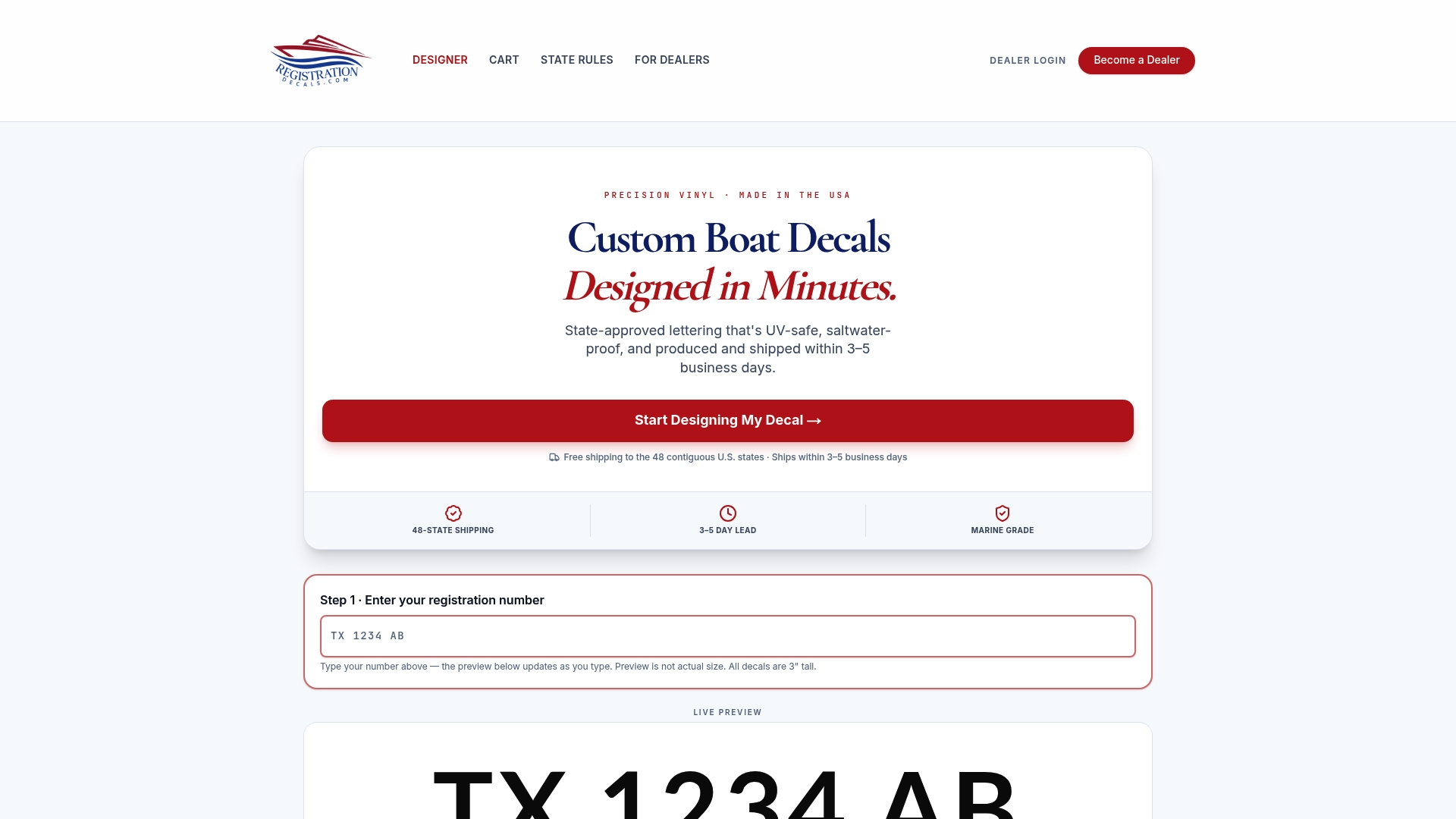
If your hull is a standard fiberglass or aluminum boat, we can get you from registration number to ready-to-install decals fast. Our approach covers the details above:
- Customizable, state-compliant, marine-grade vinyl decals built in an online design tool
- Production with free shipping across the contiguous United States
- Sets for common hull types, from jet skis and pontoons to center consoles
- Guidance on backing plates or rigid options if you run an inflatable or a heavily curved surface
Custom sets start at 35.99 USD per set. Registrationdecals with your number and state ready, and you can have decals on the way soon.
FAQ
How tall must boat registration numbers be?
They must be at least 3 inches tall, in plain vertical block characters. They also need to contrast with your hull color.
Do registration numbers go on both sides of the boat?
Yes. Numbers go on each side of the forward half of the vessel. The validation decal sits within six inches of the number on each side.
Where does the validation decal go?
It goes within six inches of the registration number on each side, according to the federal boater's guide. Some states require it closer, so check your state agency.
What if my boat is inflatable?
Adhesive often fails on flexible tubes. A rigid backing plate or painted numbers keeps the characters permanent and readable.
How long do registration decals last?
Registrations commonly last three years, and decals show the month and year of expiration, as Virginia's guidance notes. Replace them when the registration renews.
Sources
- A Boater's Guide to the Federal Requirements for Recreational Boats
- Watercraft Registration, Titling and Sales Tax Requirements | Virginia DWR
- Boat Registration Decal Requirements and Display Rules - LegalClarity
- Oregon State Marine Board : OR Number Placement, Spacing and Finding the HIN : Title & Registration : State of Oregon