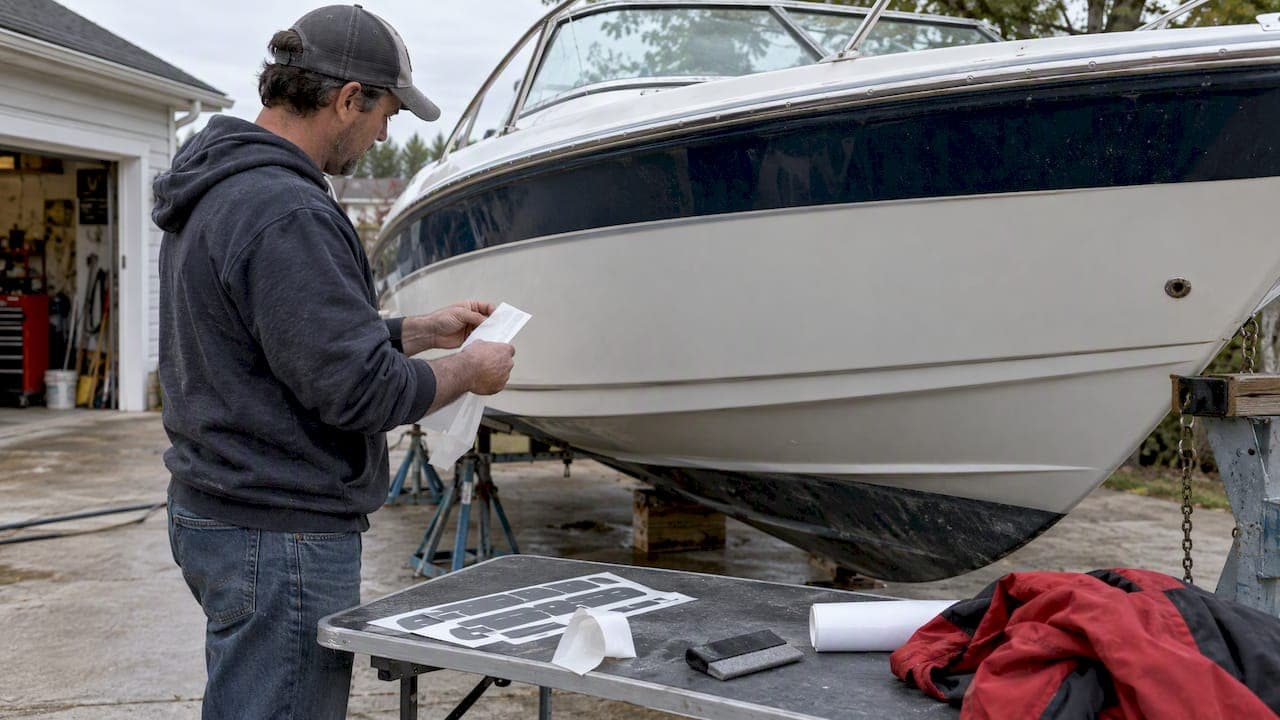
Preserve original boat numbers only when they remain intact, legible, and properly placed. Most full repaint jobs strip or damage the backing on stickers and painted lettering, which means installing new numbers once the paint cures. One rule overrides everything else: never alter a Hull Identification Number or VIN, and always work through the official channel when one of those needs correcting.
TL;DR:
- Preserving original numbers is only advisable when they remain fully adhered, legible, and compliant with your state's size and placement rules, especially after gentle masking and protection during a light repaint.
- Full strip-and-repaint jobs almost always damage sticker backing or adhesive, making replacement with new decals necessary to ensure durability and adherence.
- Never attempt to repaint or recreate a Hull Identification Number yourself; always use official verification and correction procedures through the authorized agencies.
- State replacement decal fees are typically low, around a few dollars, but custom decals from specialists usually take several days to produce and ship before installation.
- When choosing new decals, opt for marine-grade vinyl or aluminum materials designed for UV and saltwater exposure, and verify your state's regulations before ordering.
Table of Contents
- Checklist to decide: preserve, repair, or replace
- How to preserve factory stickers and painted numbers during repaint
- Safe methods to remove paint, over-spray, and adhesive residue
- How to order and install replacement decals that meet display rules
- Why HIN/VIN and official decals are different
- Expected costs and turnaround for replacement decals
- Author perspective and a vendor solution for replacement needs
- Get compliant replacement decals without the guesswork
- Sources
- FAQ
Checklist to decide: preserve, repair, or replace
Before you reach for a scraper or a new decal order, run through a short checklist. The right path depends on what kind of repaint you did and what condition the original numbers were in before you started.
- Check whether the lettering or sticker backing is still fully adhered, with no peeling edges or cracked vinyl.
- Confirm the numbers still meet your state's placement and sizing rules, since many jurisdictions require specific height and spacing.
- Note whether the repaint involved chemical stripping (which almost always destroys adhesive and sticker backing) or a scuff-and-recoat approach (which can sometimes be masked around).
- Compare the time cost of carefully preserving originals against the time and expense of ordering a fresh set.
Federal guidance on boat lettering backs this approach: preserve numbers only when they stay intact, legible, securely attached, and compliant with current placement rules, and otherwise remove the residue and apply a matching replacement set once the surface is ready. That single standard resolves most of the preserve-or-replace debate before you even pick up a tool.
Chemical strippers damage sticker adhesive far more often than sanding does, which is the main reason full strip-and-repaint jobs usually end with new numbers rather than salvaged ones.
How to preserve factory stickers and painted numbers during repaint
When the repaint is light, a scuff-and-recoat rather than a full strip, preservation is often realistic. Treat it as a short project with its own sequence rather than an afterthought squeezed into the paint schedule.
- Photograph every number and decal from straight on before you start, noting exact placement, font, and color for your own records.
- Mask tightly around the edges of each number using fine-line tape, and remove any nearby hardware or panels if the boat's layout allows it.
- Apply a thin bead of edge sealant or a temporary protective film over sticker edges that will be near spray or brush work.
- Avoid aggressive sanding directly on or beside sticker boundaries; spot-sand and spot-prime the surrounding area instead of blending the whole panel.
- After the paint cures, inspect each number for trapped overspray or lifted edges, then clean gently around the perimeter with a soft cloth.
If you find cracking, lifted corners, or paint bleed under the tape line during that final inspection, stop trying to save the originals. Switch to the replacement plan in the next section rather than forcing a patch job that will fail within a season.
Pro Tip: Remove nearby panels or trim pieces before masking whenever you can. It is far easier to protect a flat removed panel than to tape tight lines around a number still mounted on a curved hull.
Safe methods to remove paint, over-spray, and adhesive residue
When preservation is not realistic, the old numbers and any adhesive residue need to come off cleanly before new decals go on. Work from the gentlest method up, and stop as soon as the surface is clean rather than pushing further than necessary.
- Start with warm water, a few drops of mild dish soap, and a plastic scraper held at a low angle to lift loosened edges.
- Use a soft microfiber cloth for final wipe-downs so you do not introduce fresh scratches into gelcoat or paint.
- Move to a low-heat heat gun or a citrus-based, marine-safe adhesive remover only if soap and water leave residue behind.
- Reserve fine abrasive pads for stubborn adhesive spots, and test on a small hidden area first.
Avoid solvents and abrasive pads anywhere near the HIN plate or the current registration decal, since both are easy to scratch or obscure by accident. A detailed walkthrough of removing old registration decals covers specific products and timing for this step. If the residue sits directly over or against an identification panel and ordinary methods are not lifting it safely, stop and bring in a professional restorer or contact the issuing authority rather than risk damaging the ID itself.
Pro Tip: Work in sections no larger than a sheet of paper at a time. Trying to clear a whole hull side in one pass is how people end up over-applying heat or solvent in one spot.
How to order and install replacement decals that meet display rules
Once the surface is clean and the paint has fully cured, ordering new numbers is straightforward if you work through the details in order rather than guessing at sizing after the fact; understanding the right timing for decal installation after repaint can be found in marine paint systems explained.

Materials matter more than most owners expect. Marine-grade vinyl resists UV fading and saltwater exposure far better than general-purpose decal stock, and aluminum numbers are a solid option when you want raised, dimensional lettering instead of a flat decal. Both outperform standard adhesive vinyl on boats that sit in the sun or spend most of the season in salt water.
Before placing an order, confirm your state's current size and placement requirements and check how close the registration numbers can sit to the official validation decal. A state-by-state reference like boat decal regulations is worth checking even if you ordered from the same supplier last time, since rules occasionally change.
- Measure your hull to confirm the required letter height, typically three inches on many vessels but worth verifying for yours.
- Write out the exact registration number format your state issued, letter by letter, to avoid a reorder.
- Choose a font and color combination with enough contrast against your hull color to stay legible at a distance.
- Select your material, vinyl or aluminum, based on expected sun and saltwater exposure.
- Confirm production time and shipping before you finalize the order, especially if you are working around a launch date.
Installation follows a short, repeatable sequence:
- Clean and degrease the application area thoroughly, since any wax or residue will cause lifting within weeks.
- Use an alignment template or painter's tape guide to keep the baseline level before committing to placement.
- Apply with a squeegee working from the center outward to push out air bubbles rather than trapping them.
- Let the decal set for the manufacturer's recommended cure time before exposing it to water or washing.
A step-by-step walkthrough of this process, including template use and squeegee technique, is covered in the installation guide if you want photos alongside the steps. Owners who prefer vinyl decals over painted-on numbers for durability reasons can find the tradeoffs explained in more detail on the vinyl versus painted numbers page.
Why HIN/VIN and official decals are different
A registration number you apply yourself, the state's official validation decal, and the Hull Identification Number are three separate things with three separate rules, and conflating them is the most common mistake in this whole process.
A vessel's Hull Identification Number functions like a VIN: it is a permanent identity record, and incorrect or altered characters change the vessel's legal identity rather than just its appearance.
That standard comes directly from USCG guidance on HIN verification, which lists acceptable ways to confirm or correct a HIN, including pencil tracings, close-up photographs, physical inspection, and contacting the manufacturer. None of those methods involve repainting or re-stamping the number yourself.
- Never repaint, re-stamp, or recreate a HIN or VIN privately, even if the original has faded.
- Use official verification methods (tracing, photographs, inspection) rather than guesswork if the HIN is hard to read.
- Replace a lost, damaged, or stolen state validation decal through the issuing authority's own process, which commonly requires a specific form and sometimes a police report for stolen decals.
- Check your state's statute for no-cost replacement provisions; Florida law, for example, allows replacement without a fee when a decal is proven stolen or lost in the mail.
Keep these three categories separate in your head as you work through a repaint. Your own registration lettering is yours to maintain and replace. The validation decal belongs to the state. The HIN belongs to the vessel's permanent record, and it is the one thing on this list you do not touch yourself.
Expected costs and turnaround for replacement decals
Budgeting for replacement is usually a two-part question: what the state charges for its own decal, and what a custom manufactured set costs on top of that.
State replacement fees are small but vary by jurisdiction. Wisconsin's registration renewal and replacement form lists a $2.50 replacement-material fee for decals, separate from any registration card replacement cost. That figure is specific to Wisconsin's process and is a useful reference point, not a universal rate, since other states set their own fees and forms.
Custom manufactured decals run on a different timeline entirely. Production for a vinyl or aluminum number set typically takes several business days once the order is placed, plus shipping time, which matters if you are working against a launch date or an inspection deadline. If your schedule is tight, factor shipping transit into your planning rather than assuming production time alone covers it, and consider ordering as soon as the hull is clean rather than waiting until the day before launch.
Author perspective and a vendor solution for replacement needs
Most of the confusion around this topic comes from treating "the numbers" as one thing instead of three. Owners who understand the difference between their own registration lettering, the state's validation decal, and the HIN make far fewer costly mistakes during a repaint.

RegistrationDecals.com builds its custom registration numbers and decals from marine-grade vinyl chosen for UV and saltwater resistance, with an online tool that lets you enter your exact registration format and pick color and font before ordering. Production typically runs several business days with free shipping across the contiguous states, fitting the timeline most owners are working with after a repaint.
A manufactured decal from a specialist makes sense once you have confirmed your state's placement rules and cleaned the surface properly. A DIY painted number still works for owners comfortable with stencils and marine paint, but it will not match the UV resistance of vinyl built for the job, and the state-issued decal path only covers the validation sticker, never your own registration lettering.
— Taylor
Get compliant replacement decals without the guesswork
If your repaint left you without usable numbers, RegistrationDecals.com turns that gap into a short online order rather than a trip to a sign shop. Enter your registration format, pick a font and color that contrasts against your new paint, and the set ships in 3 to 5 business days with free shipping across the contiguous states.
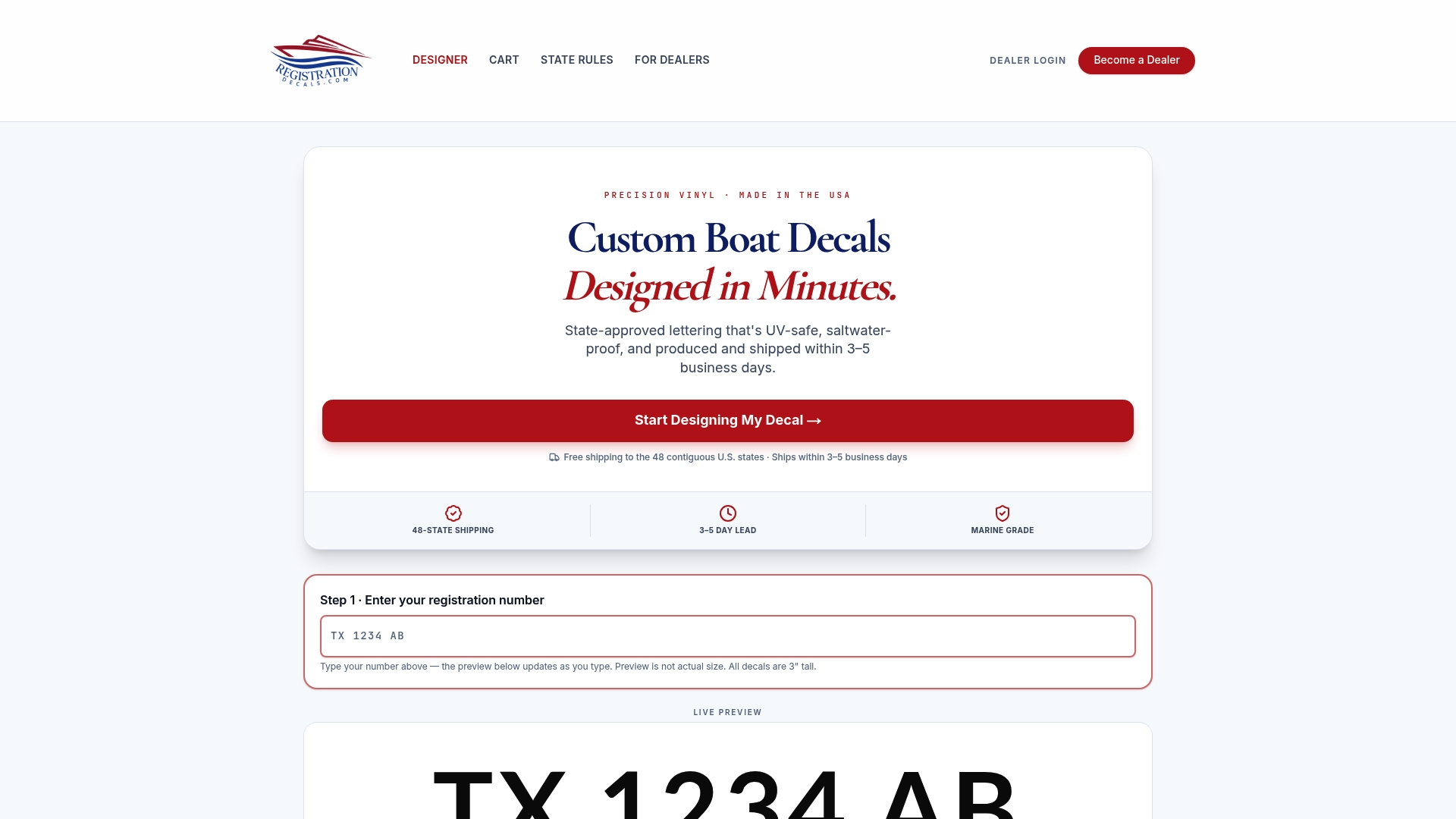
The Custom Boat Registration Numbers & Decals line covers most hull types, and dedicated product pages exist for jet skis, pontoons, bass boats, aluminum hulls, and center console boats, so you can order a set built for your specific vessel rather than a generic one. Marinas and dealerships repainting multiple boats can also order through the same system for bulk needs.
Start your order once your hull is clean and the paint has cured, and you will have a compliant, durable set of numbers ready before your next launch.
Sources
- BoatUS — USCG requirements for boat lettering
- Florida Application for vessel duplicate registration, replacement decal
- Wisconsin Form 9400-622 — Boat registration renewal and replacement materials request
- USCG — Vessel Determinations and HIN guidance
- Florida Statute Chapter 328.48 — Vessel registration and decals
FAQ
Can I just repaint over my old boat numbers?
Repainting over old numbers usually destroys the adhesive backing on stickers and can crack or lift painted lettering, so most boats end up needing new numbers after a full repaint. Light scuff-and-recoat jobs sometimes allow careful masking to preserve originals, but check the edges closely once the paint cures before assuming they survived.
Do I need to replace the HIN after repainting my boat?
No, you should never repaint, re-stamp, or recreate a Hull Identification Number yourself, since it is a permanent identity record rather than surface graphics. If the original HIN is faded or damaged, use the verification methods described in USCG HIN guidance, such as pencil tracing or manufacturer contact, instead of altering it.
How much does a replacement state decal cost?
State decal replacement fees vary by jurisdiction. Wisconsin's registration form lists a $2.50 replacement-material fee for decals as one example, while other states set their own rates and some waive the fee entirely for stolen or lost-in-mail decals when documentation is provided.
What material lasts longest for replacement boat numbers?
Marine-grade vinyl and aluminum numbers both hold up well against UV exposure and saltwater, outlasting general-purpose adhesive vinyl or standard paint. RegistrationDecals.com produces both options from marine-grade materials designed for that kind of exposure, with a 3 to 5 business day production window.
How long does it take to get new boat registration decals?
Custom manufactured decals commonly take several business days to produce, plus shipping time, before they reach you. Typical custom decal production timelines run several days with free shipping across the contiguous states, which is worth factoring in if you are working against a launch date.