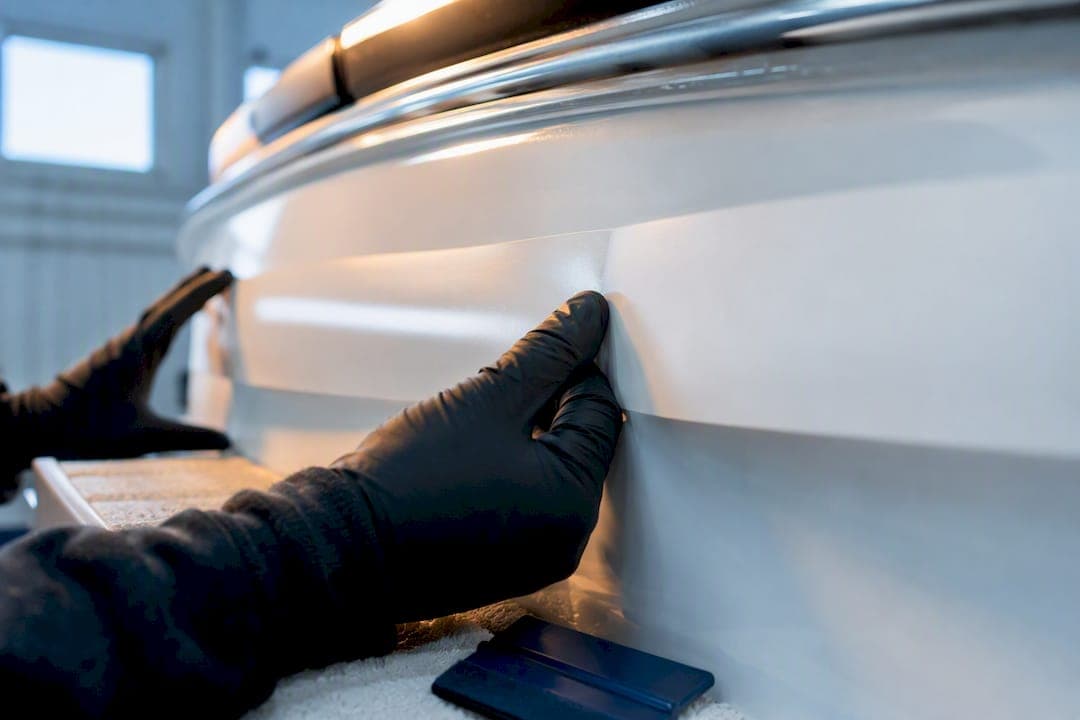
Applying boat decals in winter is safe only when the vinyl and hull surface both sit above roughly 65°F — below that, delay the job, move it indoors with a heat source, or use a temporary protective film until conditions cooperate. If you're stuck below freezing right now, warm workspace installation or a short wait usually beats a rushed job. RegistrationDecals.com's marine-grade decals and cold-weather guides cover both options.
TL;DR:
- Applying boat decals below 65°F risks poor adhesion, surface temperatures on the hull can be 10 to 15 degrees colder than air, so verification is essential.
- Cold weather application requires thorough hull cleaning, alcohol wiping, accurate temperature checks, and careful handling with proper tools and controlled heat sources.
- Full adhesive curing in cold conditions can take up to 48 hours, and early inspection for edge lifting is crucial to prevent long-term damage.
- Protecting decals over winter involves using marine-grade protectants, avoiding petroleum-based waxes, and storing the boat indoors or under breathable covers for best results.
- Using high-quality marine-grade vinyl helps decals withstand freeze-thaw cycles and UV exposure, which are common challenges during winter storage and early spring application.
Table of Contents
- What Temperature Is Safe for Installing Vinyl Decals?
- Prep Checklist for Cold-Weather Decal Application
- Cold-Weather Application Technique, Step by Step
- Protecting Decals Through Winter Storage
- Why We Build for Cold-Weather Installs, Not Just Warm Ones
- Order Winter-Ready Registration Decals
- Sources
- FAQ
What Temperature Is Safe for Installing Vinyl Decals?
Most professional installers point to 65°F as the practical floor for applying vinyl boat decals, since that's the range where adhesive activates properly and bonds to the hull. BoatingMag recommends a calm, windless day above 65°F for exactly this reason. Below that threshold, the adhesive stiffens and won't grab the gelcoat the way it should.
Air temperature isn't the number that matters most. Hull surface temperature, especially on a boat sitting in shade or on a trailer overnight, can run 10 to 15 degrees colder than the air around it. An infrared thermometer aimed directly at the hull tells you the real story, not the thermostat on your garage wall.
Cold adhesive doesn't fail instantly. It fails slowly, over the following weeks, as edges lift and corners curl because the bond never fully set.
- Check both air and surface temperature before you unpack the decal.
- Treat 65°F as your working target, not a suggestion you can shave a few degrees off.
- If a decal was already applied in marginal cold, inspect the edges weekly for the first month.
- Reseal any lifting corner immediately rather than waiting for spring.
Pro Tip: Keep the decal itself at room temperature until the moment you apply it. Cold vinyl straight from a garage or a delivery box is stiffer and harder to conform to curves, even if the hull surface reads warm enough.
Prep Checklist for Cold-Weather Decal Application
Cold weather punishes sloppy prep harder than warm weather does, because moisture that would normally evaporate in minutes can linger and freeze under the vinyl. A clean, dry, oil-free surface is non-negotiable here.
- Wash the hull section with mild soap and water, then rinse thoroughly and let it air dry completely.
- Wipe the area with a 70% isopropyl alcohol solution to strip residual wax and oil. In cold conditions, alcohol evaporates faster than plain water and reduces trapped moisture that can freeze under a decal.
- Confirm hull surface temperature with an infrared thermometer rather than trusting ambient readings, since garages and heated tents often have cold spots near doors or windows.
- Mark a center reference line on the hull and match it to the decal's centerline before committing to placement.
- Apply a strip of masking tape as a hinge along the top edge of the decal to hold your alignment steady during application.
Have your tools staged before you start: clean microfiber towels, low-tack masking tape, a firm squeegee, a controlled heat source, and an edge sealer pen for finishing. Running back to the garage for a missing towel with half the decal exposed is how bubbles happen.
Pro Tip: Do the alcohol wipe twice in cold weather. The first pass lifts surface grime; the second catches the fine residue that first pass tends to smear rather than remove.
Cold-Weather Application Technique, Step by Step
Once the hull and decal are both at temperature, the sequence matters more than speed. Rushing a cold install is how you end up with trapped air and a decal you're peeling off by February.
- Position the decal using your hinge tape, then fold it back and peel away the backing paper from the center outward.
- Squeegee from the center out in overlapping strokes, applying firm, even pressure. Center-out technique pushes air toward the edges instead of trapping it in the middle.
- If the vinyl feels stiff or resists conforming to a curve, apply gentle warm air from a heat gun on a low setting, keeping the nozzle moving. Practitioners use controlled warm air to make vinyl pliable and reactivate the adhesive, but overheating can bubble or discolor the material, so never hold the heat gun still on one spot.
- Peel the transfer film away at a shallow angle, close to the surface, rather than pulling straight up.
- Run an edge sealer pen along every border to guard against freeze-thaw lifting, and allow it to flash per the product's directions before covering or moving the boat.
Full adhesive cure in cold weather can take up to 48 hours, according to BoatingMag's installation guidance, so avoid washing, waxing, or trailering over rough roads until that window passes. If you spot a small bubble the next day, a pin prick and gentle pressure with a squeegee usually resolves it. For larger lifts or full panels, Boatus publishes wet-installation and removal instructions worth reviewing before you attempt a rework.
Pro Tip: If you're installing in a heated garage, run the heat for at least an hour before you start. A space that feels warm to you might not have brought the hull surface up to temperature yet.
Protecting Decals Through Winter Storage
Winter protection is active maintenance, not a one-time wax job. Storage choice tends to be the biggest single factor in how a decal survives the season, since trapped moisture, UV exposure, and abrasion do most of the long-term damage.
- Apply a graphics-safe wax or protectant before storage, not a generic automotive product.
- Avoid petroleum-based or heavy silicone waxes, since those solvents can soften and weaken decal adhesive over time.
- Overlaminate film adds a protective layer over the decal itself and can extend graphic life to 7 to 10 years when applied correctly.
- Store the boat indoors when possible; if that's not an option, use a breathable cover rather than a tight tarp that traps condensation against the hull.
- If you're weighing marina storage against a home setup, a detailed comparison of storage trade-offs can help you decide what fits your boat and budget.
Once spring arrives, walk the hull and check every decal edge for lifting, fading, or discoloration. A small edge lift caught early is a five-minute fix with a sealer pen. Left through another freeze-thaw cycle, it becomes a full decal replacement.
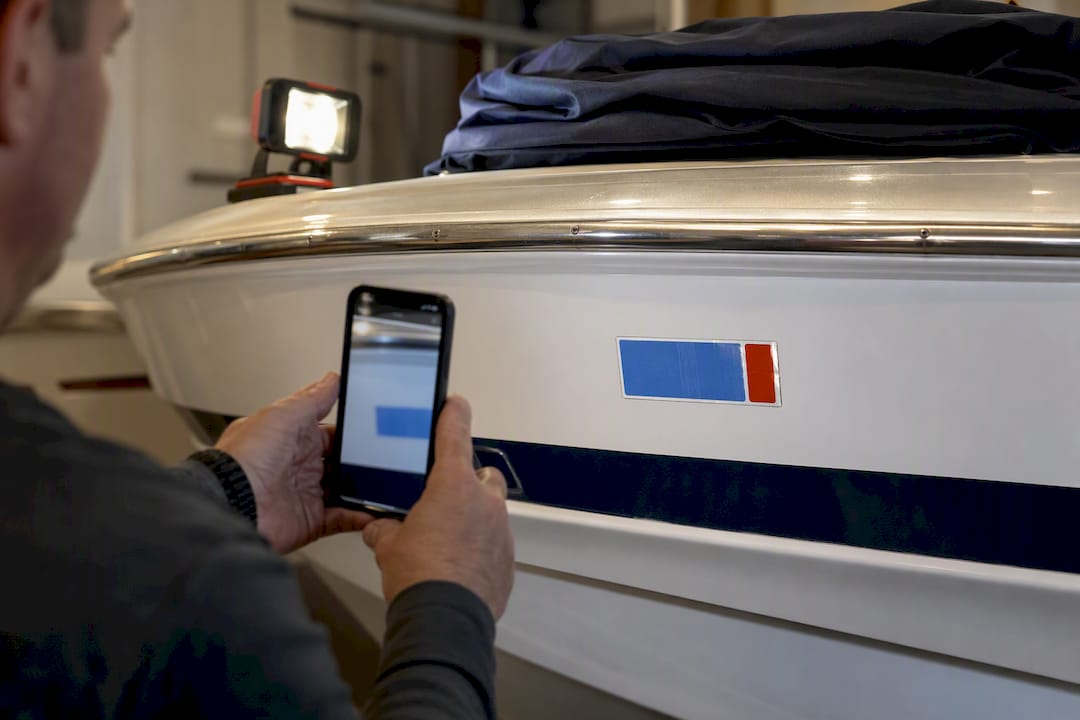
Pro Tip: Photograph your decals before winter storage. Side-by-side comparison in spring makes subtle fading or lifting far easier to spot than memory alone.
Why We Build for Cold-Weather Installs, Not Just Warm Ones
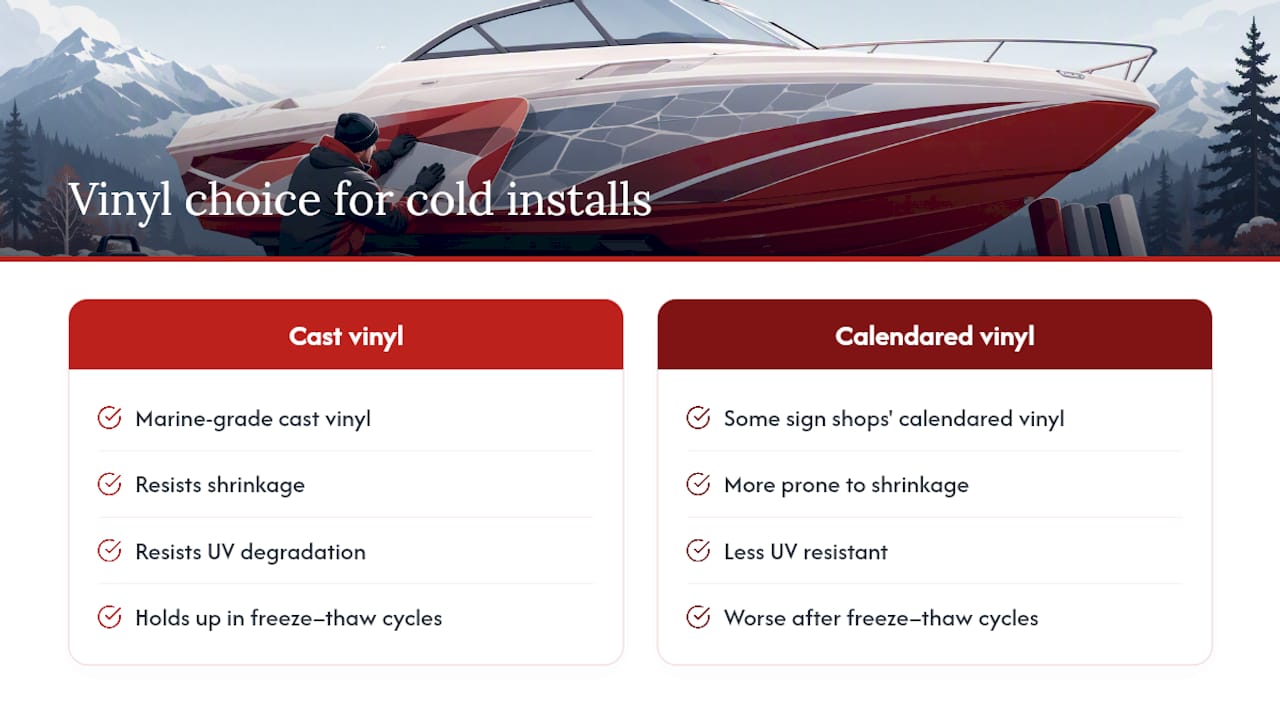
Most decal guidance assumes a sunny dock day, but a lot of boat owners are working in a driveway in November or a heated shop in January. That gap in most advice is why RegistrationDecals.com builds its materials around marine-grade cast vinyl rather than the calendared vinyl some sign shops still use. High-performance cast vinyl resists shrinkage and UV degradation better than cheaper alternatives, which matters more, not less, when a decal has to survive freeze-thaw cycles before it ever sees full summer sun.
Orders move through production in a few business days with shipping available across the contiguous US, timing that matters when you're racing a cold front rather than a calendar. Readers planning a cold-weather install can also work through our step-by-step guide for getting decals to stick at 41°F and our breakdown of which vinyl types hold up best on boats.
— Taylor
Order Winter-Ready Registration Decals
RegistrationDecals.com produces custom, state-compliant boat registration decals from marine-grade vinyl that's UV-safe and saltwater-proof, which is exactly the kind of material that holds up through a freeze-thaw winter instead of curling at the edges by March. The online design tool lets you enter your registration numbers, pick colors and fonts, and place an order in minutes, with production running 3 to 5 business days and free shipping anywhere in the contiguous US.
If your boat sits on a pontoon, a bass boat, or an aluminum hull, dedicated product pages make sizing and layout simpler: pontoon numbers, bass boat numbers, and aluminum boat numbers each account for the placement quirks of that hull type. Once your decals arrive, our installation walkthrough covers cold-weather technique start to finish. Before you order, double-check your state's current registration number and placement rules, since requirements vary by state and change periodically. When you're ready, current prices are available on the pricing page.
Sources
FAQ
Can You Put Vinyl Decals on When It's Cold?
You can, but only with adaptations: a heated workspace, a controlled heat gun to keep the vinyl pliable, and realistic expectations that full adhesive cure may take up to 48 hours instead of the usual few hours. Below freezing, most installers recommend waiting or moving the job indoors rather than forcing it.
What Temperature Is Too Cold for Applying Boat Decals?
Anything meaningfully below the 65°F minimum that BoatingMag recommends puts the bond at risk, and hull surface temperature (not just air temperature) is what actually determines whether the adhesive activates.
What Do People Do With Their Boats in the Winter?
Most owners either store the boat indoors, cover it with a breathable cover to prevent trapped moisture, or store it at a marina with winterized services. Storage choice is generally the biggest factor in how well graphics and decals survive the season.
Where Should Registration Decals Go on a Boat?
Placement rules vary by state, but numbers typically go on both sides of the forward hull, reading left to right and matching state font and spacing requirements. RegistrationDecals.com's placement guidance walks through the specifics by boat type.
How Much Do Custom Boat Registration Decals Cost?
A custom set of registration numbers and decals costs vary; please see the pricing page for current details.