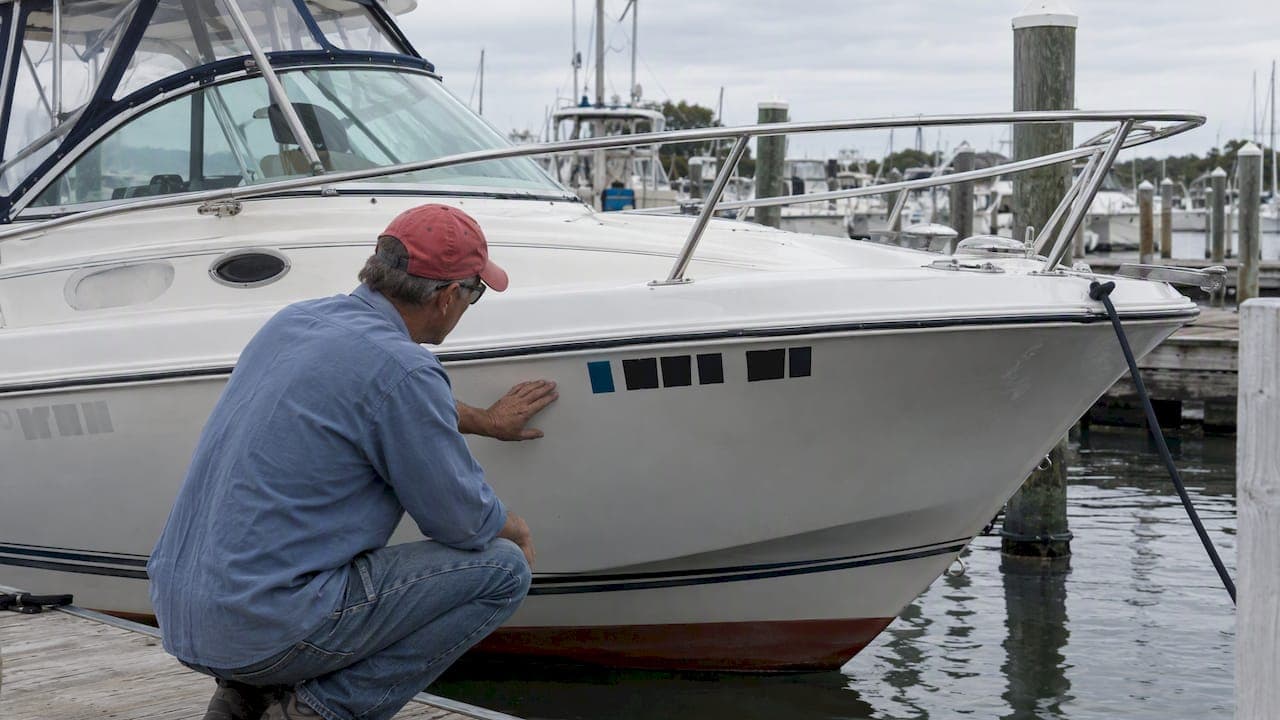
Mirror-image numbers on the starboard side of a boat are normally a Hull Identification Number or a builder's plate, not a registration problem, since HINs and manufacturing marks are placed and tooled in ways that can read backward depending on how they were cast or laminated. Registration numbers, by contrast, should never be mirrored: they are required to read left to right on both sides of the bow. This guide walks through where each marking belongs, why some appear reversed, and what to do if yours looks wrong.
TL;DR:
- Mirrored markings on hulls are usually due to manufacturing or decal application errors, not legal violations, and often involve builder plates or decorative graphics.
- Registration numbers must be clearly readable from left to right on both sides of the bow to meet state legal standards, with at least three-inch height and high contrast.
- The Hull Identification Number is fixed, usually on the starboard transom, and should never be intentionally mirrored or altered, as it can cause legal and titling issues.
- Flipping a photo or viewing with a mirror can quickly determine if a reversed mark is a manufacturing artifact or a legitimate regulation breach.
- Keeping registration numbers separate from decorative graphics and inspecting them regularly helps prevent compliance problems and ensures quick, easy identification.
Table of Contents
- Where registration numbers and the HIN actually belong
- Why some hull markings look mirrored
- Legal visibility rules that make mirrored registration numbers a problem
- What the HIN is, and why it is never mirrored
- How to decipher a mirrored or reversed marking
- Best practices for keeping registration numbers readable
- Where we fit into solving legibility problems
- A common mistake worth avoiding
- Get compliant, durable numbers without the guesswork
- FAQ
- Sources
Where registration numbers and the HIN actually belong
Two very different markings live on a boat, and mixing them up causes most of the confusion owners run into. Registration numbers are the ones a state agency assigns, and they go on both sides of the forward half of the hull, read left to right as you face the bow from outside the boat. They are required to be legible, in block characters, and contrasting in color from the hull. Our guide on registration number placement covers the exact spacing and positioning rules most states apply.
The Hull Identification Number is a completely separate identifier. It is not a navigational mark, not a decorative element, and not something you choose or design. It is a federally structured, manufacturer-assigned code permanently fixed to the hull, almost always on or near the starboard side of the transom, the upper right corner as you look at the boat from behind. Because the HIN is often stamped, molded, or riveted rather than painted, how it reads can depend on the angle of the tool or mold used during manufacturing, which is one reason people sometimes think it looks "backward" when it is not.
Beyond these two, several other things can appear near the starboard transom or bow:
- Builder plates: small aluminum or plastic tags listing the manufacturer, model, and sometimes a capacity rating, often mounted near the HIN.
- Model or hull-series numbers: used internally by builders for production tracking, not for public identification.
- Decorative striping or graphics: purely cosmetic, with no legal placement rules at all.
- Dealer or marina decals: branding added after purchase, unrelated to registration or HIN requirements.
Only the registration numbers carry a strict left-to-right, both-sides requirement. Everything else can legitimately look unusual, including appearing mirrored, without indicating any kind of violation. For a deeper look at whether registration numbers must appear on both bow sides at all, see our breakdown of registration numbers on both sides of the boat.
Why some hull markings look mirrored
Most mirrored markings trace back to how they were made, not to any rule being broken. Understanding the mechanics clears up a lot of confusion for owners who spot something odd on their hull.
Builder-engraved plates are frequently cast or stamped using tooling that is mirrored relative to the final product, especially when the mark is meant to be read from inside a mold or during an internal quality check rather than by the boat's eventual owner. Owner forums have repeatedly noted that certain hull numbers or builder-applied decals are laminated directly into the fiberglass on the starboard side during construction, and depending on which layer the mark sits in, it can appear reversed when viewed from outside once the hull is finished.
Decal application errors are the second common cause. A vinyl decal applied by hand can go on backward if the installer flips the material before pressing it down, particularly with transparent or translucent film where the printed side is not obvious at a glance. This is purely an installation mistake, not a structural or legal issue, and it is usually fixable by removing and reapplying the decal correctly.

Finally, some graphics are intentionally mirrored as a design choice. Flame patterns, wave graphics, or model-name scripts sometimes use mirrored artwork on the port and starboard sides so the design "faces forward" symmetrically on both sides of the hull. None of this applies to registration numbers, which always use the same orientation on both sides.
A quick way to sort these out:
- Builder plate or molded mark: likely a manufacturing artifact, not an error.
- Vinyl decal that looks flipped: probably an installation mistake, correctable by reapplying.
- Symmetrical decorative art: intentional design, no compliance implications at all.
Legal visibility rules that make mirrored registration numbers a problem
Registration numbers exist so a boat can be identified at a glance from a distance, by law enforcement, marina staff, or another boater. That function only works if the numbers are oriented consistently and are easy to read. Most states require registration numbers to be permanently affixed or painted on each side of the forward half of the vessel, in plain block characters, of a minimum height, and in a color that contrasts clearly with the hull.
New Jersey's boat registration guidance is representative of language used across many states: registration numbers must be painted on or permanently attached to each side of the bow, read from left to right, in block letters at least 3 inches in height, and in a color that contrasts with the boat's hull. That three-inch minimum is one of the most consistently cited figures across state registration rules, and it is a useful benchmark even where exact wording varies.
A few consistent requirements show up across most jurisdictions:
- Orientation: numbers must read left to right as viewed from outside the boat, never reversed.
- Height: a commonly cited minimum is three inches, per New Jersey's registration guidance.
- Contrast: numbers must stand out clearly from the hull color, not blend in.
- Spacing: letters and numbers typically need a visible gap from any hyphen or decorative element.
Because the entire purpose of these rules is public legibility, deliberately mirroring or reversing registration numbers defeats the point of the requirement and will generally be treated as noncompliant by a registering authority. If you are unsure whether your current numbers meet font requirements, our page on block letter requirements walks through what inspectors typically look for.
What the HIN is, and why it is never mirrored
The Hull Identification Number is the maritime equivalent of a vehicle's VIN: a permanent, structured code used for titling, registration cross-checks, and theft recovery, not for navigation or public display in the way registration numbers are. It is a 12-character code combining a manufacturer identifier, a serial number, and a date code, and it is permanently affixed to the hull, almost always on the outboard side of the starboard transom.
Because the HIN's entire value depends on it being a fixed, unaltered identifier, it is never intentionally mirrored or stylized. If a HIN plate looks reversed, damaged, painted over, or otherwise altered, that is a different kind of concern than a mirrored registration number. Tampering with a HIN, even unintentionally through sanding, repainting, or poor decal placement over it, can create real problems with titling and insurance claims down the line.
A few things worth keeping in mind:
- Never paint over or decal over the HIN plate, even when refinishing the transom.
- Photograph your HIN periodically and compare it to your title paperwork to catch any damage early.
- Report a missing, illegible, or altered HIN to your state boating authority or the manufacturer rather than attempting a DIY fix.
If your HIN looks wrong in a way that goes beyond normal wear, that is a question for your state agency or the original builder, not something to resolve with a new decal.
How to decipher a mirrored or reversed marking
When you spot something on the hull that looks backward, a few simple checks usually sort out what you are dealing with before you need to call anyone.
- Hold a hand mirror up to the marking. If it reads correctly in the mirror, the mark itself was designed or tooled in reverse, most likely a builder plate or internal part number.
- Photograph it and flip the image horizontally on your phone. This is the fastest way to confirm whether a reversed mark is simply a mirrored builder or model code rather than a registration number.
- Compare it against your registration paperwork and title. Registration numbers should match your documents exactly and read correctly without any mirroring trick. If they do not match or still look reversed after flipping, that is a genuine problem.
Pro Tip: Keep a photo of your registration paperwork on your phone so you can cross-check hull markings on the spot, without digging through a glove box at the dock.
Mirrored builder plates or decorative graphics are safe to leave alone since they carry no legal weight. A mirrored or incorrect registration number, however, should be corrected before your next renewal or inspection, and a damaged or altered HIN should be reported to your state boating agency or the manufacturer rather than patched over. When in doubt about which category a marking falls into, a quick call to your marina's service department or your state's boating registration office will usually clear it up.
Best practices for keeping registration numbers readable
A little upkeep prevents most of the confusion that leads owners to search for answers about mirrored markings in the first place.
- Use block characters only. Script, italic, or decorative fonts are commonly rejected during inspection; our font requirements guide covers what typically passes.
- Keep height at or above your state's minimum, commonly three inches per state guidance like New Jersey's.
- Choose a color with strong contrast against your hull, dark numbers on light hulls or vice versa.
- Keep registration numbers physically separate from decorative striping, flame graphics, or builder plates so nothing overlaps or gets misread as part of the number.
- Inspect numbers each season for fading, peeling edges, or cracking, especially after winter storage or heavy UV exposure.
Pro Tip: Replace registration decals at the first sign of fading rather than waiting for a failed inspection, since a worn number is one of the most common reasons boats get flagged during a routine check.
Keeping the registration numbers visually distinct from everything else on the hull, including builder marks and any mirrored decorative art, is the simplest way to avoid both compliance headaches and confused dockside conversations.
Where we fit into solving legibility problems
We build custom registration decals specifically to meet the orientation, size, and contrast rules described above, using marine-grade vinyl that is UV-resistant and saltwater-proof so numbers stay legible season after season instead of fading into an illegible blur by year two. Our online design tool lets you enter your assigned numbers, pick a font and color combination that contrasts properly with your hull, and preview the layout before ordering, which removes the guesswork that leads to misapplied or backward decals in the first place.
Because every set is produced to the specifications your state actually requires, you avoid the kind of reversed-orientation mistakes that happen when a decal is cut or applied without attention to left-to-right readability. Our guidance pages on placement and vinyl decal compliance walk through the same rules referenced throughout this guide, so you can check your current setup against the same standard before ordering a replacement.
A common mistake worth avoiding
The owners who get tripped up here usually are not breaking any rule on purpose. They are mixing decorative graphics, like a mirrored flame design or a builder's script logo, with the actual registration numbers, and then second-guessing whether their numbers are "supposed to" look that way. They are not. Registration numbers follow one fixed orientation, period, while everything else on the hull is fair game for creative choices.
My practical recommendation is simple: keep decorative elements physically separate from your registration numbers, and when in doubt about a marking's purpose, check it against your title paperwork before assuming it is an error. A boat covered in bold graphics can still have perfectly compliant, easy-to-read numbers if the two are kept apart.
— Taylor
Get compliant, durable numbers without the guesswork
We make it straightforward to replace faded, mismatched, or incorrectly oriented registration numbers with a set built to your state's actual requirements. Our decals are made from durable vinyl designed for outdoor marine conditions and are produced and shipped promptly to customers across the lower 48 states.
- Enter your assigned registration numbers into our online design tool and choose a compliant font and contrasting color.
- Order a matching set for both sides of the bow in one pass, so orientation and spacing stay consistent.
- Browse options built for specific hull types, including center console numbers, pontoon numbers, and aluminum boat numbers.
Start your set on the Custom Boat Registration Numbers & Decals page, and if you are insuring a newly registered boat, it is worth reviewing boat insurance requirements as well, since clear identification numbers often factor into claims documentation.
FAQ
How do you remember port from starboard?
A common memory trick is that "port" and "left" both have four letters, and a ship leaving port has its left side facing the dock. Mariners rely on fixed terms like port and starboard instead of left and right because those directions change depending on which way you are facing, while port and starboard stay constant relative to the bow.
Why don't sailors say left and right?
Left and right are relative to which way a person is facing, which creates confusion when giving directions on a moving vessel with crew facing different directions. Fixed terms like port and starboard always refer to the same sides of the boat regardless of where someone is standing or looking.
What does "mirror reversed" mean on a boat marking?
A mirror-reversed marking is one that reads correctly only when viewed in a mirror or flipped horizontally, which commonly happens with builder plates or internal tooling marks rather than registration numbers. Mathematically, a mirror number simply means reversing the order of characters, a concept distinct from hull markings but useful for understanding why the term gets used loosely.
How many Mirror dinghies are there?
This question refers to the Mirror sailing dinghy class rather than hull registration markings, and total fleet counts are not something we have a sourced figure for. For official class specifications, including identification requirements on the hull, checking directly with the class association is the most reliable path.
Sources
- Why do ships use "port" and "starboard" instead of "left" and "right?"
- New Jersey State Police: Boat registration information (example state rule language)
- Formula for mirror numbers — Math StackExchange