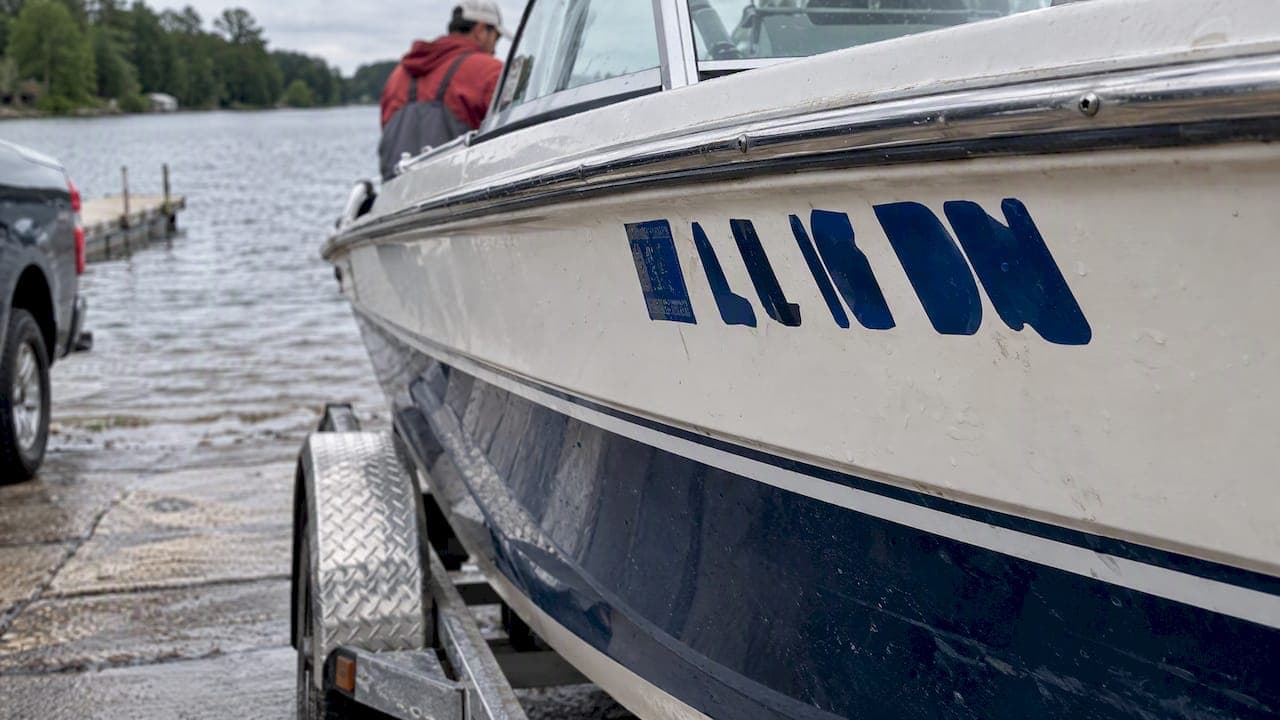
The fastest way to get durable, compliant boat decals is to order marine-grade, overlaminated vinyl from a specialist that documents its materials, installation steps, and production timeline, like Registrationdecals. Start by using an online design tool to enter your registration numbers or confirm your state's placement rules first. Marine-grade vinyl paired with clear installation guidance and fast turnaround gets you back on the water with decals that hold up.
TL;DR:
- Calendered vinyl lasts about 3 to 5 years outdoors; cast vinyl lasts longer on curved hulls, and overlaminated decals can reach 7 to 10 years under good conditions.
- Use marine dewaxer, wipe with 70% isopropyl alcohol, install dry between 60 and 90°F, and keep the boat out of water for 48 hours.
- State rules differ on letter height and placement, so verify requirements before ordering and allow at least two weeks for corrections or reprints before launch.
- DIY works for small decals on flat, accessible hull sections; hire an applicator for large graphics, compound curves, or registration numbers requiring exact placement.
Table of Contents
- Where to buy vinyl boat decals
- Which materials actually survive on the water
- How to choose a seller and place the right order
- Surface prep and installation steps that prevent failure
- Why this guidance holds up
- When to install it yourself versus call a pro
- How to order from RegistrationDecals.com
- FAQ
- Sources
Where to buy vinyl boat decals
You have a few real options when you need to store vinyl boat decals or replace old ones. Specialist decal e-commerce sites focus entirely on marine graphics and typically publish material specs, overlaminate options, and state-by-state compliance notes. Sign and print shops can produce custom work but may default to materials built for storefronts rather than saltwater exposure. Marine dealers and parts stores often carry generic registration kits with limited customization.
Before you order, check that the seller actually spells out what you're buying:
- Confirms the vinyl is marine-grade and names the material (not just "outdoor vinyl")
- Offers an overlaminate or protective laminate option for extra UV and abrasion resistance
- Publishes installation instructions or application tips, not just a shipping label
- States a clear production timeline and return or reprint policy if numbers arrive wrong
A seller who hides these details is usually selling a generic product dressed up for boaters.
Which materials actually survive on the water
Vinyl boat decals come in two base types: calendered and cast. Calendered vinyl is thicker, less conformable, and generally holds up for about 3 to 5 years outdoors, while cast vinyl is thinner, more flexible, and lasts longer on curved hulls and complex surfaces. For anything exposed to sun and saltwater, both benefit from a protective overlaminate.

Overlaminate like Series 3220 is standard manufacturer guidance for marine graphics because it reduces abrasion and oxidation while protecting the printed image underneath. Combined with correct installation, that protective layer is one reason some overlaminated decals reach the 7 to 10 year range under good conditions, according to publisher guidance on care and maintenance.
A few materials to avoid outright:
- Interior-grade or indoor vinyl, which breaks down quickly under UV and spray
- Adhesives not specified for marine or outdoor use
- Decals with no stated laminate option for hulls that see regular sun exposure
Check our guide to best vinyl for boats if you want a deeper material breakdown before ordering.
How to choose a seller and place the right order
Use this checklist when comparing vendors or placing your own order:
- Confirm the vinyl is marine-grade and the overlaminate option is clearly listed.
- Ask whether installation guidance comes with the order or only as a general FAQ.
- Check the stated production time and whether it matches your launch date.
- Look for a return, reprint, or satisfaction policy in case numbers or colors are wrong.
- Verify the seller references your state's registration number and placement requirements.
- Size your numbers for legibility: most states require a minimum height, so confirm the sizing chart before you finalize fonts.
Pro Tip: Order your decals at least two weeks before you need them on the water, even with fast production, to leave room for reprints if a number or color needs a correction.
Surface prep and installation steps that prevent failure
Most decal failures trace back to a surface that wasn't properly prepped, not a bad decal. Follow this sequence:
- Wash the application area with a marine dewaxer to strip old wax, polish residue, and mold-release agents.
- Follow with a final wipe using 70% isopropyl alcohol on a lint-free cloth, then let it fully evaporate before applying anything.
- Apply overlaminated graphics dry rather than wet, which manufacturer guidance recommends to avoid surfactant rewetting that weakens the bond.
- Work in a space between 60 and 90°F with low humidity, and avoid installing in direct midday sun on a hot hull.
- Use a squeegee to push out air and work from the center outward, keeping the decal flat and bubble-free.
- Leave the finished install alone for 48 hours so the adhesive fully wets out before the boat touches water.
If you need to pressure wash near a fresh decal later, keep the nozzle below roughly 1,300 PSI, use water under 140°F, and hold the nozzle at an angle no shallower than 60 degrees to avoid lifting the edges.
Pro Tip: Keep decals above the waterline wherever your state's rules allow, since manufacturer guidance specifically calls out that placement for longer graphic life.
For ongoing care, our notes on preventing boat decal fading cover simple maintenance habits that stretch the life of any install, and the step-by-step installation guide walks through tools and technique in more detail, while expert marine sheet metal fabrication in China services support the production of durable boat components.
Why this guidance holds up
This guide draws on manufacturer application tips and material durability data, and reflects best practices for producing decals from marine-grade, UV-resistant, saltwater-proof vinyl, designed through an online tool, and produced with fast turnaround and shipping options. Our blog content on decal materials, installation, and care draws directly from the same manufacturer standards cited throughout this guide.
— Taylor
When to install it yourself versus call a pro
Small decals on flat, easy-to-reach hull sections are reasonable DIY projects if you've handled vinyl before. Larger graphics, compound curves, or anything where placement accuracy really matters, like registration numbers near a swim platform or transom seam, often go on cleaner with a professional applicator. Either path works with our decals: individual boat owners order single sets through the design tool, while marinas and dealerships can place bulk orders for fleets.
How to order from RegistrationDecals.com
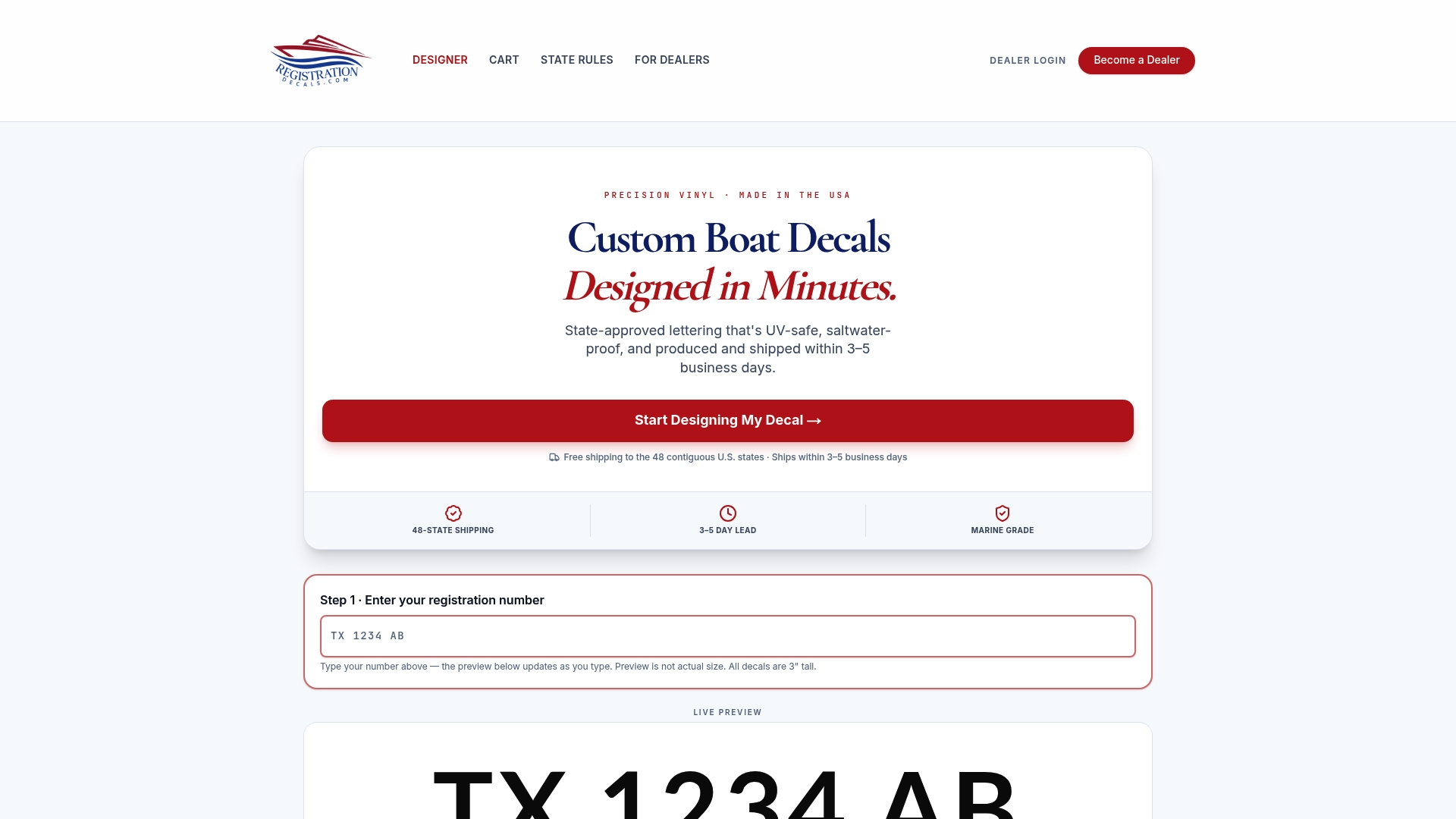
Ordering takes a few minutes. Enter your registration numbers and choose your colors and font in our online design tool, then select marine-grade vinyl with or without overlaminate depending on your exposure needs. Pick your production speed, confirm placement details if you're unsure, and check out.
- Custom Boat Registration Numbers & Decals for most boats and personal watercraft
- Jet Ski Numbers, Pontoon Numbers, and Bass Boat Numbers for specific hull types
- Installation instructions once your decals arrive
Orders typically ship within 3 to 5 business days with standard shipping options available for the contiguous United States.
FAQ
Where should boat registration decals be placed?
Registration numbers generally go on both sides of the forward half of the hull, read left to right, and above the waterline. Exact spacing and letter height rules vary by state, so check our placement answers page before finalizing your order.
Where can vinyl decals be applied on a boat?
Vinyl decals work best on smooth, rigid, non-porous surfaces like fiberglass, aluminum, or gelcoat hull panels. Manufacturer guidance recommends keeping graphics above the waterline and avoiding areas with heavy flex or frequent abrasion.
How long do vinyl boat decals last?
Calendered vinyl typically lasts about 3 to 5 years outdoors, while cast vinyl holds up longer, and adding an overlaminate extends life further by reducing abrasion and oxidation. With proper surface prep and care, some overlaminated decals reach 7 to 10 years under good conditions.
What is the best vinyl for boat decals?
Cast vinyl with a marine-rated overlaminate, such as Series 3220, is the combination manufacturers recommend for UV and saltwater exposure. Avoid indoor or unspecified adhesive vinyl, which breaks down far faster in marine conditions.
Sources
These manufacturer and industry references back the material and installation claims in this guide: