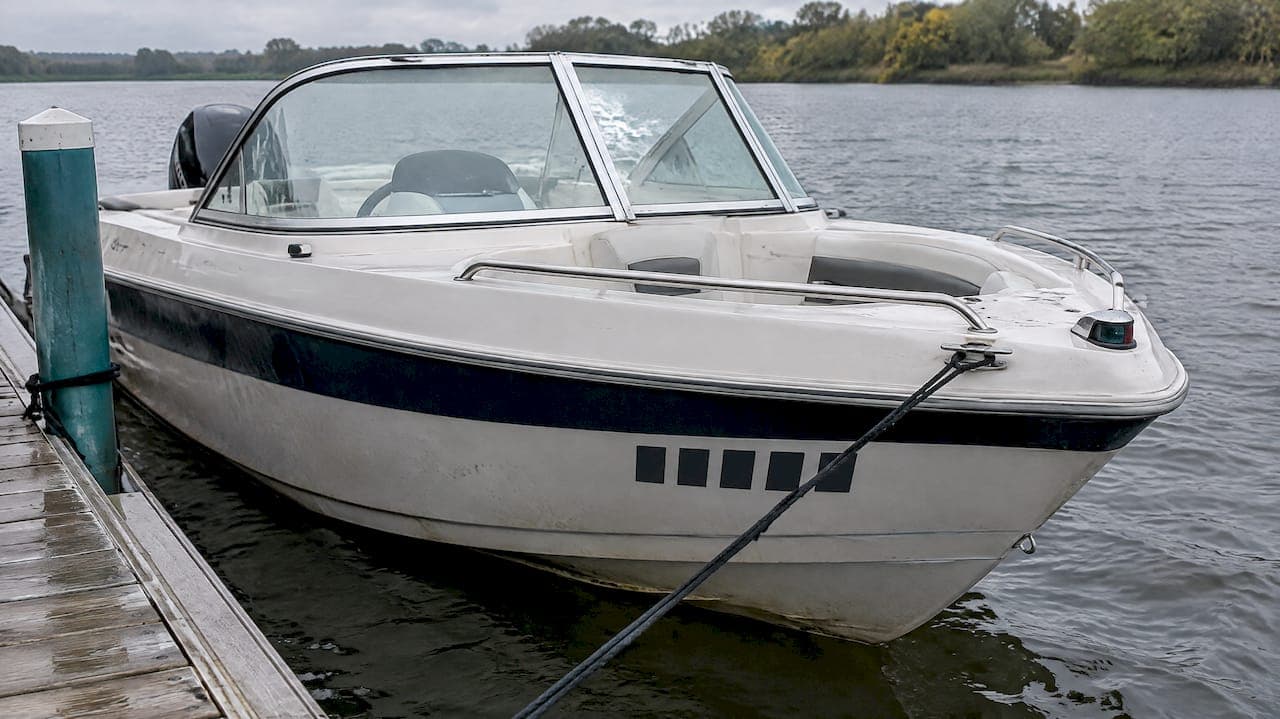
Yes, peel-and-stick boat numbers are generally legal in the United States, as long as they count as "permanently attached" and meet the same size, style, contrast and placement rules as painted numbers. Federal regulation 33 CFR 173.27 allows numbers that are painted on or permanently attached. A quality marine-grade vinyl decal, applied correctly to a clean hull, is a standard way to do that. A flimsy sticker that peels, fades or sits in the wrong spot is where owners get into trouble.
TL;DR
- Vinyl decals are an accepted way to display registration numbers when they are permanently attached, not a temporary fix.
- Federal minimums: plain block characters, at least 3 inches tall, contrasting with the hull, on both sides of the forward half, reading left to right.
- Your state can add rules, especially for the yearly registration decal, which has its own placement and removal requirements.
- The word "legal" depends on the product and the install: material, adhesion, spacing, contrast and location all count.
- Check your state boating agency's page before ordering, and measure your hull before you pick a size.
Table of Contents
- What "peel and stick" means for boat numbers
- What federal law requires
- What makes a decal "permanent" in practice
- Size, spacing and contrast: where decals go wrong
- Both sides of the boat
- The state layer: validation decals are a separate item
- A quick compliance check before you apply
- Which boats get decal numbers most often
- Mistakes that lead to a warning
- Our perspective
- Get compliant numbers made for your boat
- FAQ
- Sources
What "peel and stick" means for boat numbers
Peel-and-stick is shorthand for an adhesive vinyl decal: letters and numbers cut from vinyl, held on a transfer sheet, and pressed onto the hull. The label sounds casual, and that is the source of the confusion. Many people picture a paper sticker from a craft store. A marine decal is a different product: outdoor-rated vinyl with an adhesive made to survive sun, spray and washdowns.
The law does not regulate products by marketing name. It regulates the result: how the numbers look, where they sit and whether they stay put. So the real question is not whether the decal is "peel and stick." It is whether the finished numbers meet the rule.
What federal law requires
The baseline is 33 CFR 173.27, published in the eCFR. Under it, the registration number must be:
- Painted on or permanently attached to each side of the forward half of the vessel.
- In plain, vertical block characters at least 3 inches high.
- In a color that contrasts with the background, and distinctly visible and legible.
- Separated by a space or hyphen between the letter and number groups. That gap is equal to the width of a letter other than I, or a number other than 1.
- Read left to right on each side of the boat.
The regulation also covers boats where the hull or superstructure would not make the number easily visible. In that case, a backing plate attached to the forward half must make the number visible from each side.
Notice the phrase "permanently attached." It sits right next to "painted on" as an equal option. That is why a properly applied vinyl decal is a normal, accepted choice. If you want a plain-language walk through this, our answer page on whether registration numbers can be vinyl decals instead of painted covers it.
What makes a decal "permanent" in practice
The regulation does not publish a list of approved materials. In practice, a decal holds up as permanent when:
- The vinyl is outdoor and marine rated. It should resist UV so the color does not wash out, and it should tolerate fresh and salt water. Our guide to the best vinyl for boats explains what to look for.
- The surface is prepared. Wax, oil, chalky oxidation and dirt keep adhesive from bonding. A clean, dry, degreased hull makes the difference.
- The decal is pressed down fully. Edges that lift catch water and start peeling.
- It is left to cure before the boat goes back in the water or gets a hard wash.
A decal that fades to a pale gray or curls at the corners can fail the contrast and legibility test even if it was a fine product on day one. Officers judge what they can see. If they cannot read your numbers from a reasonable distance, that is the problem.
Our installation guide takes you through application step by step.
Size, spacing and contrast: where decals go wrong
Most problems with decal numbers have nothing to do with the adhesive. They come from design and layout mistakes.
Height
The federal minimum is 3 inches. Because that is a minimum measured on the character itself, a decal that is 3 inches including a border or shadow may fall short. Measure the solid letter. Our boat number design guide shows how to check that your characters stand a full three inches tall.
Font
The rule says plain block characters. Script, italic, outlined or decorative fonts that make a 5 look like an S invite a warning. Block lettering is not a style choice here, it is a requirement.
Spacing
A typical Florida-style number looks like FL 1234 AB, with groups separated. The federal rule sets the gap between groups at a space or hyphen equal to the width of a letter other than I or a number other than 1. Cramped spacing that runs groups together is a common reason an order has to be redone.
Contrast
Dark numbers on a light hull, light numbers on a dark hull. Black on navy, white on pale gray and silver on white all look fine in a showroom and fail on the water. Metallic finishes can also lose contrast in glare. Pick the highest-contrast pairing available.
Obstruction
Numbers must stay distinctly visible. A rub rail, a anchor roller, a fender or a hull graphic crossing the digits can undo an otherwise perfect install. If other numbers or graphics sit nearby, see our answer on whether other numbers can be on a boat's bow.
Both sides of the boat
The federal rule places the number on each side of the forward half. One decal on only one side is not enough. Our page on whether registration numbers go on both sides explains the layout, including how the numbers should read on the starboard and port sides.
On unusual hulls the question becomes where "the forward half" really is. Pontoon boats are a good example, since the tubes are curved and the flat fence panels are often not a suitable surface. Our pontoon placement answer deals with it. Where the hull shape stops the number from being easily visible, the federal rule allows a backing plate on the forward half. Washington's licensing agency says the same thing: a rubber boat or a boat whose construction prevents visible numbers may use a backing plate, but the number must stay visible from outside the vessel, per the Washington Department of Licensing.

The state layer: validation decals are a separate item
Federal rules cover the registration number. States then add their own requirements, and the most common is a yearly or multi-year validation decal. People often mix up the two, and this is where "peel and stick" rules diverge. The number is something you apply yourself. The validation decal is typically issued by the state and has its own rules for placement and removal.
A few examples from official sources:
| State | Validation decal rule | Source |
|---|---|---|
| Washington | Decals on both sides of the bow, within 6 inches of the registration number, aft of it and directly in line with it | Washington DOL |
| Florida | Registration-year decal on the port side, immediately before or after the registration number; expired decals must be removed | Florida HSMV |
| Virginia | Validation decals within 6 inches of the registration number on each side; only the current decal may remain visible; expired decals must be removed | Virginia DWR |
The pattern is useful. In Florida, the registration number itself must be painted or permanently attached, while the year decal follows its own placement and removal rules. That means a decal-based number and a state validation sticker can coexist on the same hull, as long as you leave the right spot for the sticker and clear off old ones.
If you boat in Florida or Virginia, we keep dedicated pages: Florida boat registration decal requirements, the longer Florida boat registration numbers guide and Virginia boat registration decal requirements.
A documented-vessel wrinkle
Washington notes that vessels documented with the Coast Guard may not display the Washington registration number, though Washington state decals are still required under its rules. If your boat is federally documented, check your state's page before ordering numbers, because you may need different markings entirely.
A quick compliance check before you apply
Before peeling anything, run through this list:
- Find your state's current rules. Search your state boating agency's page for registration number display. The yearly decal rules change more often than the federal baseline.
- Check the number on your registration certificate. Order exactly what it says, including letters and any spacing.
- Measure the mounting area. Confirm you have a clear stretch on the forward half, with no hardware in the way, for the number plus the validation decal space.
- Verify the character height. The solid letters must measure at least 3 inches.
- Pick a high-contrast color against your actual hull color, not the color on your screen.
- Dry-fit with tape. Hold the decal up and view it from 20 or 30 feet away.
- Remove expired decals where your state requires it.
- Photograph the finished install on both sides, in case you ever need to show it.
Which boats get decal numbers most often
Almost every recreational boat can use decals. A few notes by type:
- Jet skis and personal watercraft have small, curved bow areas, so size choice matters. See do jet skis need registration numbers and our jet ski numbers.
- Pontoons usually need numbers on the forward half of the tubes or on a panel that keeps them visible. See pontoon numbers.
- Bass boats have lots of curves and graphics, so clear space is the challenge: bass boat numbers.
- Aluminum boats often have riveted or ribbed hulls, where surface prep and a smooth area count: aluminum boat numbers.
- Center consoles have broad bow sides that suit decals well: center console numbers.
- Kayaks and canoes are covered by their own rules about when numbers are needed. See our kayak registration numbers guide and the answer on whether kayaks and canoes need registration numbers.
Mistakes that lead to a warning
These come up again and again:
- Numbers too small because the owner measured the decal sheet, not the characters.
- Fancy fonts chosen to match a boat's graphics.
- Low-contrast colors chosen for looks.
- No gap between groups, so the number reads as one block.
- Numbers on the transom or the stern rather than the forward half.
- Number on one side only.
- Old validation decals left stacked up when the state requires removal.
- Decals applied over wax or a dirty hull that start lifting after a few weeks.
- Boat name or other lettering placed so close that it confuses the number. Name lettering has its own rules, covered in our guide to boat name signs.
Our perspective
We think the question "are peel-and-stick boat numbers legal?" hides the one that matters: are they permanent, correct and readable? The regulation does not care how the number got onto your hull. It cares that the number is there, the right size and style, and stays there.
That is why we produce our decals in-house from marine-grade vinyl chosen for UV and saltwater resistance. A decal that fades or peels is a compliance problem waiting to happen, and we would rather you never have to think about it.
We also built our design tool around the rules. You enter your registration number, choose colors and a block font, and the layout is built for state-compliant display. We publish state guidance because we have seen how often owners are unsure where the yearly decal goes.
Our advice is simple: measure twice, pick contrast over style, prep the hull properly, and check your state agency's page before you apply.
Taylor
Get compliant numbers made for your boat
Our custom boat registration numbers and decals are $35.99 per set. You type in your registration number, pick a color and a font, and review the layout. Production takes 3 to 5 business days, and shipping is free across the contiguous United States. Marinas and dealerships can order in bulk as well.
Start on our custom boat registration numbers page, or browse by boat type above if your hull is a jet ski, pontoon, bass boat, aluminum boat or center console.
FAQ
Can I use regular vinyl stickers instead of marine decals?
The rule requires numbers that are painted on or permanently attached, with contrast and legibility maintained. Ordinary indoor or craft vinyl tends to fade, crack and peel on a boat, so it often fails over time. Marine-grade outdoor vinyl is the safer choice.
Do I need to paint over my old numbers before applying decals?
No, but the surface must be clean, smooth and free of wax. Old numbers that conflict with the new ones, or leftover validation decals that your state requires you to remove, should come off first. Check your state's page for removal rules.
Is the yearly registration sticker the same as my boat numbers?
No. The registration number identifies your boat and is displayed on both sides of the forward half. The validation decal shows your registration is current and has state-specific placement, often within a few inches of the number. Florida, Virginia and Washington each describe their own placement.
Can the numbers go on a pontoon fence or a curved hull?
They must stay on the forward half and be easily visible from each side. If the hull shape prevents that, the federal rule allows a backing plate on the forward half that makes the number visible.
What size should the numbers be?
At least 3 inches tall, in plain block characters, measured on the solid characters. Many owners go a bit larger on a big hull so the numbers read from a distance, as long as they fit within the forward half with proper spacing.
Sources
- eCFR: 33 CFR 173.27, Numbers: Display; size; color
- Washington Department of Licensing: Boat registration and hull identification numbers
- Florida Department of Highway Safety and Motor Vehicles: Numbering and Decals
- Virginia Department of Wildlife Resources: Watercraft registration, titling and sales tax